
Architect’s Secret Commission for Papal Visit
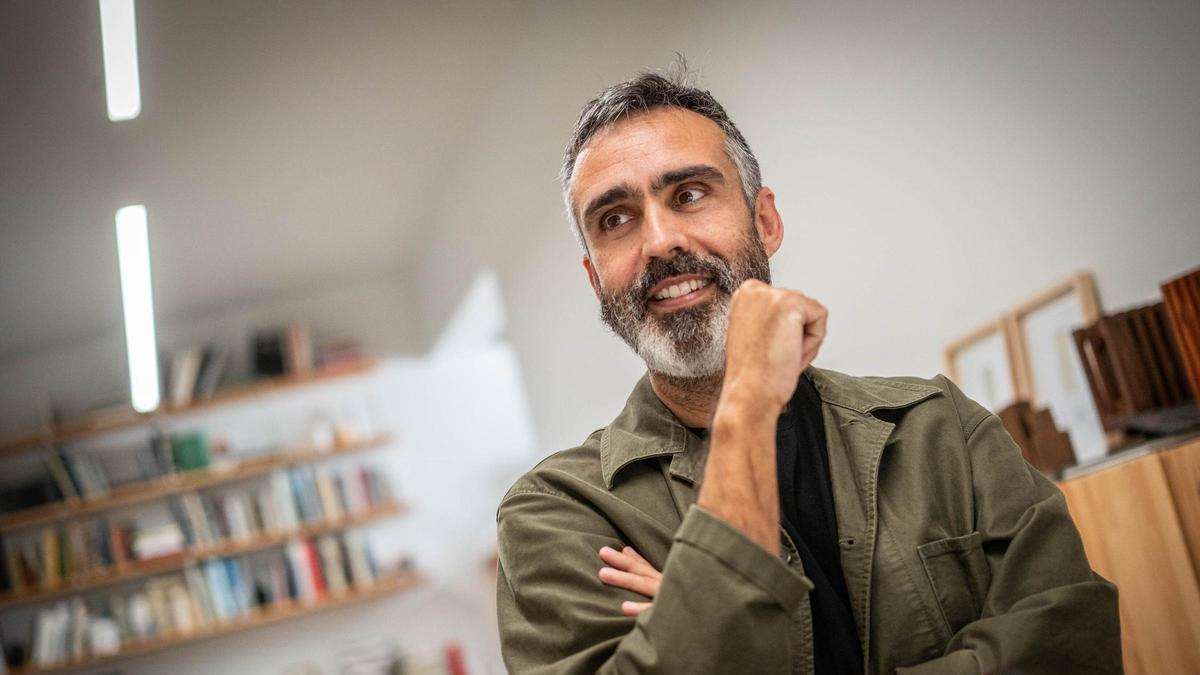
The studio of architect Alejandro Beautell, a Lagunero who has lived in the Santa Cruz neighbourhood of El Toscal for six years, holds one of the best-kept secrets of the Pope’s visit to Tenerife: the design for the celebratory space to be installed at Los Llanos dock in the island’s capital port, where the Pope will preside over the thanksgiving mass concluding his visit to Spain. At 48, this architect can boast of having completed his studies and found his true calling, as practically from the start his professional career has been linked to the Diocese of Tenerife, sometimes constructing new churches and other times restoring buildings of heritage value.
A Signature Style and a Life-Changing Call
His signature style is contemporary architecture prioritising open-plan spaces and exposed concrete in a search for the essential. Examples of his concept intertwining the artistic with the architectural include the church of Alcalá in the southern municipality of Guía de Isora; the hermitage of San Juan Bautista in the El Hierro town of Frontera; Stella Maris in the fishing village of El Pris; and the church of San Miguel de Geneto in La Laguna, which links a new temple with the old one.
Within this quiet professional life of hard graft, Alejandro Beautell received an unexpected call from the vicar and treasurer, Víctor Oliva: “You know the Pope is coming, right?” A “you’re going to be involved” confirmed what the architect considers a special commission that only happens once in a lifetime. It has meant his studio has thrown itself into this work and they have had to request several extensions on other projects. “My team is completely dedicated to this,” he says.
The Stage Is Set in the Port
Within the port enclosure, covering almost 39,000 square metres with a capacity for up to 60,000 people, the celebratory space itself will be set up. This 900-square-metre area will house the altar presided over by the Cristo de La Laguna and will also feature the presence of the Virgin of Candelaria. The altar will be raised on three levels to gain visibility from the seafront avenue, which is configured as a grandstand allowing more spectators to view the mass.
To give readers an idea, the celebratory space will be placed with the sea as a backdrop, allowing the Pope to look directly at the city, with the Anaga mountains to his left and the Tenerife Auditorium to his right. A security lane will be set up on the side closest to the sea to attend to any eventuality, and the altar will be to the left of a small existing building integrated into the service area generated in the enclosure, which will also include a choir.
Design Philosophy: Geometry and Symbolism
The celebratory space will have three levels. The first is the port’s own surface, upon which a base thirty metres long by thirty metres wide will be erected. At a second height, demarcating the four corners of the square-shaped plan, four spaces covered in volcanic gravel (‘picón’) and native flora will be created, representing the volcanic territory that identifies the Canaries and the humble, welcoming spirit of its people.
Facing forward, between the two squares closest to the authorities and people with reduced mobility and elderly people accessing the seats, a staircase will provide access to the altar itself, which occupies the three central squares. In the middle is the main altar; to the left, the ambo where the word will be proclaimed; and to the right, the image of the Virgin of Candelaria. In the central square of the part closest to the sea will be the seat for the Pope and, presiding over the presbytery, the carving of the Cristo de La Laguna. Elsewhere, in the lateral areas of the port enclosure, attendees will be standing.
The 300 metres securing the central zone of the celebratory space will be for the concelebrants on the left and right, with the Pope presiding. They will have a canopy protecting them from the sun, which holds a secret. At the rear, the space will be laid out creating a Tao cross. The elevation of the altar will enhance the prominence of the sea as a silent witness to the city’s history, with the ocean as a gateway to eternal life for all who sought a prosperous future, as the press spokesman recalled during the presentation of the logo for the Pope’s visit to Spain.
The Secret Canopy and Guiding Principles
The secret of the Pope’s canopy is a structure that seems to generate pressure over the presidency, will be hollow inside, and finished in yellow—one of the Vatican’s corporate colours—while the rest will be white… “although we all know there are many types of white,” warns the architect.
A maxim given to him at university by an old professor of Alejandro Beautell’s, who recommended using geometry to solve how to design a house in the desert, remains alive in the Lagunero architect. He cherishes the aesthetic sense of the celebratory space—ambo, seat, altar—from the perspective of geometry and its hidden beauty, in a play of triangles and squares. With this concept, and the sea as a backdrop, a stage is created that enhances the beauty and harshness of the sea without losing an avant-garde vision, with a space ideal for a drone’s-eye view.
Three Defining Concepts
The architect gives the keys to the philosophy defining his proposal. “The celebratory space is situated with the sea as a background. That open horizon refers to the drama of immigration that crosses these waters and gives meaning to the Pope’s visit to the Canaries. The celebration is thus inscribed in a concrete reality, marked by suffering and hope. The Pope is oriented towards Santa Cruz, incorporating the city as part of the assembly. The topography allows the whole to be visible from the seafront avenue.”
He also develops the concept of geometry, which “structures the project from its origin. The plan adopts the Greek cross inscribed in a square of black lava, in reference to Bramante’s San Pietro. A precise, essential form. From this matrix, the altar, ambo, and seat are born, linked to each other by the same logic. Above the altar, an opening in the canopy establishes a direct relationship with the sky. At that point, the plane descends and the space compresses.”
Lastly, it is a space that enhances spiritual power through liturgy. “On the main axis is the Cristo de La Laguna, above the Holy Father and against a neutral background. The Virgin of Candelaria completes the set, establishing a triangulation with the altar and the ambo. The project seeks clarity, proportion, and permanence within the ephemeral,” specifies Alejandro Beautell.
Fifty Days to Build a Legacy
Fifty days remain, and one month is needed to transform the plans into the celebratory space for one of the most important events in Tenerife’s history. And Alejandro Beautell does not want a miracle; rather, he takes to heart the maxim of praying to God but keeping his feet firmly on the ground.

Hotel facade fire in Las Palmas causes material damage

Tenerife comic salon returns with 40 exhibitions and 80 artists

Buenavista del Norte and Villa de Mazo compete for Christmas lights glory

Tourism overcrowding and its impact on Canary Islands healthcare

WOMEX 2026 closes in Gran Canaria as Tenerife named 2027 host

Five French sailors injured as yacht hits rocks off Lanzarote

Amaia Montero’s emotional tribute at Gran Canaria concert

Netflix begins filming new thriller in Tenerife

Loquillo and Amaia headline Tenerife Peñón Fest 2026
