Uncovering a hidden heritage
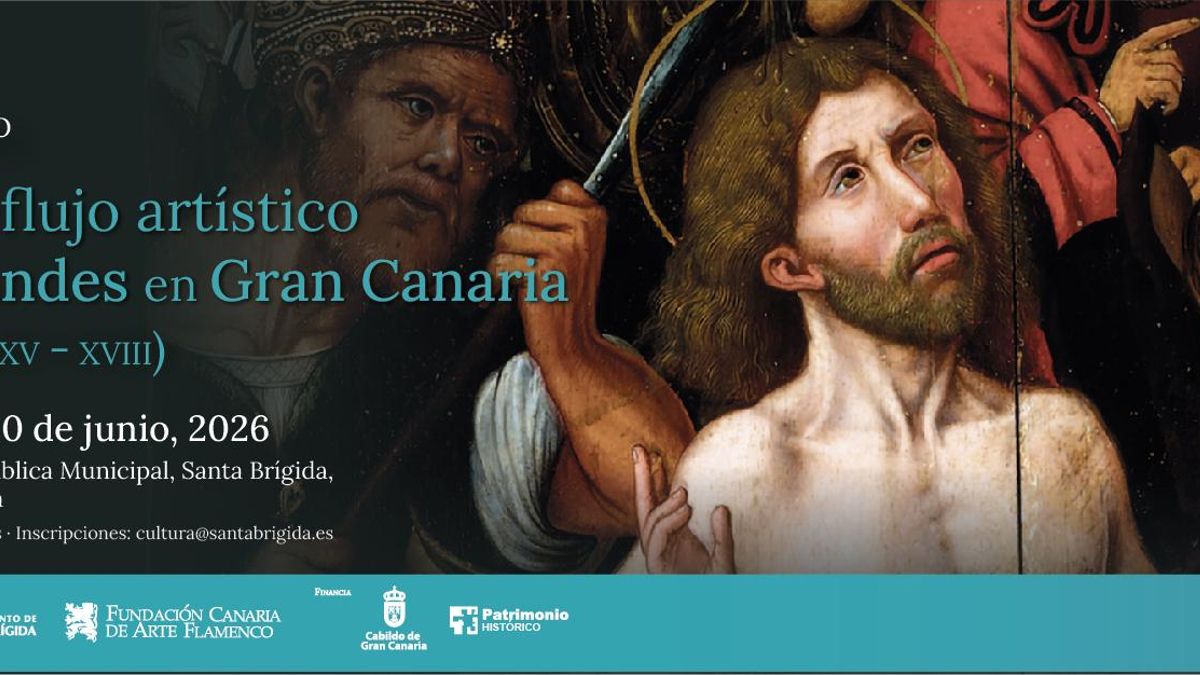
The Canary Islands hold one of the world’s most significant collections of Flemish art, works of extraordinary value and beauty rooted in a period of unprecedented cultural development across the archipelago. To raise awareness of this exceptional heritage, little known to much of the public, and to create narratives that help explain its historical context, Santa Brígida Town Council, in collaboration with the Canarian Foundation for Flemish Art, is holding a seminar from 18-20 June entitled “The Artistic Influence of Flanders in Gran Canaria (15th-18th Centuries)”. The event will take place at the Villa Municipal Library and is funded by the Island Directorate of Historical Heritage, part of the Presidency and Sustainable Mobility Department of the Cabildo of Gran Canaria.
A meeting point for experts and enthusiasts
The conference, aimed at both the general public and specialists, will turn Santa Brígida into a three-day meeting point for researchers, historians, conservators and art lovers. Its purpose is to promote access to a heritage held in churches, museums and private collections, and to boost quality tourism linked to knowledge and cultural dissemination.
The sugar trade that brought Flemish masterpieces
When ships from the archipelago arrived at the port of Antwerp laden with sugar, the expansion of sugar mills on the islands went hand in hand with the settlement of Flemish families drawn by the prosperity of this crop. They brought with them altarpieces, goldsmith pieces, missals, choir books, embroideries, sculptures and paintings of extraordinary quality. Thanks to this patronage, the Canary Islands today preserve works by some of the most important painters of the European Renaissance and Baroque, including Joos van Cleve, Hendrick Van Balen, Pierre Pourbus, Pieter Coecke van Aelst and Lambert Lombard, painters to princes, bishops and kings.
Seminar programme
Coordinated by art historians José Andrés Lorenzo Palenzuela and Ricardo Suárez Acosta, the seminar will bring together experts who will address the significance of Flemish art in the island from different perspectives.
Opening day: Thursday 18 June
18:45 Official opening by the Island Director of Historical Heritage, Sebastián López García; the Councillor for Culture and Historical Heritage of Santa Brígida Town Council, Avelina Fernández Manrique de Lara; and the President of the Canarian Foundation for Flemish Art, Tomás Van de Walle Sotomayor.
19:00 Lecture: “Flemish Art on the Sugar Island: Gran Canaria and its Nordic Heritage”, given by Isabel Saavedra Robaina.
20:00 Lecture: “Art, Society and Heraldry: Flemish Family Emblems in the Canary Islands”, presented by Juan Ramón Gómez-Pamo y Guerra del Río.
Friday 19 June
19:00 Lecture: “From Bruges to Amsterdam: Flemish Art in the Canary Islands – Works, Workshops and Centres of Origin”, given by Jesús Pérez Morera.
20:00 Lecture: “A Different Perspective: Flemish Art in the Canary Islands through its Dissemination, Conservation and Management”, by Juan Alejandro Lorenzo Lima.
21:00 Lecture-concert: “Music from the Low Countries in the Canary Islands (15th-17th Centuries)”, by Carlos Oramas.
Saturday 20 June: Visit to a Van Cleve masterpiece
From 10:00 to 13:00, a trip to the Church of San Juan Bautista in Telde to see some of the most extraordinary jewels of Flemish heritage preserved in Gran Canaria. These include the famous triptych of The Adoration of the Shepherds, one of the most important works by Joos van Cleve, court painter to the kings of France and England and a major figure of the European Renaissance. During the visit, Iván Arencibia Rivero will give a lecture on the restoration of the Retablo de la Infancia de Cristo y Vida de la Virgen, a work of great delicacy and quality, followed by a “musical metaphor”.
How to attend
The town council has announced that those interested in attending can register by email at: [email protected].
What’s happening in the Canaries – straight to your phone
News, weather alerts and practical updates – direct from the islands, in English. We live here and know what’s going on – before the international media catch up. Everything lands on our WhatsApp channel – no middlemen, no algorithm. Curated for families, expats and travelers.

Sonora Festival 2026 draws 16,000 to Las Palmas

Two men injured in fall from wall in Playa de Troya
Tenerife-forged bell rings again in tiny Rioja village
Canarian journalists to discuss a world in conflict at Las Palmas theatre
Festival del Sur returns to Agüimes with theatre from three continents
Man, 24, seriously hurt in buggy crash on Gran Canaria track

Woman, 81, rescued from sea at Las Vistas beach in Adeje
Tenerife to receive ES-Alert volcano drill messages

Canary film Benito Pérez Buñuel to premiere in Venezuela