
Compiled with the help of artificial intelligence, based on Spanish-language information. Source below the article.
Farmers left high and dry
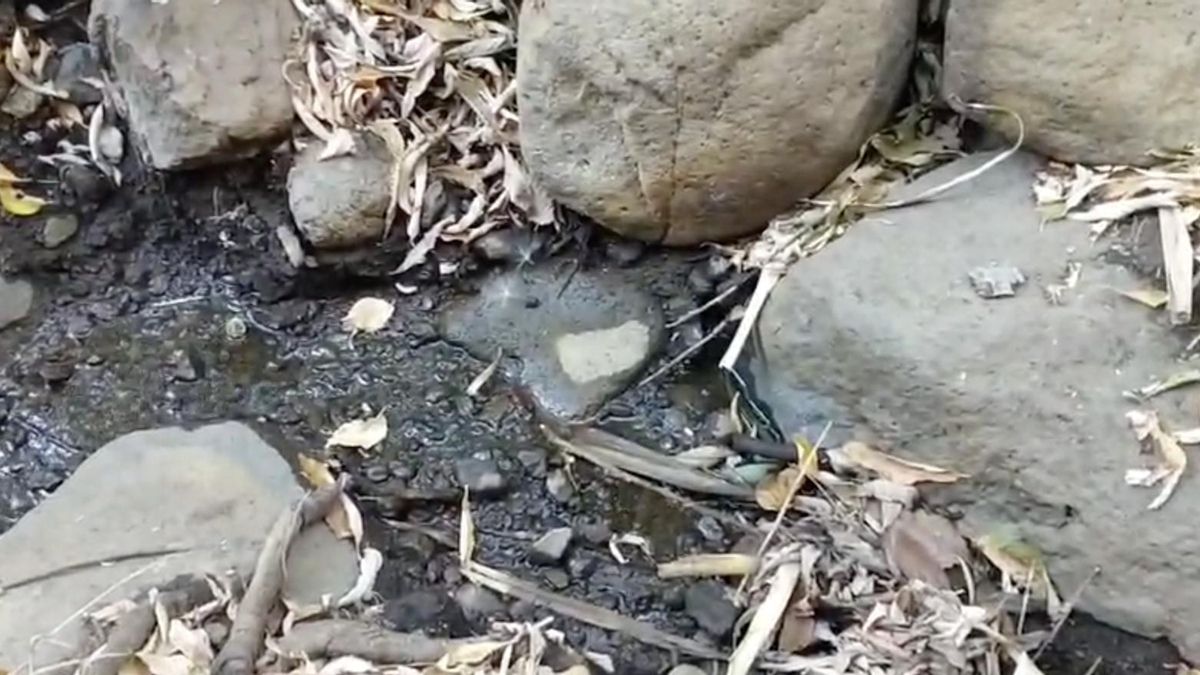
Residents of Los Arenales and Lomo Magullo in Telde, Gran Canaria, have been without water for their crops since March, after Storm Therese caused large rocks and branches to tumble into the Barranco de Los Cernícalos, blocking the usual channel used to distribute irrigation water. The situation is affecting more than 300 irrigators and their livelihoods, while also endangering a fragile ecosystem that is home to protected species, including the bird after which the ravine is named. The ravine runs through two protected natural areas: the Special Nature Reserve of Los Marteles and the Protected Landscape of Lomo Magullo.
“The water is buried; it seeps away through other areas and doesn’t reach where it needs to go,” explains Francisco Florido, a user of the Valle de los Nueve water community and a resident of Lomo Magullo. “There are people who depend economically on this type of farming, because their lives depend on it, both irrigation for crops and for animals, because there’s also livestock farming, an activity that relies heavily on water,” he adds. “Some plots in the area have managed to get water thanks to winter rainfall and water stored in the reservoir, but those with land, for example, at the entrance to the Barranco de Los Cernícalos, have lost all their crops.” Florido laments that not only has this year’s harvest been lost, but looking ahead, “these trees are going to be severely damaged.” He also fears for the natural environment, which he describes as “moribund and at high risk of wildfires.”
Asked whether he is satisfied with the explanations given so far by the various authorities with responsibility for the matter, he is blunt: “As far as I’m concerned, with institutions, I’ll believe it when I see it.”
A question of responsibility
Because the area is protected, three main institutions share responsibility for solving the problem: the Cabildo of Gran Canaria, to which the Insular Water Council is attached; Telde Town Hall; and the Government of the Canary Islands. This stems from how Law 4/2017 on Land and Protected Natural Spaces of the Canary Islands distributes duties between administrations: the regional government sets the regulatory and environmental framework and enforces compliance through inspections; the Cabildo manages the protected natural space and coordinates the management of resources such as water; and the town hall handles urban planning and monitors land use within the municipality.
Asked by this publication, the Regional Ministry for Ecological Transition of the Government of the Canary Islands said it is a matter that “concerns mainly the island Cabildo,” without detailing whether there has been any inter-institutional contact to coordinate and ensure the protected space and the species it harbours are not harmed by the disruption to the usual watercourse.
Provisional pipeline proposed
The Cabildo of Gran Canaria, for its part, told Canarias Ahora that the Insular Water Council and the Cabildo’s Environment Department authorised the Valle water community to install a temporary pipeline to bypass the obstruction and transfer water from where it had been held back to the irrigation channel, thereby supplying water to farmers and livestock keepers. Subsequently, the president of the water community contacted the Insular Directorate for Water Security, which falls under the Cabildo’s Department of Primary Sector, Food Sovereignty and Water Security, to say the authorised proposal needed updating because the water no longer reaches the point where the pipeline installation was originally due to start.
“The technical report is being updated to reflect the new proposal and has been submitted to the Insular Water Council and the Environment Department. It is awaiting a decision, which will come shortly,” the island government said. They add that the Department of Primary Sector, Water Security and Food Sovereignty is “arranging a visit with technicians from the administrations that could be involved to assess on site the measures to be taken and the responsibilities each one must assume.”
Finally, in comments to Canarias Ahora, Telde Town Hall maintains that Juan Martel, as councillor for the Cumbre District, “remains in contact with the water community and the affected residents and farmers.” It explains that the Governing Board unanimously approved requesting a coordination meeting between the Town Hall, the Cabildo, the Insular Water Council, the Government of the Canary Islands, the water community and those affected. “The aim is for that meeting to put the situation of the watercourse and the water on the table, determine what action is needed, which administration should take responsibility for each part, and establish a timetable,” it says. “The Town Hall will act in everything within its remit and continue to act as an intermediary to keep the matter moving forward. There have also been proposals to carry out a comprehensive review of the ravine’s condition and the public-use elements affected.” The council stresses that “at this point it would not be prudent to give a specific date for a solution, because it does not depend on the Town Hall,” but the goal is that once that technical and institutional meeting takes place, residents can be given a concrete answer and a realistic timetable.
‘We’ve lost our trees’
Diego Suárez, a resident of the Lomo Magullo neighbourhood, has already written off his fruit trees. He points out that the water community no longer has enough workers or capacity to carry out the ravine cleaning work that, through the installation of a temporary hose, has allowed a few litres of water to reach the areas of La Colomba and Charco Hondo.
The piped solution, however, can only ever be provisional under the 2006 Master Plan for the Special Nature Reserve of Los Marteles, into which the Barranco de Los Cernícalos runs. “The possibility of piping the water flow of Los Cernícalos would contradict the conservation and restoration objectives of the wetlands and the functioning of their entire associated ecosystem. The persistence in Gran Canaria of one of the few remaining examples of running water that enables the survival of an exceptional gallery forest (willow groves, Bermudian buttercups, reed beds, etc.) currently relies on this traditional water transport system,” the document reads.
The residents who have organised in the affected neighbourhoods to demand a solution are fully aware of the two sides of this problem: the lack of irrigation water and saving the protected space, knowing that both go hand in hand. “That the ravine gets wet and that we irrigators have water to water with,” explains resident Diego Suárez. “Because the water doesn’t come down on its own, as there’s a lot of sediment, the action plan is to clean the whole channel, and that’s a lot of work to fall on just the two workers of the water community,” he says.
The residents want the matter treated as urgent, with the watercourse restored as soon as possible and “the paths where there are rocks being held up by tree roots” repaired. This resident is referring to the risks currently involved in walking along the scenic corridor that crosses the ravine. “Let us be able to irrigate and have normality restored as soon as possible.” They will continue to demand a solution and want to be included in any meetings held, hoping for a return to the time when the only talk of the village and its water happens in August, and the only sound in the ravine is that of water and the song of the kestrels.
What’s happening in the Canaries – straight to your phone
News, weather alerts and practical updates – direct from the islands, in English. We live here and know what’s going on – before the international media catch up. Everything lands on our WhatsApp channel – no middlemen, no algorithm. Curated for families, expats and travelers.

Canary Islands sea hits second-hottest year on record

Legal bid to halt tree felling in Santa Cruz’s La Salud

Fiesta del Charco: A journey through La Aldea’s past

Corralejo dunes power line set for removal

ULPGC launches 14 research projects at Las Canteras

TMT will never be built, says Canary Islands astrophysics chief

Pedro Duque: Canarias is the “ultimate dream” for rockets

Court blow to Tenerife motor circuit project
La Palma faces new volcanic risk planning deadline
