
Compiled with the help of artificial intelligence, based on Spanish-language information. Source below the article.
ULPGC to study Las Canteras and El Confital with 14 lines of research
The University of Las Palmas de Gran Canaria (ULPGC) is to develop 14 lines of research examining coastal dynamics, climate change and pollution at Las Canteras and El Confital. The project has a budget of €140,000, funded in equal parts by Las Palmas de Gran Canaria City Council and the Canary Foundation for the ULPGC Science and Technology Park.
The city council has renewed its collaboration agreement with the university for the sixth consecutive year, with the aim of making progress on the conservation and sustainable management of these two flagship natural spaces in the Gran Canarian capital.
Two programmes: research and citizen participation
This year the research will be organised through two initiatives: ‘Investiga Las Canteras’, focused on the scientific study of the coastline, and ‘Cuida Las Canteras’, aimed at citizen participation and transferring knowledge to society.
The ‘Investiga Las Canteras’ programme will bring together a multidisciplinary team of more than 30 professors, doctors, lecturers and researchers in training from various university institutes. Among the main lines of study are analysis of the effects of climate change and the development of adaptation measures to address sea-level rise, as well as monitoring of microplastics and organic pollutants in the coastal environment.
The work will also address sedimentary dynamics and the hydrodynamics of the coastline, fundamental aspects for understanding how the beaches evolve and the processes affecting these ecosystems. The project also includes the automation of simulations to identify possible sources of bacterial contamination, with the aim of improving understanding of the factors that can affect the area’s environmental quality.
Artificial intelligence to analyse beach use
The initiative will also incorporate advanced technological tools, including artificial intelligence systems for automated image analysis. These tools will make it possible to characterise patterns of use and occupation of the coastal space, providing information on how the beaches are used and how the presence of users in these environments evolves.
For its part, the ‘Cuida Las Canteras’ programme will seek to bring the research findings closer to the public and encourage social participation in conserving the coastline. Planned actions include university placements and final-year undergraduate (TFG) and master’s (TFM) projects, the organisation of working meetings and the development of citizen science initiatives for environmental monitoring.
The programme will also promote the active participation of the university community in the Las Canteras Ecotourism Micro-area, strengthening collaboration between researchers, institutions and civil society.
More than 634 protected hectares
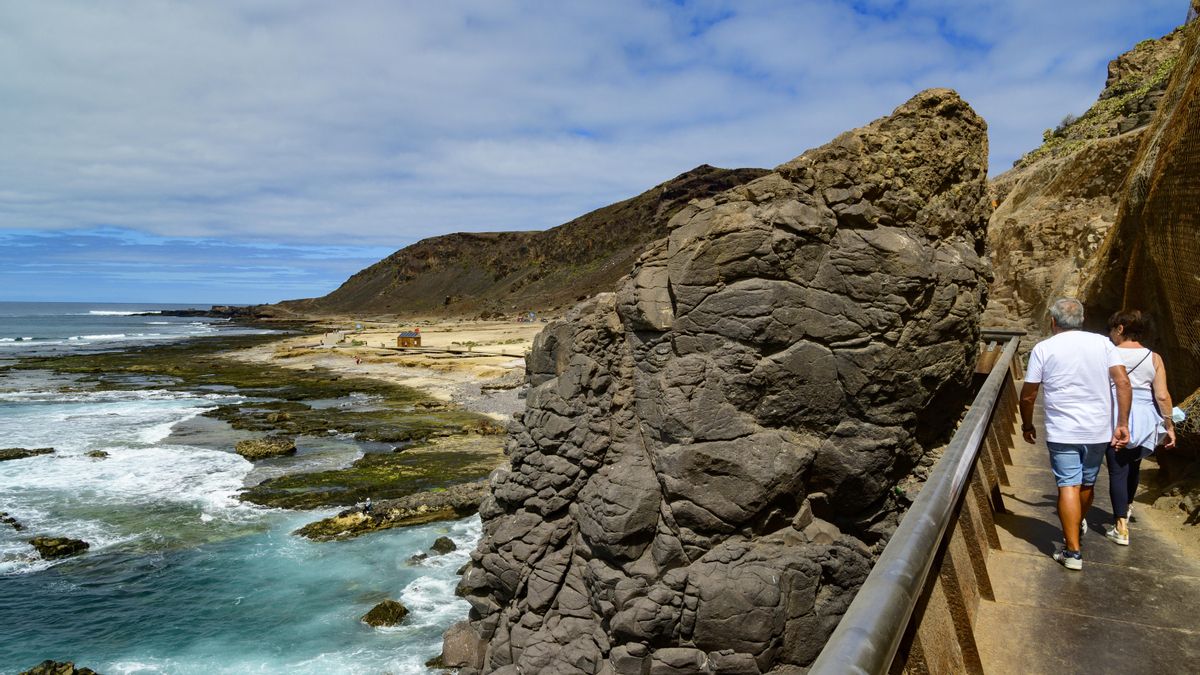
The area covered by the study and management spans more than 634 hectares in the north-eastern sector of Gran Canaria and is protected.
The councillor for Ciudad de Mar, Pedro Quevedo, highlighted the continuity of the agreement between the city council and the ULPGC, now in its sixth consecutive year. “Reaching six years of continued collaboration shows that this alliance is now an indispensable and consolidated pillar for the management of our most valuable natural heritage,” he said.
Quevedo also defended the importance of basing the protection of Las Canteras and El Confital on scientific knowledge. “We do not conceive of the protection of Las Canteras and El Confital from intuition, but from the rigorous knowledge that science provides us with,” he stated.
What’s happening in the Canaries – straight to your phone
News, weather alerts and practical updates – direct from the islands, in English. We live here and know what’s going on – before the international media catch up. Everything lands on our WhatsApp channel – no middlemen, no algorithm. Curated for families, expats and travelers.
Canary Islands sea hits second-hottest year on record
Legal bid to halt tree felling in Santa Cruz’s La Salud
Fiesta del Charco: A journey through La Aldea’s past

Corralejo dunes power line set for removal

TMT will never be built, says Canary Islands astrophysics chief

Pedro Duque: Canarias is the “ultimate dream” for rockets

Court blow to Tenerife motor circuit project
La Palma faces new volcanic risk planning deadline

Fuerteventura launches campaign to rescue young shearwaters
