Compiled with the help of artificial intelligence, based on Spanish-language information. Source below the article.
Approval for Arona solar plant despite environmental concerns
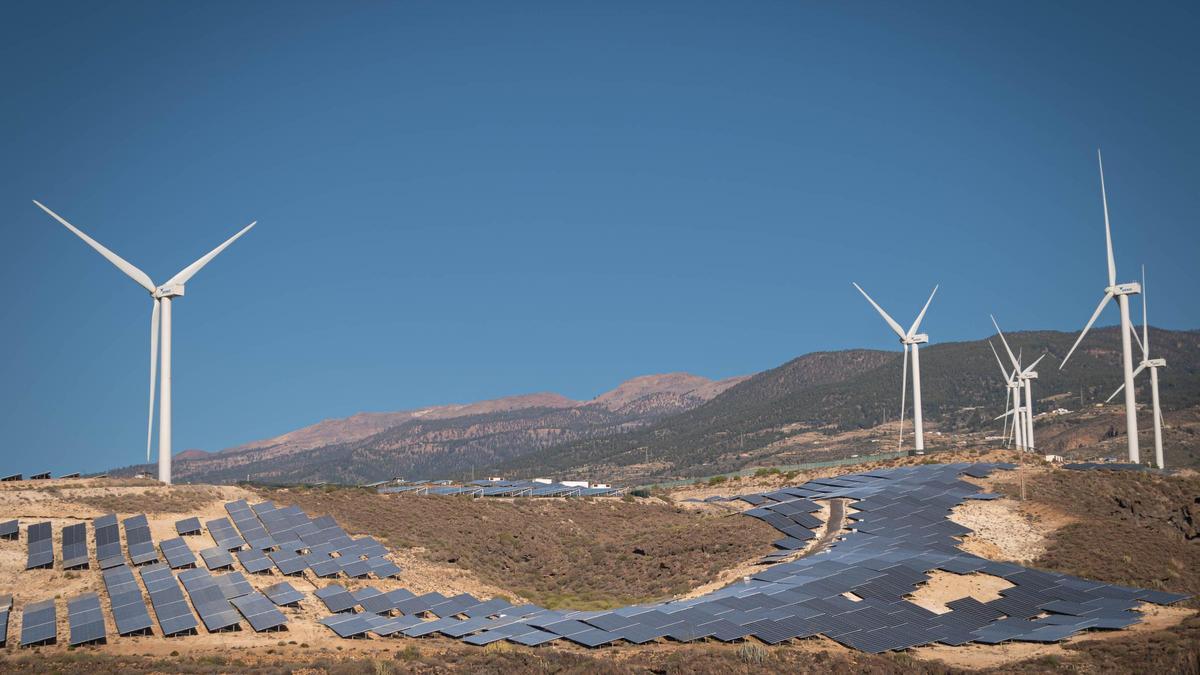
The Canary Islands Government has given the green light to a new large-scale photovoltaic plant in Arona, which will occupy nearly five hectares of land and cover an area with high agricultural potential, as well as spaces requiring environmental protection, with solar panels.
With a budget exceeding €259,000, the project, promoted by Disa, will have a capacity of almost five megawatts and will require a medium-voltage power line to carry the electricity to the grid. This route crosses protected ravine areas and has generated disagreements between different administrations.
Conflict over power line route
The main conflict lies in the fact that this evacuation line is intended to run through land that the Tenerife Island Planning Plan classifies as Areas of Environmental Protection, where this type of installation is generally prohibited. The Cabildo of Tenerife considered that these sections did not fit with the island’s planning framework and proposed studying an alternative route, as well as demanding more detailed justification to determine the environmental and landscape impact that an infrastructure of this scale could generate.
The route affects a habitat of community interest made up of different native species, such as the sweet tabaiba and the balera bushes, the latter associated with the bed of the Llano Azul ravine. For this reason, the report from the Directorate General for the Natural Environment obliges Disa, as a protection measure, to reinforce the marking of sensitive areas and to prevent any spillage or discharge into the watercourse during the works.
Agricultural land concerns
In the same vein, reports from the Cabildo warned that the plant means abandoning the potential agricultural use of these lands, which are being considered for a future Strategic Agricultural Reserve. Disa argued during the process that the plot has been disused for more than three decades, lacks a nearby irrigation network, and that its characteristics make it more suitable for solar production. The Cabildo, however, warned that the accumulation of photovoltaic projects could progressively reduce the land available for recovering agricultural activities.
The Arona Town Council has also expressed reservations about the location of the plant. The council considers these lands to be “strategic for the future of the municipality” and for the possible expansion of nearby settlements, which are located 220 metres away. For this reason, they warn of the landscape impact due to the proximity to residential areas and maintain that it is not appropriate to install an infrastructure of these characteristics “practically right next to” homes. They insist they will continue to defend the preservation of these soils within their powers.
Declared of general interest
Despite these discrepancies, the project found a way to circumvent the incompatibilities detected with the planning rules. In January 2025, the Canary Islands Government declared the installation to be of general interest and, subsequently, through Decree 101/2026, approved its execution and ordered the modification of the affected planning. The decision was justified by the need to boost electricity generation from renewable sources in the Canary Islands.
Accordingly, the authorisation now declares the plant to be of public utility, a status that takes on special relevance because it allows action to be taken on the land needed to build the connection between the installation and the grid. The problem is that Disa, although it owns the plots where the panels will be placed, does not own much of the land through which the evacuation line will run. Therefore, the declaration allows for compulsory purchase of the affected assets and rights if agreements cannot be reached with their owners, making the execution of the connection possible.
Timeline and conditions
To this end, the energy company will have a maximum period of five years from obtaining the access permit to execute and bring the installation into service, with an exceptional extension of up to eight years. However, the authorisation does not allow Disa to begin works immediately. The permit is conditional on complying with a series of environmental, heritage and technical requirements that must be completed before entering the construction phase.
These include incorporating a specific section into the execution project on compliance with the island ordinance regulating photovoltaic and wind installations, as well as preparing a study of the heritage values of the land, including an archaeological survey to verify that no remains or elements of interest exist. Additionally, environmental controls will need to be carried out to assess the impact on the stone curlew, a bird species particularly sensitive to land transformation and present in the vicinity of the installation. The monitoring should make it possible to verify whether the plant causes the displacement of these birds, loss of habitat or difficulties for their movements, and for their subsequent protection, the fencing must incorporate visible signs interspersed in the mesh to reduce the risk of collision, along with night-time lighting using presence-activated systems.
The Directorate General for Public Health has also recommended reducing dust, noise and vibration emissions during the works and carrying out measurements of electromagnetic fields in areas close to the route of the evacuation line. Native flora that may be affected by earthworks must also be protected, with plants being moved to nurseries for later reintroduction in areas free of the installation.
Project details
If construction ultimately goes ahead, the plant, named Llano de los Bebederos I, will feature 8,610 photovoltaic modules of 700 watts each, capable of harnessing solar radiation on both sides, installed on structures anchored to the ground.
What’s happening in the Canaries – straight to your phone
News, weather alerts and practical updates – direct from the islands, in English. We live here and know what’s going on – before the international media catch up. Everything lands on our WhatsApp channel – no middlemen, no algorithm. Curated for families, expats and travelers.
El Bejeque in Las Canteras adds sea to its fire

Siam Park Gran Canaria must build its own desalination plant
Fuerteventura’s biggest resort to open on 1 November
Gran Canaria to teach tourism history in schools
Canary Islands see 0.3% rise in foreign tourists in August

Row over 368-bed hotel project in La Gomera
Spanish astronaut trains in Lanzarote for Moon mission

Tivoli La Caleta hosts first red tuna Kaitai in Canarias
La Laja natural pools reopen in Las Palmas