Compiled with the help of artificial intelligence, based on Spanish-language information. Source below the article.
Breaking down language barriers in island communities
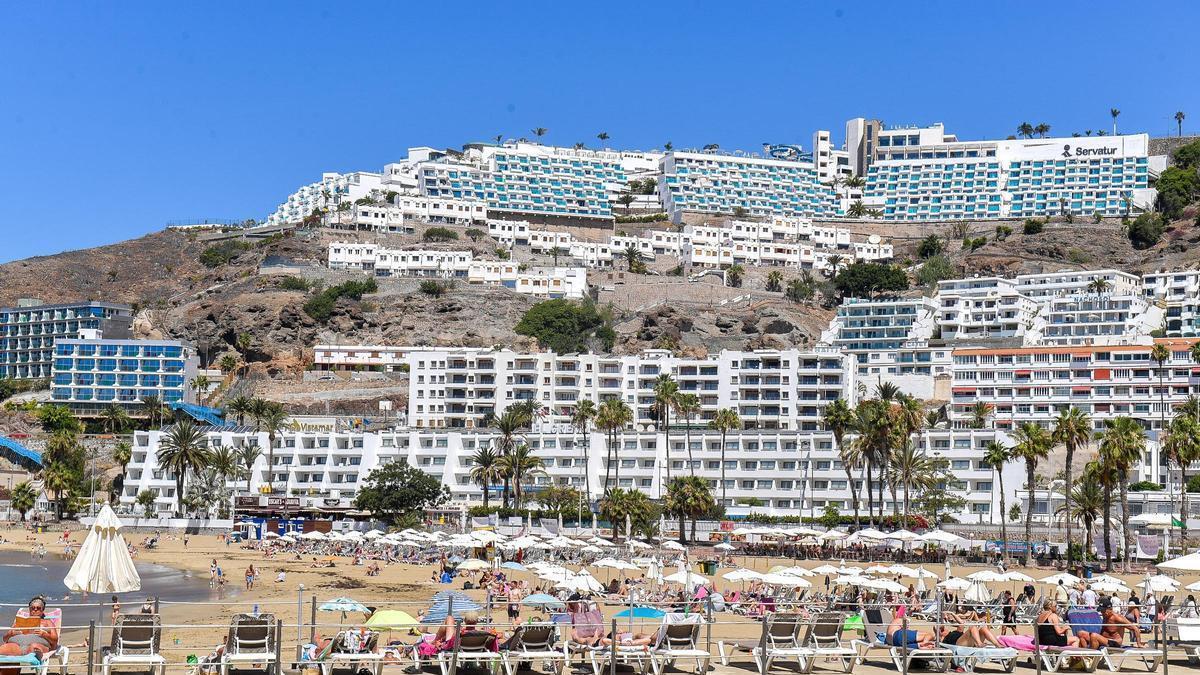
Owners’ meetings, special levies, building works or the approval of accounts can become difficult matters to tackle when a portion of the neighbours do not speak Spanish. In the south of Gran Canaria, where a sizeable number of foreign property owners are concentrated, many communities turn to interpreters to ensure everyone can follow the meetings and understand the decisions affecting their homes.
Jenni Hymoff has spent 31 years dedicated to translation and interpreting and knows this reality first-hand. Together with her business partner, Ana Rial, she founded Ari Traducciones, the first company of its kind to establish itself in the municipality of Mogán. She currently works with a range of owners’ communities, mainly in the south of the island. Hymoff estimates they attend some 35 to 40 different communities, some of them several times a year, depending on the number of meetings or the complexity of the issues to be addressed. “All kinds of foreign owners have bought property here and they need to be able to communicate,” she explains.
Her work spans everything from upmarket apartment complexes to buildings constructed in the 1970s, where foreign owners with very diverse financial profiles live side by side. The common thread, however, is the difficulty of following a meeting in Spanish when you do not master the language.
When interpreting becomes essential
As the professional points out, her involvement comes mainly at annual general meetings and extraordinary meetings. The former must be held at least once a year for matters such as the approval of accounts or the election of the management committee, while the latter can be convened when the need arises to make other decisions. “A breakdown, the installation of a ramp, the replacement of a lift or any other work involving an extraordinary expense can lead residents to hold another meeting,” she notes.
It is precisely at those moments that interpreting takes on particular importance. “The Spanish horizontal property law is quite strict and they need to know what is happening, what decisions are being made, what the future of the complex looks like and where they are going to have to spend money,” Hymoff details.
However, the difficulty is not limited to transferring what is said during an assembly literally from one language to another. “Spanish horizontal property regulations establish procedures and obligations that can feel unfamiliar to those coming from other countries. Foreigners find it very hard to understand that certain things have to be done by protocol because the law requires it,” she points out. These include matters such as approving accounts, electing a new management committee or complying with each community’s internal rules.
Clarifying more than just words
The language barrier can also end up generating misunderstandings between neighbours. So much so that Hymoff says she sometimes has to ask permission to expand on an explanation. “If someone says something is black and I can see it is white, I have to say it is black, but often the committee takes for granted that a concept has been understood when the foreign owner has not understood it, and I have to clarify why something is being decided one way or another,” she comments.
This company provides services to owners of various nationalities. The languages the founders work with most are English, German and Norwegian, although they also have collaborators to translate other languages. In this way, they manage to offer translations in around twenty languages. “Right now, in the south of the island there are many Italian owners. I, for example, do not work with Italian and they usually manage quite well in Spanish, but when they need a translation service we turn to one of our collaborators,” Hymoff reports.
A vocation rooted in multiculturalism
Her connection with languages, however, goes back much further. Jenni Hymoff grew up in a multicultural environment – her mother was German and her father Russian – a circumstance that ultimately influenced her professional vocation. “In this job it is very important that people are well prepared and have a good command of languages. Often people learn to be a translator, but being an interpreter is not the same thing,” she clarifies.
Beyond the interpreting work during meetings, the increase in foreign owners also raises, in her view, the need to improve the information these residents receive. “They are often sent minutes in Spanish and foreigners do not know what to do with them,” she adds. It should be noted that translating a document several pages long for a single owner can involve a significant cost. For this reason, she suggests that several neighbours could ask the committee for that translation to be covered as a community expense rather than an individual one.
Beyond the meeting room
Translation and interpreting can also come into play outside residents’ meetings. One example is rentals. In these cases, the company produces translations of contracts so that both parties can understand what they are about to sign. “It is very important that the foreign person understands the content of the contract before signing it to avoid later disputes over what was agreed,” she asserts.
Thus, the mission of these professionals sits at an intermediate point between translation and linguistic mediation. In communities where owners of different nationalities coexist, understanding what is being voted on, how much a building project will cost or what obligations each resident has is not just a matter of language; it also involves understanding how the residential complex in which one has bought a home operates. “In reality, everything is somewhat wrapped up in a lack of knowledge of both the regulations and the language,” Hymoff summarises.
What’s happening in the Canaries – straight to your phone
News, weather alerts and practical updates – direct from the islands, in English. We live here and know what’s going on – before the international media catch up. Everything lands on our WhatsApp channel – no middlemen, no algorithm. Curated for families, expats and travelers.

Canary Islands approves new €1.6bn development fund

Mogán mayor says her €65,000 salary is too low

Abandoned cars in Canary Islands: hundreds left to rot
Work resumes on 27 affordable rental homes in Las Palmas
Los Realejos residents fight on against propane gas plant

Canarias among Spain’s poorest regions as 36.2% live on low incomes

Canary Islands bananas lose ground to imported bananas
Canary Islands bottom of Spain’s social housing table

Three migrant boats reach Canary Islands in 24 hours