
Compiled with the help of artificial intelligence, based on Spanish-language information. Source below the article.
A bleak summer for Canary Islands bananas
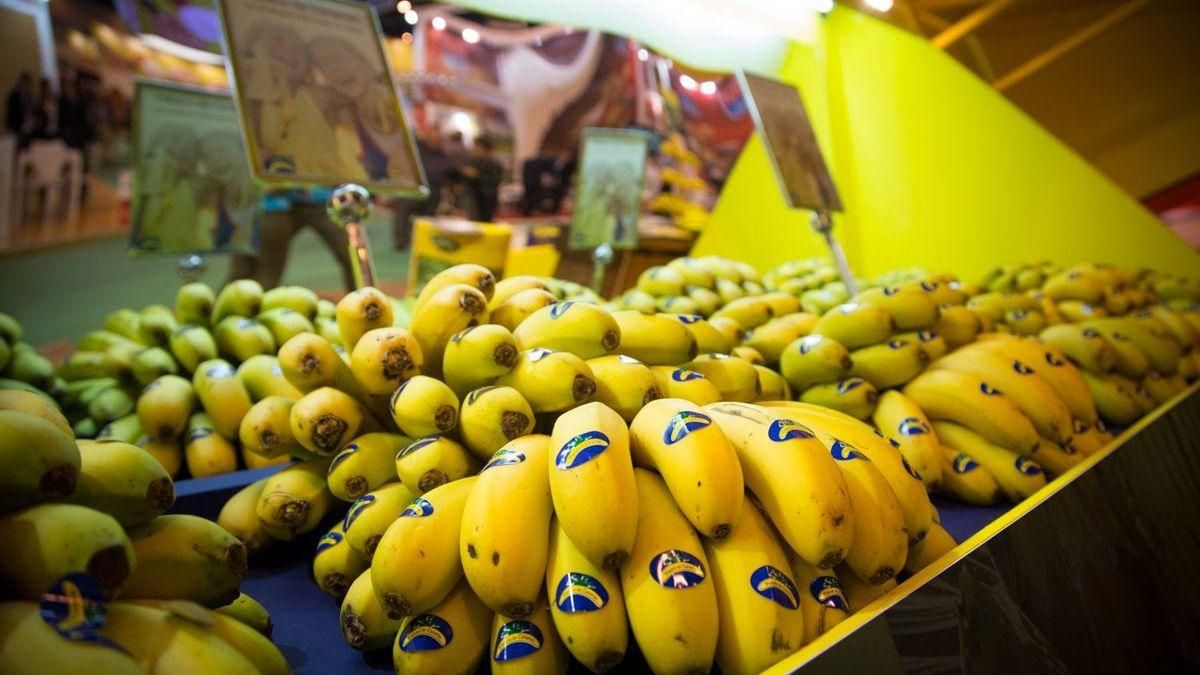
This August has been a black month – or perhaps a very black one – for the Canary Islands banana, a period that habitually, through a combination of lower demand for the fruit, a greater supply of fresh produce and the absence of corrective measures in the islands, sends prices received by local farmers tumbling. This is the so-called farm-gate price, the amount the local producer receives once all marketing costs have been deducted and before agricultural costs are taken into account, currently standing at between 0.80 and 0.90 euros per kilo, though still subject to revision.
The fall has been so intense this summer – in several weeks the figure has dropped below 0.40 euros per kilo – that the average farm-gate prices achieved have become ruinous for local banana growers for their fruit sold in mainland Spain and the Balearic Islands, where 90% of the Canary Islands crop goes. But this loss of capital, or such a pronounced loss of income for many island growers, once again over almost three months of summer, has not come alone. Far from it.
Imported bananas now dominate the Spanish market
Other bad news has certainly piled on top, but one development is especially significant and even demoralising: the Association of Producer Organisations of Canary Islands Bananas (Asprocan) has just acknowledged in a post on its Facebook profile that, according to data from market specialists Kantar, the Canary Islands banana accounted for only 47% of the market share for this fruit in mainland Spain and the Balearic Islands – that is, of the combined banana and plantain market (the latter being the imported variety). That percentage for the island fruit leaves the imported variety with no less than 53% of the business, and it does so in territory that was once a protected market reserved exclusively for bananas originating in the Canary Islands, as was the case until July 1993.
According to the same post, always based on information published by Asprocan, “August data [last month] show a recovery in volume share [for the local fruit in the mainland market] of 7% compared with June, and of 2.7% compared with July.” That is the part Asprocan highlights as positive.
Official customs figures paint an even gloomier picture
However, if the analysis of the banana’s market share in mainland Spain is carried out using official data provided by the Directorate-General for Customs, a body dependent on the Spanish government, then up to June, in the first half of the year, the imported banana was already absorbing between 54.07% and 64.18% of that same market. This range worsens for the interests of the island fruit if the cumulative total is calculated up to July, when the percentages rise from 54.15% to 64.63%.
Given these figures, it can be concluded that the Canary Islands banana’s market share currently sits closer to 40% than 50% (what Kantar indicates for August 2026), with the remaining 60% going to the imported banana. Up to last June, the Canary Islands had shipped 177,689 tonnes of bananas to the rest of Spain, 14,872 more than in the same period of 2025 (a rise of 9%), while 241,582 tonnes of imported bananas had been brought in, 30,541 more than between January and June of the previous year, an increase of 14.5%.
Production decline and the crisis of recent years
The Canary Islands produced 440 million kilos (440,000 tonnes) in 2023, a year that set a historic record for fruit and one of very low prices, among the worst remembered in recent times. In 2024, the marketed supply fell to 425 million kilos, a normal limit, while in 2025 there was another decline to 375 million. The year 2025 was not an entirely bad campaign, but few have resembled the good or very good years of 2021 – the year of the La Palma volcano eruption – and 2022, the latter described as excellent by almost everyone.
The farm-gate price crisis of 2023, the worst of recent annual campaigns, led that year to 26 million kilos of fruit being withdrawn or taken off the market. There was also forced restriction of the island supply at source in August 2026.
What’s happening in the Canaries – straight to your phone
News, weather alerts and practical updates – direct from the islands, in English. We live here and know what’s going on – before the international media catch up. Everything lands on our WhatsApp channel – no middlemen, no algorithm. Curated for families, expats and travelers.

Los Realejos residents fight on against propane gas plant

Canarias among Spain’s poorest regions as 36.2% live on low incomes

Canary Islands bottom of Spain’s social housing table

Three migrant boats reach Canary Islands in 24 hours

Canarias proposes 10-year residency rule to buy property

Gran Canaria hotel maid arrested over stolen gold necklace
Canary Islands plan 10-year residency rule to buy a home

Canary Islands launches empty homes rental scheme

Canary Islands push to ban non-resident property purchases
