
Contamination returns to Playa Jardín
Playa Jardín, the main bathing area in the Tenerife municipality of Puerto de la Cruz, has suffered another contamination episode just weeks after reopening following a 10-month closure due to sewage spills between 2024 and 2025. The wastewater was detected between 22 and 24 June and has been recorded in Náyade, Spain’s national bathing water information system, a digital health management tool coordinated by the Ministry of Health.
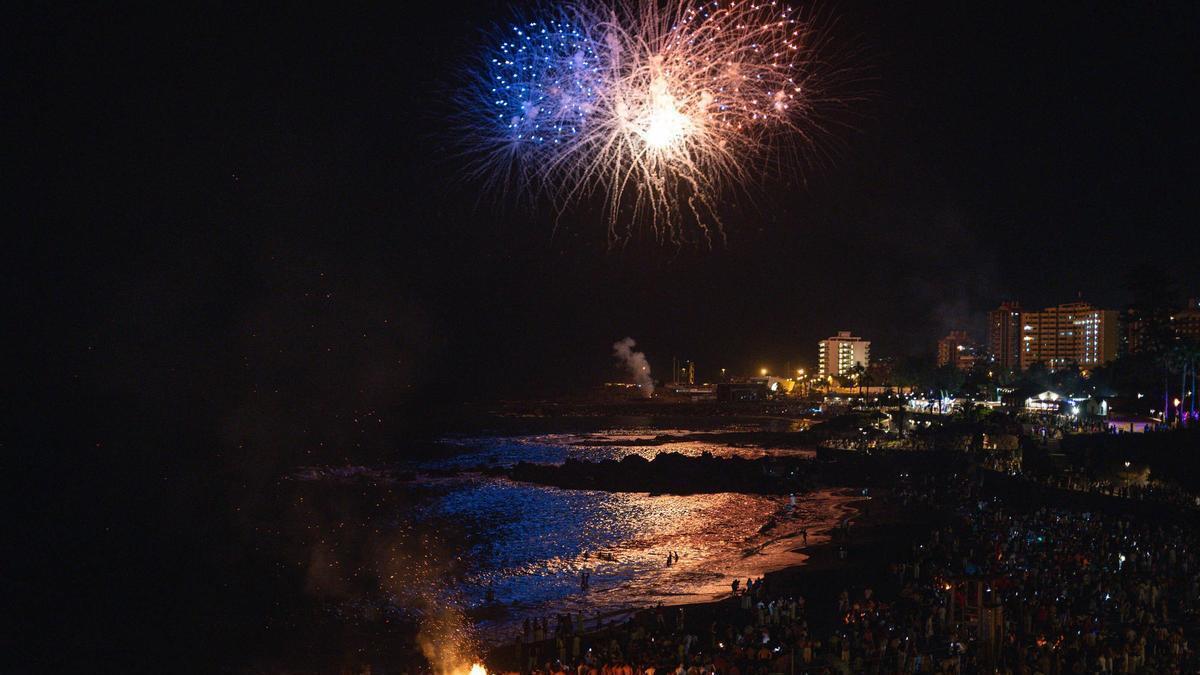
The portal reports the detection of “microbiological contamination” – the presence of toxic microorganisms such as bacteria, viruses, fungi and parasites commonly found in wastewater that can be harmful to human health – and clarifies that it was of “short duration”. Náyade adds that bathing was “temporarily” prohibited. The information was released on Thursday 23 July 2026 by the PSOE in Tenerife, which denounced that during those days “the beach was not closed nor was the public informed, despite the incident coinciding with the San Juan night celebrations, which brought thousands of people to the coast of Puerto de la Cruz”.
Political backlash and demands for answers
The secretary general of the PSOE in Tenerife, Tamara Raya, along with the party’s secretary general and spokesperson in Puerto de la Cruz, Marco González, demanded explanations from the Cabildo de Tenerife, the Puerto de la Cruz town council and the Directorate General of Public Health “for failing to close the three coves of this natural complex or to warn residents and visitors of this health threat”. Raya announced that the Socialist Group will also request an extraordinary plenary session of the Cabildo in August so that its president, Rosa Dávila, can explain why the measures announced as urgent over a year ago to resolve the contamination problems at Playa Jardín “have still not begun, and what steps she intends to take in response to this new episode”.
The leader of the Tenerife Socialists, in her criticism of the Cabildo, refers to the fact that in March 2025 the island corporation announced, via an emergency procedure, the rehabilitation of the Punta Brava submarine outfall, connected to the treatment plant in the same neighbourhood, right next to Playa Jardín, and identified as the main source of the 2024 and 2025 spills. However, official documentation sent to the PSOE by the Consejo Insular de Aguas (Island Water Council), a body dependent on the Cabildo, confirms – according to Tamara Raya – that “as of 2 June 2026, the works had not yet begun”. “We Socialists publicly denounced this delay, and barely twenty days later, Playa Jardín recorded a new episode of microbiological contamination.”
Previous contamination and ongoing legal investigation
One of the spokespeople at the PSOE press conference, Marco González, was mayor of Puerto de la Cruz when the previous contamination episode occurred, forcing Playa Jardín to close for 349 days between 3 July 2024 and 17 June this year. A month later, he was replaced as mayor by Leopoldo Afonso (PP) following a vote of no confidence. This case – the longest-lasting sewage spill to the sea in Tenerife – has led to a judicial investigation. The proceedings remain in the preliminary investigation phase at Court of First Instance number 2 in Puerto de la Cruz. Those under investigation include Marco González himself, the island’s councillor for Natural Environment, Blanca Pérez, and the manager of the Island Water Council, Javier Davara.
Official response and further inquiries
Contacted by this newspaper, the governing teams of the Cabildo de Tenerife and the Puerto de la Cruz town council clarified that they will provide the appropriate explanations in response to the PSOE’s accusations at a press conference on Friday. Meanwhile, the Socialist Municipal Group has submitted two requests for information: one addressed to the Puerto de la Cruz town council and the other to the Directorate General of Public Health. The aim is to obtain the analysis parameters, communications between the administrations and the technical documents that led to the opening and closing of the incident.
Marco González stressed that “there is no record that the town council ordered the closure, informed the public or took any public action during the days the incident remained active”. “What is clear is that there was no closure order and no communication to the population,” the former socialist mayor emphasised, adding: “The beach was not closed as Public Health of the Government of the Canary Islands indicated, and the municipal government remains in total silence,” he denounced. Public Health is the body with the authority to warn of contamination episodes and can advise the closure of bathing areas, a decision that must be taken by the local councils. González particularly highlighted that the episode coincided with the San Juan night celebrations, organised by the town council itself, when thousands of people came to the municipality’s coastline. “We want to know who had access to the information passed on by Public Health, what actions the town council took, whether any protocol was activated and whether any administrative measure was adopted after receiving the notification,” he added.
What’s happening in the Canaries – straight to your phone
News, weather alerts and practical updates – direct from the islands, in English. We live here and know what’s going on – before the international media catch up. Everything lands on our WhatsApp channel – no middlemen, no algorithm. Curated for families, expats and travelers.

Calima pre-alert declared across all Canary Islands

Tuesday: calima and cloud as temperatures dip

Monday: calima and 34C heat across the Islands

Canary Islands weather: Calima, storms and 34°C heat

Sunday: calima and 30°C as alisio winds strengthen

Calima and 30C heat to hit the Canary Islands this Sunday

Calima and 30°C heat to hit the Canary Islands this Sunday

Friday: trade winds return and skies clear

Rain alert declared for three Canary Islands from midnight
