Octopus farm plan in Gran Canaria faces collapse as port authority initiates cancellation
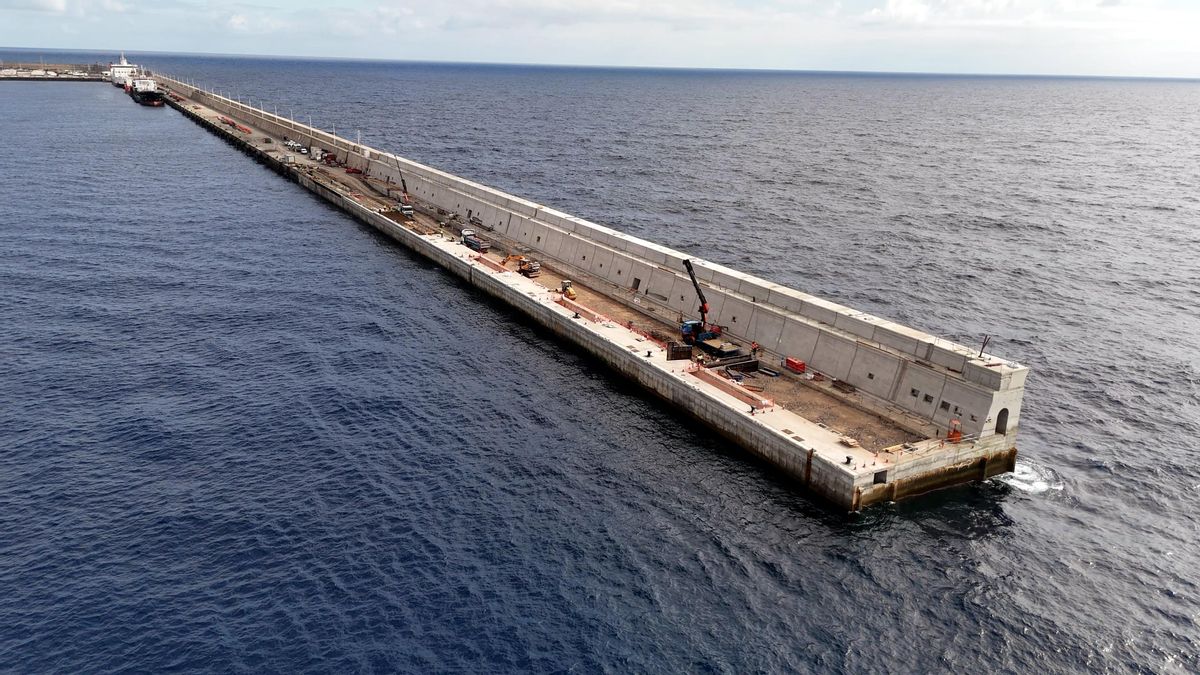
The controversial project to build the world’s first intensive octopus farm in the Canary Islands is on the verge of being abandoned. The Port Authority of Las Palmas began proceedings on 8 May to declare the public domain concession application submitted by the company Nueva Pescanova as null and void.
This move comes after the company admitted on 14 April, just a few weeks earlier, that it had not yet started the process of submitting the required standard environmental impact assessment, despite insisting it remained interested in the concession. In the face of this inactivity, the authority, chaired by Beatriz Calzada of the Canarian Coalition, has invoked Article 95.1 of the Common Administrative Procedure Law. This legislation stipulates that when a file is stalled for reasons attributable to the applicant, the administration issues an ultimatum: if the necessary steps to resume proceedings are not taken within three months, the file will be closed.
This information appears in the background of a resolution dated 14 May, signed by both Calzada and the Secretary of the Board of Directors, María Bosch. This document, which this newspaper has accessed, partially upholds an appeal lodged by the association Compassion in World Farming International (CIWFI). While the organisation has been granted the right to consult the file electronically, the Port Authority has reaffirmed its refusal to recognise the international group as an interested party in the process.
Government of Canary Islands already cancelled discharge permit
Adding to the company’s woes, the Government of the Canary Islands had already declared the project’s discharge authorisation procedure void in January of this year, because the company failed to submit the required documentation on time. This was revealed in a response to another freedom of information request filed by the organisation AnimaNaturalis.
The Galician company Nueva Pescanova announced its plans in 2021 to build the world’s first commercial intensive octopus farm at the Port of Las Palmas. Specifically, the facility would occupy just over 50,000 square metres at the La Esfinge dock. The company set aside €50 million for the farm, aiming to produce around 3,000 tonnes of octopus annually, equivalent to more than ten per cent of Spain’s national production of the animal.
Environmental concerns and scientific opposition
The project was initially subjected to a simplified environmental assessment, which identified potentially significant adverse effects. These included the risk of unpleasant odours affecting a passenger terminal, and the possible deterioration of port water quality due to organic waste. Upon noting these potential impacts, the Government of the Canary Islands decided to subject it to the more thorough standard environmental assessment.
Last October, Compassion in World Farming published a report warning of the enormous ecological cost of the project. The international organisation calculated that up to 28,000 tonnes of wild fish would be required to feed the octopuses during the farm’s first year of operation alone. Since Nueva Pescanova announced its plans, numerous scientists and groups have opposed the project, noting that the octopus is a highly sentient, solitary species that appears incompatible with captive breeding.
Growing opposition and planned protest
Opposition to the project has been steadily growing, and more than 42,000 emails have now been sent to the email address of the President of the Port Authority of Las Palmas, Beatriz Calzada, demanding that the file be closed. The organisations AnimaNaturalis and Compassion in World Farming have called for a protest against the octopus farm on Saturday 25 July. It will take place from 11:30am at the Espiral de Viento monument, at the beginning of Calle Triana in Las Palmas de Gran Canaria. The organisers say the aim is to urge the Port Authority to permanently archive the file, which is still awaiting a final decision.
The protest is supported by Eko, Ecologistas en Acción, Acción Océanos, We The Free, Raíces y Brotes, Turcón, WeMove Europe, Aquatic Animal Alliance, Aquatic Life Institute, and Eurogroup for Animals. On 24 July, the day before the protest, an open letter with the same demand will be released, signed by more than 110 organisations opposed to the project.
What’s happening in the Canaries – straight to your phone
News, weather alerts and practical updates – direct from the islands, in English. We live here and know what’s going on – before the international media catch up. Everything lands on our WhatsApp channel – no middlemen, no algorithm. Curated for families, expats and travelers.
El Bejeque in Las Canteras adds sea to its fire

Siam Park Gran Canaria must build its own desalination plant
Fuerteventura’s biggest resort to open on 1 November
Gran Canaria to teach tourism history in schools
Canary Islands see 0.3% rise in foreign tourists in August

Row over 368-bed hotel project in La Gomera
Spanish astronaut trains in Lanzarote for Moon mission
Tivoli La Caleta hosts first red tuna Kaitai in Canarias
La Laja natural pools reopen in Las Palmas