
Saharan dust: a growing threat to European air quality
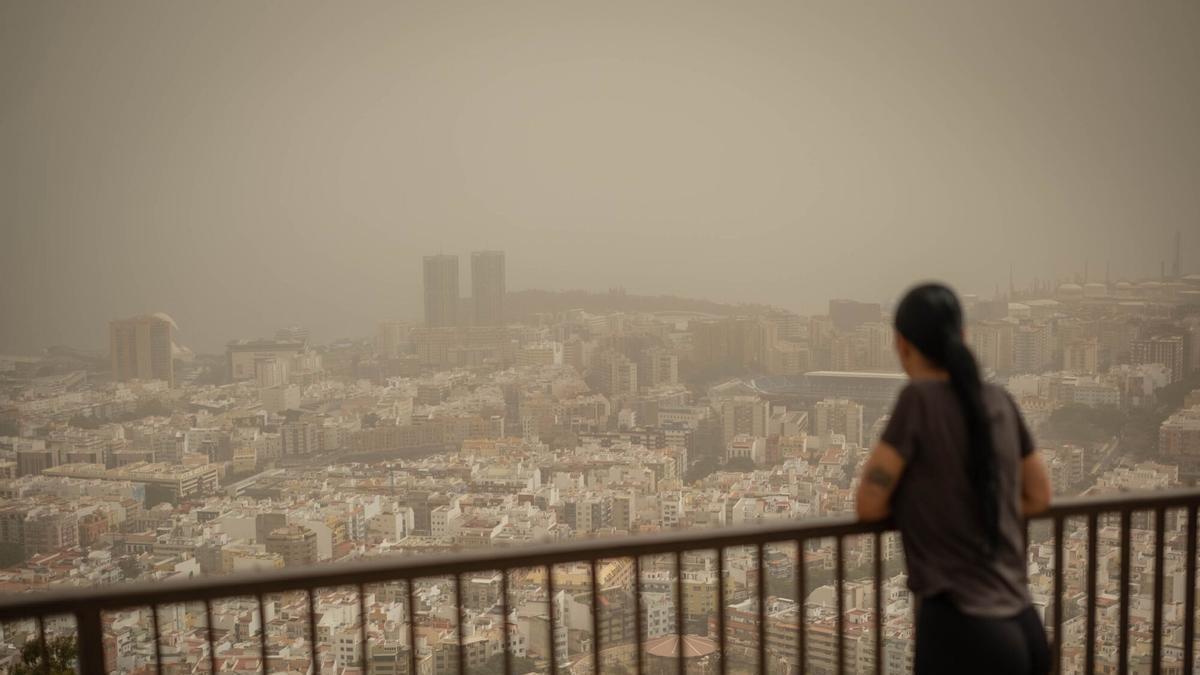
Desert dust from Africa, an atmospheric pollutant that has until now gone largely unnoticed, is posing a growing threat to air quality across Europe. Southern European nations are bearing the brunt, with the Canary Islands among the most severely affected regions. A new study has confirmed that the arrival of this dust has increased by between 10% and 25% over the last decade.
What the study reveals
Published today in the journal Nature, the research combined data from more than 100 European air quality monitoring stations over the past ten years with artificial intelligence techniques to track changes in desert dust levels. The analysis shows that in southern Europe, the average concentration of desert dust stands at 5.3 micrograms per cubic metre of air (μg/m³) — more than double the 2.1 μg/m³ recorded in central and northern parts of the continent. Overall, the amount of African dust has increased by roughly 0.5 μg/m³ across Europe over the last decade.
The countries most exposed include Spain, Portugal, Italy, western France and Greece. The Spanish Canary Islands and the Iberian Peninsula are the worst-hit areas. This is because air masses from the Sahara tend to move towards the Atlantic before curving northwards towards western Europe, explains one of the study’s authors, Xavier Querol, a researcher at the Spanish Institute of Environmental Assessment and Water Research (IDAEA-CSIC).
Climate change as the driving force
Querol and his colleagues have identified a clear cause for this increase in desert dust. On the one hand, climate change has altered atmospheric circulation patterns, drawing more African air masses towards Europe. On the other, it has dried out larger areas of North Africa, generating more dust emissions. “The increase in desert dust is facilitated by human emissions of greenhouse gases and the associated global warming. This leads to drier conditions in certain regions and the expansion of deserts,” says another of the study’s authors, Kaspar Dällenbach, a researcher at the Paul Scherrer Institute in Switzerland.
Health risks and the need for early warnings
The researchers warn that long-term exposure to desert dust can cause pneumoconiosis, asthma or chronic bronchitis, among other conditions. The immediate rise in mortality during days with high levels of desert dust in the air is also well documented: more people die from heart attacks and respiratory problems on those days compared with dust-free periods. The authors stress the need to establish alert systems for elevated dust concentrations across Europe, similar to those used for urban pollution episodes, so that vulnerable individuals — including children, the elderly and those with respiratory or cardiovascular conditions — can take appropriate precautions.
What’s happening in the Canaries – straight to your phone
News, weather alerts and practical updates – direct from the islands, in English. We live here and know what’s going on – before the international media catch up. Everything lands on our WhatsApp channel – no middlemen, no algorithm. Curated for families, expats and travelers.

Canary Islands sea hits second-hottest year on record

Legal bid to halt tree felling in Santa Cruz’s La Salud

Fiesta del Charco: A journey through La Aldea’s past

Corralejo dunes power line set for removal

ULPGC launches 14 research projects at Las Canteras

TMT will never be built, says Canary Islands astrophysics chief

Pedro Duque: Canarias is the “ultimate dream” for rockets

Court blow to Tenerife motor circuit project
La Palma faces new volcanic risk planning deadline
