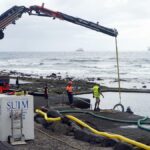
New campaign warns of hotel pool dangers
The Elder Museum of Science and Technology in Gran Canaria hosted the launch of the new 2027 Drowning Prevention Campaign this Thursday, promoted by the association Canarias, 1500 Km de Costa. The event focused on the danger facing children in hotel swimming pools, a location that particularly concerns experts because minors face the greatest risk there due to a lack of supervision or overconfidence from their families.
Child drowning numbers already match 2025 total
So far in July, the Canary Islands have recorded 33 deaths from accidents in aquatic environments, including four minors, already equalling the number of child victims recorded throughout the whole of 2025. Furthermore, 115 people suffered some kind of incident in aquatic spaces during the first half of the year, representing a 15 per cent increase compared to the same period in 2025.
‘The great deadly trap for children’
One of the issues that most concerns the organisation is the safety of the youngest. Sebastián Quintana, president of Canarias, 1500 Km de Costa, reports that the greatest danger for children is not the sea, but hotel complexes. “The great deadly trap for children is not the beaches; it is the swimming pools,” he warns. “They create a false sense of security because there are no waves or rocks.”
The platform’s director warns that parents relax, go to get a drink, or use their mobile phones, neglecting their children. “A one-year-old child can die in 27 seconds, and a three-year-old in a minute and a half. The mobile phone is the great enemy of child drowning prevention,” he points out.
New campaign video: ‘You decide how you reach the shore’
One of the highlights of the event was the premiere of the campaign’s new audiovisual piece, under the slogan ‘You decide how you reach the shore’. The piece tells a direct visual story that invites reflection on the importance of respecting safety rules on beaches and other aquatic spaces. The video sets up a contrast between two opposing realities: the tranquillity of enjoying a swim in safe conditions, symbolised by the green flag, and the serious consequences that can result from risky behaviour, such as entering the water when the red flag is flying. With this message, the campaign insists that prevention and individual responsibility are fundamental to avoiding accidents and saving lives.
Ten hidden video tips for drowning prevention
The presentation also served to unveil the 10 Hidden Video Tips for Preventing Drownings, a series of audiovisual resources that complement the campaign. Each one was presented and analysed by specialists in prevention, emergencies, and water safety, who explored the recommendations that make up this decalogue and explained how their application can help reduce the number of incidents in aquatic environments.
This series of guidelines addresses the main risk situations in aquatic environments and offers basic rules for preventing drownings and serious accidents. Among the recommendations are checking the depth before diving, respecting sea conditions and signage, keeping a close watch on children, avoiding improvised rescues, not trusting inflatable floats as a safety measure, knowing how to act in emergency situations, and always maintaining a preventive and responsible attitude on beaches, in swimming pools, and in other aquatic spaces.
“We want to show that the decision and individual actions of each person who interacts with the water depend on their own self-responsibility. We cannot put a lifeguard behind every bather,” says Sebastián Quintana, who confirms that 80 per cent of deaths in aquatic environments in the Canary Islands are caused by recklessness.
Social media ‘magnet effect’ blamed for promoting dangerous beaches
During his speech, Quintana also warned about the so-called “magnet effect” that, in his opinion, social networks generate. Some content creators and even certain media outlets promote visually attractive beaches which, however, pose significant risks and lack adequate safety conditions. “It is impossible to activate any mass social awareness campaign and fight against YouTubers and influencers. They collect millions of likes,” he warns.
Among the spots that thousands of content creators describe as a “must visit” in the Canary Islands and which represent a real danger, he highlighted La Cocha beach on La Graciosa, Cofete on Fuerteventura, and El Tancón on Tenerife.
Experts and authorities back prevention message
The presentation also included contributions from Sofía Hernández, head of Maritime Rescue in the province of Las Palmas; Juan Ortega Machín, former diver for the Civil Guard’s Special Underwater Activities Group (GEAS) and president of the Real Club Victoria; Vanessa Ramírez, a lawyer specialising in drownings; Juan Ramón Viera, an expert in safety and emergency training; and journalist Kiko Barroso, who analysed the ten video tips of the campaign.
The institutional event also brought together the director of the Elder Museum, José Gilberto Moreno; the Deputy Minister for Physical Activity and Sport of the Government of the Canary Islands, Ángel Sabroso; the General Director of the Presidency of the Cabildo of Gran Canaria, Pablo Rodríguez; the Deputy Minister for Emergencies and Water of the Government of the Canary Islands, Marcos Lorenzo Martín; and the Councillor for City of the Sea for Las Palmas de Gran Canaria City Council, Pedro Quevedo. All agreed on highlighting the value of prevention in reducing accident rates in aquatic environments.
What’s happening in the Canaries – straight to your phone
News, weather alerts and practical updates – direct from the islands, in English. We live here and know what’s going on – before the international media catch up. Everything lands on our WhatsApp channel – no middlemen, no algorithm. Curated for families, expats and travelers.


Tenerife faces huge tourism expansion despite moratorium calls
El Bejeque in Las Canteras adds sea to its fire

Siam Park Gran Canaria must build its own desalination plant

Fuerteventura’s biggest resort to open on 1 November
Gran Canaria to teach tourism history in schools
Canary Islands see 0.3% rise in foreign tourists in August

Row over 368-bed hotel project in La Gomera
Spanish astronaut trains in Lanzarote for Moon mission

Tivoli La Caleta hosts first red tuna Kaitai in Canarias