A new chapter for an abandoned mansion
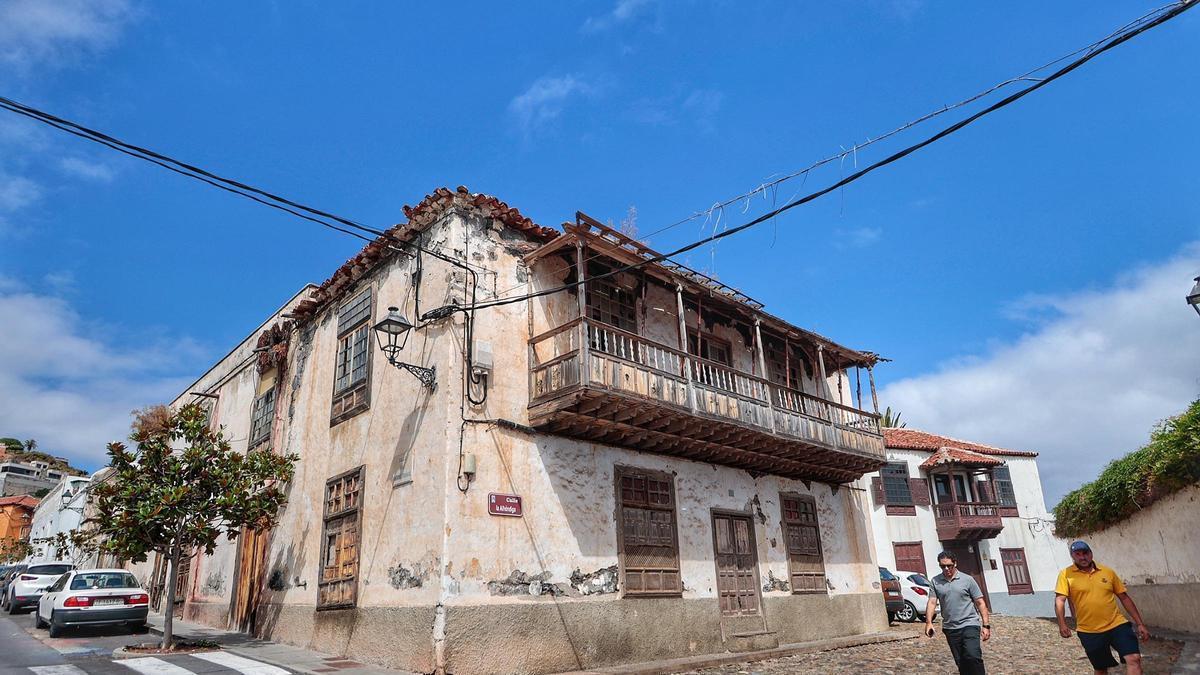
The Casona Delgado Oramas, nestled in the historic heart of San Juan de la Rambla and just a stone’s throw from the Los Roques coastline, is embarking on a new lease of life. For centuries, this property has been marked by the passage of generations, but today it lies abandoned, with vegetation creeping through its walls and decay defining its current appearance. However, it will soon regain its charm and be restored to become the first rural hotel in this northern Tenerife town.
A landmark in the old quarter
Situated in one of the municipality’s most heritage-rich areas, the mansion stands among cobbled streets and traditional homes that still preserve the essence of old San Juan de la Rambla. From the outside, the ravages of time are plain to see, with worn walls and balconies that seem to bear centuries of history upon their beams. Yet behind the facade, some of its most characteristic features survive. The 594-square-metre building is notable for its central cobbled courtyard, likely paved with stone from the San Juan quarry, where several palm trees continue to rise above the structure, offering a contrast of life amid total neglect. It also retains traditional elements such as an old kitchen, a destiladera (a traditional stone water filter) and an original oven with its chimney. Outside, the three-sided covered balcony, supported by double corbels, and the lookout point on the south facade are particularly striking.
Local hopes and memories
Several local women who walk through the area each morning observe the property’s current state with sadness, but also with hope. “Since I was a child, I’ve walked past this house and it always caught my attention,” says María Candelaria, a lifelong resident. “It’s such a pity to see it like this because it was one of the prettiest houses in the village,” she continues. “I hope they restore it without taking away its essence.” That wish, which she shares with many of her friends, will begin to come true in the coming months.
An 18th-century history
The property’s history dates back to the 18th century. Also known as Oramas Cué, the house’s name reflects the two family lines linked to its story: Oramas, a reference to Doramas, the celebrated indigenous leader who defended Gran Canaria during the Castilian conquest; and Cué, the surname of the family branch that later became associated with the property. Construction began in 1766 at the behest of landowner Antonio Lorenzo Delgado Oramas de Saá, who acquired the plot from the Peraza de Ayala y Viña family and built the house after marrying Ángela de la Rosa Alonso. The house later passed to his children, though it was the priest Antonio de la Concepción Delgado Oramas de Saá, parish priest of the town between 1810 and 1840, who lived there and cemented it as a family residence.
Surviving catastrophe
The story of this iconic property was marked by the great flood of 1826, described by contemporary chronicles as a “true catastrophe”. The torrents caused significant damage and forced a partial reconstruction, which explains why the facade today combines elements from both the 18th and 19th centuries. Over time, the property remained in the same family: first with Bruno Delgado Oramas de Saá, the priest’s nephew born in Cuba; then with his daughter, Antonia Delgado Oramas Veraud, also married to a Cuban; and later with Antonio Oramas Hernández, married to Dolores Cué Gallegos, the union from which the name still popularly used for the mansion derives.
€2 million restoration and transformation
Now, the building is preparing to write a new chapter. The restoration will be carried out by the company Víctor Rodríguez e Hijos SLU, based in neighbouring El Sauzal, thanks to a regional government investment of over €2 million. The work will have a completion period of 24 months and will transform the historic mansion into San Juan de la Rambla’s first rural hotel. According to the planned design, the layout around the central courtyard and the two entrance halls will be maintained, along with the open galleries, tiled roofs, original wooden joinery and the extensive rear garden. Some architectural treasures will also be preserved, such as the traditional oven with its chimney, the coffered ceiling of the main room and the historic balcony that characterises its facade.
What the hotel will offer
The final result will also include a basement for storage, several double rooms with private bathrooms on the first floor and two special suites with their own terraces. All of this will be harmonised with gardens, a swimming pool and a solarium, integrated into a design that seeks to combine tourist activity with heritage conservation.
A boost for the community
The news has generated excitement among many residents of the municipality. “This house is part of the image of the historic quarter and seeing it restored would be a joy for everyone,” says Milagros, another of the ladies closely following the project’s progress. Carmen, another local resident, prefers to focus on the impact it will have for the town: “It’s not just about recovering a historic building. It can also attract visitors who will discover the heritage, the shops and the restaurants of the village. It’s an important opportunity for San Juan de la Rambla.”
Leaving abandonment behind
After decades of watching time make its way through its walls, the Casona Delgado Oramas is preparing to leave abandonment behind. Its transformation into a rural hotel will recover one of the most emblematic properties in the historic quarter and open a new chapter for a building that, almost 260 years after its construction, remains part of the collective memory of this Tenerife town.
What’s happening in the Canaries – straight to your phone
News, weather alerts and practical updates – direct from the islands, in English. We live here and know what’s going on – before the international media catch up. Everything lands on our WhatsApp channel – no middlemen, no algorithm. Curated for families, expats and travelers.

Tenerife faces huge tourism expansion despite moratorium calls
El Bejeque in Las Canteras adds sea to its fire

Siam Park Gran Canaria must build its own desalination plant

Fuerteventura’s biggest resort to open on 1 November
Gran Canaria to teach tourism history in schools

Canary Islands see 0.3% rise in foreign tourists in August

Row over 368-bed hotel project in La Gomera

Spanish astronaut trains in Lanzarote for Moon mission

Tivoli La Caleta hosts first red tuna Kaitai in Canarias