Two giants waiting at the quayside
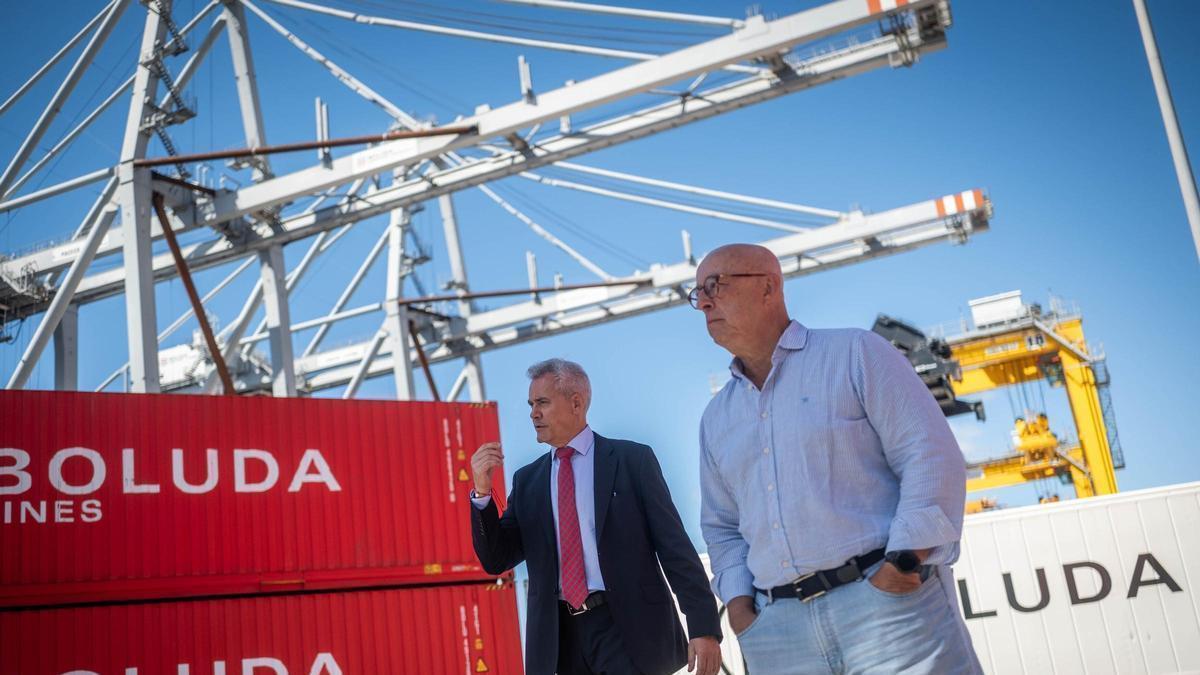
Two 1,800-tonne giants are waiting off the Port of Santa Cruz de Tenerife. They arrived just two days ago from Tarragona on a floating platform and are now waiting for the sea to calm down. Only then will a millimetre-perfect operation begin to move them onto dry land – a manoeuvre that demands almost perfect conditions and will mark a turning point for the Boluda Maritime Terminals Tenerife container terminal.
A €40 million leap forward
These are not just two more cranes. They symbolise the biggest technological leap the terminal has made since the company took over its management, and are the centrepiece of an investment plan worth over €40 million aimed at modernising the facilities following the renewal of the concession for another twenty-five years. “We had scheduled the unloading for Saturday, but the swell forced us to postpone the operation for safety reasons,” explained Boluda Shipping’s managing director, Javier Climent, well aware of the complexity of the manoeuvre.
The most powerful cranes in the port’s history
When they enter service, the Port of Santa Cruz de Tenerife will have the most modern and powerful cranes in its history. They stand 60 metres tall, can handle ships with a beam of up to 22 containers, move 71 tonnes in Twin Lift mode and lift 88 tonnes under the hook – capabilities that will allow the terminal to handle calls that until now were either unviable or uncompetitive.
First phase of investment complete
The addition of these two cranes completes the first major phase of Boluda’s investment programme. Earlier, four hybrid RTG cranes arrived for managing the container yard, along with new specialised machinery. Now comes the missing piece to reinforce the terminal’s operational capacity and position it among those ready to handle Ultra Large Container Vessels (ULCVs) – the largest container ships currently sailing international routes.
Geopolitical shifts create new opportunities
For Javier Climent, the timing is especially favourable. The reconfiguration of international maritime traffic, driven by insecurity in the Red Sea and the diversion of numerous services around the Cape of Good Hope, has opened up new logistical opportunities for Atlantic ports like Tenerife. “Until now, there was demand we couldn’t meet because we lacked the capacity. Now we have the offer to attract that traffic,” summarised the Boluda executive. The company aims to compete for vessel calls that previously chose other ports and strengthen Tenerife’s role as a strategic stopover in the mid-Atlantic.
A crane for La Palma too
The modernisation will also have a secondary effect. One of the cranes currently in service in Santa Cruz will be transferred to La Palma, where it will replace the existing mobile crane. It will be the first gantry crane at the Palmeran terminal and will significantly improve container loading and unloading operations.
Reducing turnaround times
The president of the Santa Cruz de Tenerife Port Authority, Pedro Suárez, believes the investment responds to a long-standing demand from the port community. He highlighted that more efficient facilities will reduce turnaround times, improve working conditions for stevedores, and boost the port’s competitiveness against other Atlantic hubs. Because, in the end, the shipping business is measured in minutes. The less time a vessel spends at berth, the more profitable the call. The new cranes will enable faster, safer and more precise unloading – an increasingly decisive factor for shipping lines when choosing a port.
When the sea allows
When the sea permits – perhaps today or tomorrow – the two cranes will leave the platform that brought them from Tarragona and become part of the Port of Santa Cruz de Tenerife skyline. That day will also change the profile of the Bufadero dock. But above all, it will change Tenerife’s ability to compete in a market where every metre of reach, every tonne of cargo and every minute of operation counts.
What’s happening in the Canaries – straight to your phone
News, weather alerts and practical updates – direct from the islands, in English. We live here and know what’s going on – before the international media catch up. Everything lands on our WhatsApp channel – no middlemen, no algorithm. Curated for families, expats and travelers.

Work on TF-5 third lane between Guamasa and Los Rodeos to start in November
Canary Islands international air arrivals fall 1.3% in September

Helicopter evacuates US cruise passenger near Tenerife
El Hierro airport sees 3.6% rise in September passengers

Gran Canaria approves €509k works to shore up GC-200 slope

Canary Islands gets €47.5m for free public transport in 2026
Canary Islands airports see 0.9% fall in September passengers
El Rejo road in La Gomera to close for six hours on Tuesday

Man, 65, seriously injured in GC-1 crash in Agüimes