
Canary Islands launches €21m water security programme
The Government of the Canary Islands has launched a major programme of works to strengthen water supplies across the entire archipelago, backed by an investment of €21 million – including European Next Generation funds. The initiative is designed to modernise infrastructure, improve distribution networks, reduce water loss, and bolster the islands’ water security.
The strategy, driven by the Ministry of Territorial Policy, Territorial Cohesion and Water, is being developed in collaboration with the island water councils and also marks a significant shift in the archipelago’s hydraulic planning. According to the Deputy Minister for Emergencies and Water, Marcos Lorenzo, the Canary Islands has managed to catch up on hydrological planning after years of delays that once placed the islands among the worst-performing regions in Europe.
When the current legislative term began, five of the seven Canary Islands water districts lacked the plans required by EU regulations, a situation that led to proceedings being opened by the European Union. Three years on, all islands now have plans in place for the 2022-2027 period, and the regional government is already working alongside the island water councils on the next cycle, covering 2028-2033.
“It’s essential to know where to invest in order to get it right with resources that are always limited,” said Lorenzo, highlighting that the Canary Islands is now among Spain’s most advanced autonomous communities in preparing the fourth cycle of hydrological planning.
The La Graciosa undersea pipeline: a unique challenge
Among all the projects currently underway, the renovation of the underwater connection that guarantees the supply of drinking water to La Graciosa stands out. The deputy minister himself described it as one of the most unusual and complex works the Canary Islands is currently facing. The government will put out to tender in the coming weeks the construction of the new offshore section of the drinking water supply to La Graciosa, along with a technical assistance contract for environmental monitoring and control of the works.
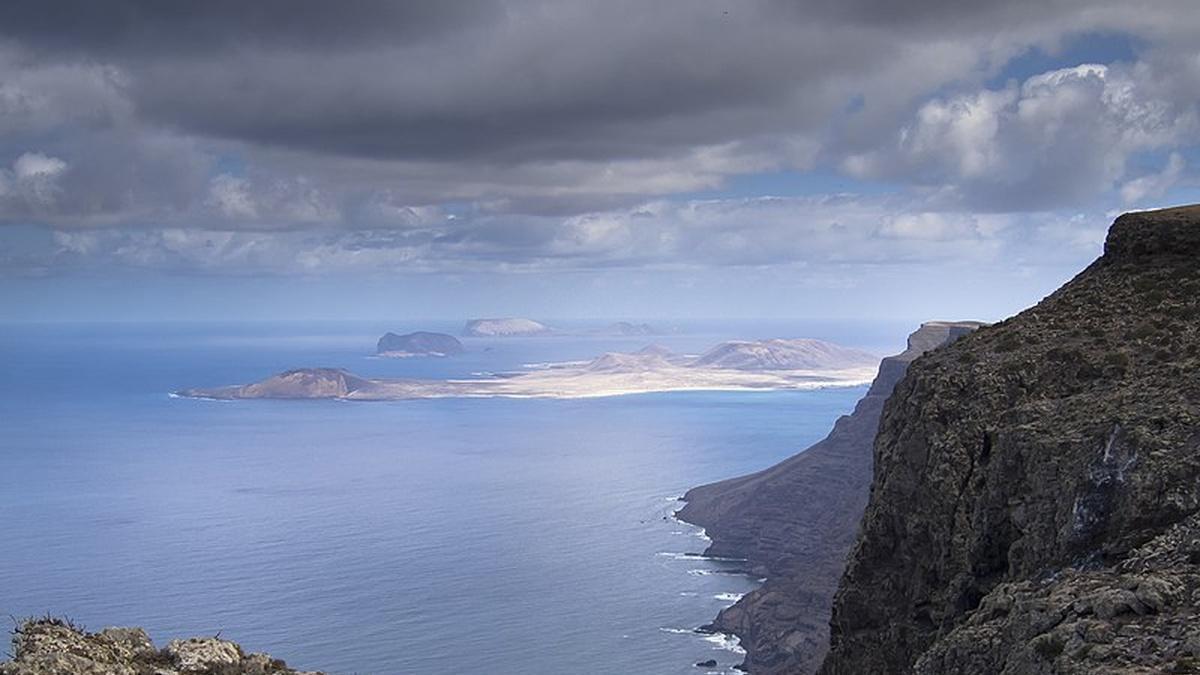
The project, representing an investment of €3.8 million, is a strategic piece of infrastructure designed to ensure water security for the “eighth island.” The plan involves installing approximately 1,220 metres of submarine pipeline between Lanzarote and La Graciosa, along with nearly 1,100 metres of onshore pipes in the connection areas around the Famara cliffs. The entire network will be built using high-resistance polyethylene pipes, specially designed to withstand the demanding conditions of the marine environment and to guarantee greater transport capacity and service reliability.
Navigating environmental sensitivities
The complexity of the project goes far beyond the construction work itself. The works are taking place in the heart of the Chinijo Archipelago, one of the Canary Islands’ most valuable and protected natural areas, within the Lanzarote Biosphere Reserve and the Natura 2000 network. This has necessitated more than two years of intensive administrative and environmental processing, including bathymetric and oceanographic studies, underwater inspections, mapping of marine habitats, and specific analyses of protected flora and fauna.
To ensure compliance with all the planned environmental measures, the government will put out to tender a specialist technical assistance contract to supervise and monitor the execution of the works.
Working with the ‘calmas’ for a delicate operation
The project is being fast-tracked to take advantage of favourable sea conditions during September and October, when the so-called “calmas” – periods of very calm seas – occur, making the submarine section easier to install. According to Marcos Lorenzo, the aim is to concentrate the laying of the underwater pipeline during this period to minimise both technical and environmental risks. Although the full project will take several months to complete, the most delicate phase is precisely the installation of the 1,220 metres of submarine pipe that will connect Lanzarote and La Graciosa.
The deputy minister also stressed that the new pipeline will not immediately replace the existing one. The government’s strategy is to install the new infrastructure first, then repair the existing pipe so that it can remain operational as a backup. “La Graciosa will have a Plan A and a Plan B,” explained Lorenzo, who considers having a dual-supply guarantee essential for an island that depends entirely on water produced in Lanzarote.
The Minister for Territorial Policy, Territorial Cohesion and Water, Manuel Miranda, highlighted that this is a strategic piece of infrastructure to guarantee supplies to La Graciosa and strengthen the reliability of an essential service for daily life on the island, particularly during periods of high tourist pressure.
Investments across all the islands
The investments are reaching all of the islands. Notable projects include the duplication of the Las Angustias siphon section on La Palma; the reduction of water loss and the installation of telemetry systems on the network in El Hierro; improvements to pipelines and strategic reservoirs on La Gomera; and the modernisation of municipal networks in Tenerife. In Gran Canaria, work is linked to desalination; there is the Zonzamas-Arrieta North line project in Lanzarote; and the reinforcement of hydraulic infrastructure in Fuerteventura.
What’s happening in the Canaries – straight to your phone
News, weather alerts and practical updates – direct from the islands, in English. We live here and know what’s going on – before the international media catch up. Everything lands on our WhatsApp channel – no middlemen, no algorithm. Curated for families, expats and travelers.

Canary Islands sea hits second-hottest year on record

Legal bid to halt tree felling in Santa Cruz’s La Salud

Fiesta del Charco: A journey through La Aldea’s past

Corralejo dunes power line set for removal

ULPGC launches 14 research projects at Las Canteras

TMT will never be built, says Canary Islands astrophysics chief

Pedro Duque: Canarias is the “ultimate dream” for rockets

Court blow to Tenerife motor circuit project
La Palma faces new volcanic risk planning deadline
