A seaside idyll, but for whom?
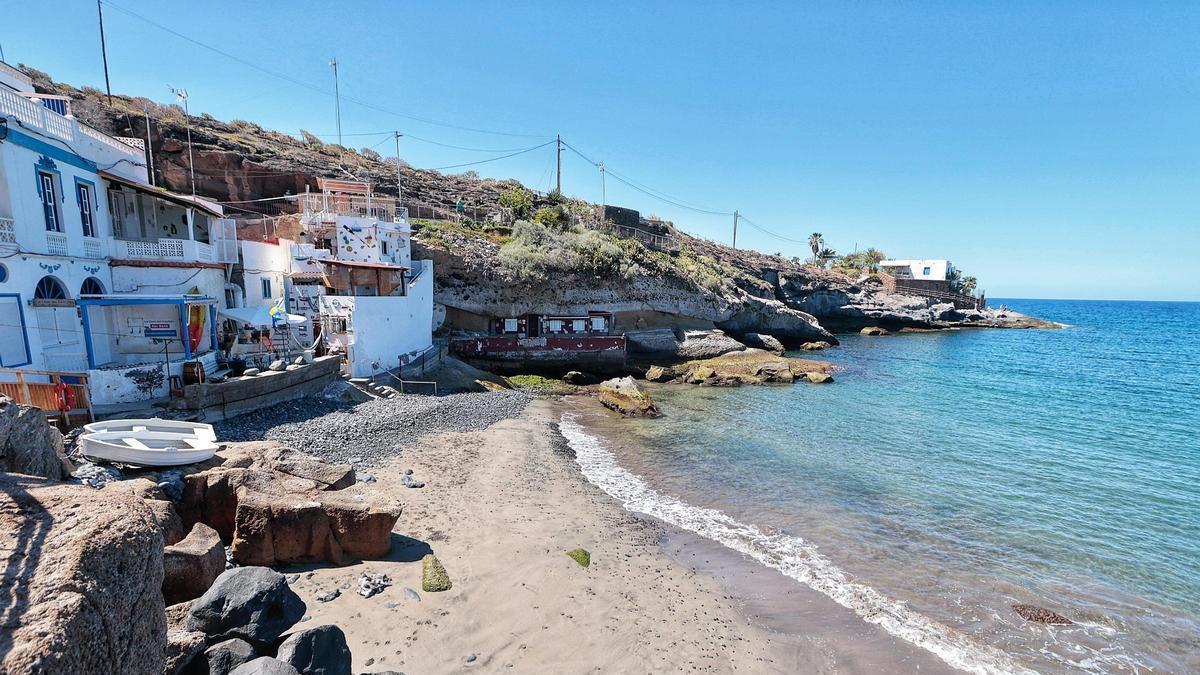
A seaside idyll: that is the image that imprints itself on the eye as you arrive at the coast of Puertito de Armeñime, in Adeje, Tenerife. It would almost be worth reaching this spot blindfolded and with your ears plugged. Remove those sensory barriers, and blue floods the view. You hear many languages and the rumble of machinery. A cluster of white houses, huddled together and crisscrossed by a narrow, charming promenade, nestles in a virgin and beautiful coastal inlet. The vast majority are holiday rentals, because in Puertito de Armeñime “barely six or seven people live here permanently,” explains one of the few who know the place and prefers to remain anonymous.
Illegal housing and a dwindling community
Nor does one of the waiters at the hamlet’s only bar wish to be named. Of Italian origin, when asked how many people live in this coastal settlement, he fires back a question: “From the Puertito or from the shacks?” In the surrounding area, there are several illegal housing settlements that make this young man, who has worked there for barely over a year, wonder who really lives there. He knows full well that all the customers on his terrace are foreign tourists. There is, however, one table of locals who, with suspicion and shrouded in anonymity, talk about Puertito de Armeñime. One of them no longer lives there, but “I grew up here. Childhood here was better than what children have now,” he boasts.
From fishing to holiday lets
He speaks of a time when Puertito de Armeñime lived off fishing – an undeniable fact at first glance – and agriculture. “That building you see over there used to be a tomato packing plant,” he says, pointing to an old but still standing industrial unit behind him. The man is dark-skinned, a mark of his southern character. He says people gradually moved “upwards, as far as Armeñime. People bought houses or plots there and moved to be closer to everything.” The settlement he refers to is barely ten minutes away by car and currently has more than 2,000 inhabitants, according to the municipal census. They have all the services that Puertito lacks: no supermarket, no pharmacy, no medical centre, and no public transport.
A stage set with a past
It is a stage set, superficial. But walking along the narrow path that leads to the tip of the cove reveals the authentic heart of this fishing community. Cave houses, boats adorning the promenade, many decorative elements that recall a past as salty as the sea spray, or spontaneous bougainvillea adding a chromatic touch beyond the blue. It once had a soul, and there were people who were born, grew up, and lived there. Fishing, the neighbourhood’s main economic activity, floods every corner. But it is not alive. It is inert: anchors, small dinghies, buoys, and nets. Everything is present, but nothing is felt. What is more, the small ramp that takes boats to the sea has a step that prevents vessels from being hauled up or launched. “With the last storm, that bridge broke and they still haven’t come to fix it,” denounces this neighbour, who, although he no longer lives in Puertito de Armeñime, is offended by the neglect the place suffers. “What they want is for everyone to leave here. Upwards, they are pushing us upwards,” he says indignantly.
Cuna del Alma: the shadow over the coast
It is unavoidable, and it would be denying the elephant in the room not to mention the landscape the visitor encounters before reaching Puertito de Adeje. If the recent past of this coastal settlement was salt and the sea, its present is called Cuna del Alma. The building site precedes the arrival at the coast. It fills everything: the sight, with the movements of bulldozers, crushers, earth, and stones being shifted back and forth; the hearing, with the constant, mechanical rattle that wages an incessant battle with the ebb and flow of the waves; and even the smell, with the odour of earth, construction, and fuel. “Everyone here is against that development. Nobody wants it,” he states angrily. He is sharing a table with a man and a woman who timidly nod along with his speech. They helped him with the initial headcount of residents but dare not speak themselves. The waiter agrees: “There isn’t a day when the neighbours don’t talk about Cuna del Alma. They don’t want the project to go ahead.”
A history under threat
Puertito de Armeñime is on the red list of Hispania Nostra, a specialist portal on cultural and natural heritage. This list includes places, buildings, or other elements that are in danger, following assessment by a scientific committee. Experts highlight the coastal settlement as the main port of the Casa Fuerte and the Marquesado de Adeje. It was the most important point on the southwest coast after the conquest. However, the history of Puertito de Armeñime goes back to the settlement of aboriginal people during the 15th century, who belonged to the menceyato of Adexe. According to the heritage website, remains of stones, ceramics, molluscs, and evidence of daily life from the pre-Hispanic period have been found in this area. They even speak of the existence of a hut from that era, with the subsequent delimitation of four archaeological sites. Much later, the cultivation of tomatoes and bananas also transformed the landscape for survival. The land was shaped for agriculture in the form of terraces and banks using the local soil.
A fragile present, an uncertain future
Looking out to sea in Puertito de Adeje or Armeñime is calming. Everything is blue. Turning around and looking towards the mountain is disturbing. Everything is ochre or grey. The local character of this fishing enclave has, apparently, ceased to exist. Yet hope appears when a couple arrives with shopping bags from a supermarket. They are Canarian. They take out their keys and open the door of their house, right next to the bar. They seem to be the only ones who truly live there. They, too, are the present of the place. The future remains very uncertain.
What’s happening in the Canaries – straight to your phone
News, weather alerts and practical updates – direct from the islands, in English. We live here and know what’s going on – before the international media catch up. Everything lands on our WhatsApp channel – no middlemen, no algorithm. Curated for families, expats and travelers.

Canary Islands tourism chief offers dialogue on residentialisation

Canary Islands office helps small councils ditch the peseta

Two tonnes of illegal tropical fruit seized at Tenerife port

Canary Islands approves new €1.6bn development fund

Mogán mayor says her €65,000 salary is too low

Abandoned cars in Canary Islands: hundreds left to rot
Work resumes on 27 affordable rental homes in Las Palmas
Los Realejos residents fight on against propane gas plant
Canarias among Spain’s poorest regions as 36.2% live on low incomes