
NASA Forges Historic Partnership with Canary Islands for Moon Missions
The Canary Islands have been on the radar of the United States National Aeronautics and Space Administration (NASA) for some time due to their strategic location. However, it was only today that this interest materialised into a formal collaboration agreement with the Canary Islands Health Service (SCS) for emergencies that may arise during future aerospace missions, as part of the Artemis programme for humanity’s return to the Moon.
A Strategic Atlantic Hub for Emergencies
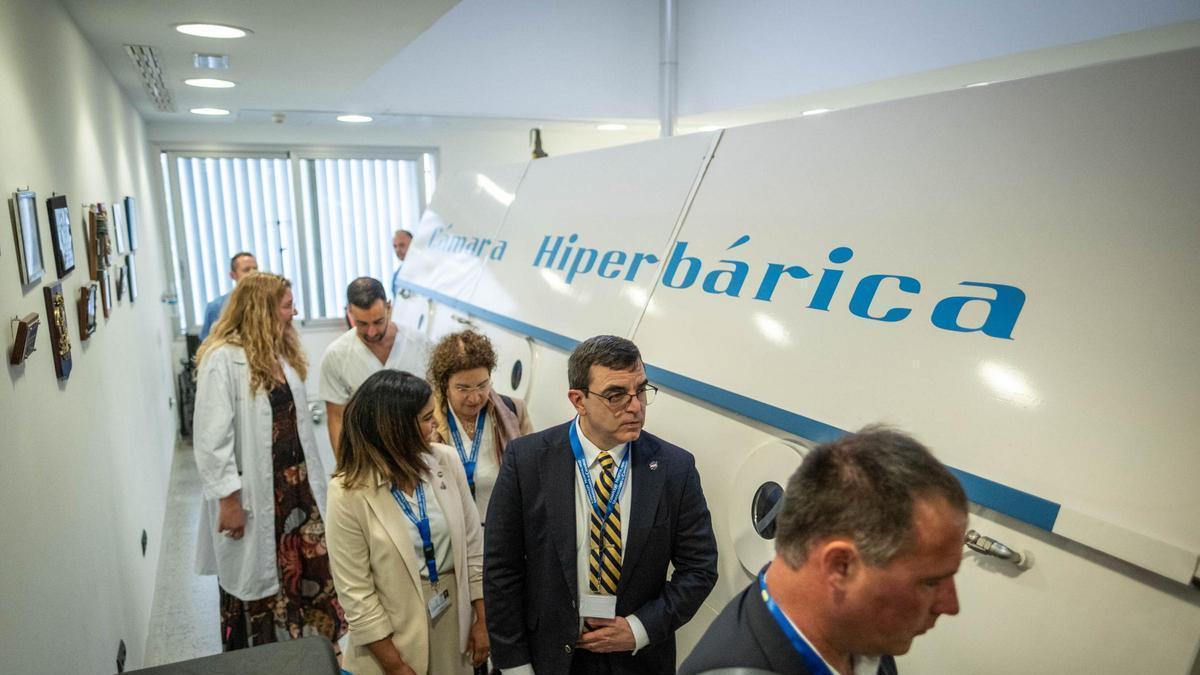
“They have chosen us as a potential reference zone for emergencies on the West African coast, Macaronesia, and part of the European coast,” stated the director of the SCS, Adasat Goya, this morning during a visit by a NASA delegation to the Hospital Universitario de Canarias (HUC) to tour its facilities. The meeting, led by NASA’s medical director James Polk, is part of a series of visits the delegation will make across the Canaries to understand the Archipelago’s capabilities.
Hospital Facilities Under the Spotlight
In line with this, the delegation will attend the Hospital Universitario Nuestra Señora de Candelaria tomorrow to also assess that centre’s resources. These two major hospital complexes, along with the Canary Islands Emergency Service (SUC) and Maritime Rescue in Tenerife, will be responsible for providing medical support in the event of astronaut rescue operations or the activation of contingency scenarios in the Atlantic.
The collaboration encompasses everything from rescue assistance to the provision of healthcare services. NASA paid particular attention to the hospital’s hyperbaric chamber, along with its trauma and radiodiagnosis services, and critical care units. “This is a historic opportunity for collaboration that highlights the capability of the SCS and its workers,” added Goya.
What’s happening in the Canaries – straight to your phone
News, weather alerts and practical updates – direct from the islands, in English. We live here and know what’s going on – before the international media catch up. Everything lands on our WhatsApp channel – no middlemen, no algorithm. Curated for families, expats and travelers.

Hotel facade fire in Las Palmas causes material damage

Tenerife comic salon returns with 40 exhibitions and 80 artists

Buenavista del Norte and Villa de Mazo compete for Christmas lights glory

Tourism overcrowding and its impact on Canary Islands healthcare

WOMEX 2026 closes in Gran Canaria as Tenerife named 2027 host

Five French sailors injured as yacht hits rocks off Lanzarote

Amaia Montero’s emotional tribute at Gran Canaria concert

Netflix begins filming new thriller in Tenerife

Loquillo and Amaia headline Tenerife Peñón Fest 2026
