
Tourist beds hidden in regenerative project
The controversial Underwater Gardens project in Tenerife included plans for tourist beds, it emerged on Friday. Alicia Leirach, the island’s director of strategic projects, revealed the details during a plenary session of the Cabildo of Tenerife, explaining why the “island interest” declaration for the Punta Blanca (Guía de Isora) scheme is being withdrawn.
Leirach outlined the services the developer had planned for 25% of the land, which she said were entirely separate from the environmental “regeneration” the company claimed the project pursued. These included a restaurant called Gastro Sable, a “meditarium” with changing rooms, a bar, a terrace, and a solarium, and, finally, an area named Zen Village. According to the director of strategic projects, this space was to include a café, shops, toilets, an infinity pool, and “low-impact accommodation, which means tourist accommodation.”
Such installations, Leirach recalled, are completely forbidden in projects granted island interest status, whether public or privately initiated. The law states that projects with this declaration must be designed to plan and organise structural facilities or activities of an industrial, energy, non-accommodation tourism, cultural, sporting, or health-related nature that are of strategic importance to “meet unforeseen needs or urgent actions”.
Pandemic-era approval
The Cabildo of Tenerife granted this declaration to Underwater Gardens in 2022, during the socialist government of Pedro Martín, to help offset the collapse in tourism caused by the coronavirus pandemic. The official documentation issued at the time stated that the private initiative “did not increase accommodation capacity, but rather promoted a change in the modes of production and management of the tourism offer towards a more durable and sustainable tourism development model”. The document by which the Cabildo made the declaration also emphasised that the project “increased the profitability of tourism activity by not proposing an increase in accommodation places, but by promoting an increase in spending and average income per stay”.
This newspaper has asked the developer how many tourist beds were planned in total, and when the Cabildo was informed of the intention to include accommodation in the project, given that the tourist accommodation did not appear in the documentation submitted at the start of the post-pandemic planning process. The company responded that, for the time being, they would not be making any statement on the matter.
According to information gathered by this newspaper, the project reserved 1,655 square metres for Zen Village.
Island interest status to be withdrawn
On 17 June, the Cabildo of Tenerife announced it would withdraw the island interest declaration from Underwater Gardens. Last Friday, 26 June, the island government reported during the plenary session on the reasons for this decision, following a proposal from the Directorate for Strategic Projects (DIPE), which issued an unfavourable report on the project’s approval.
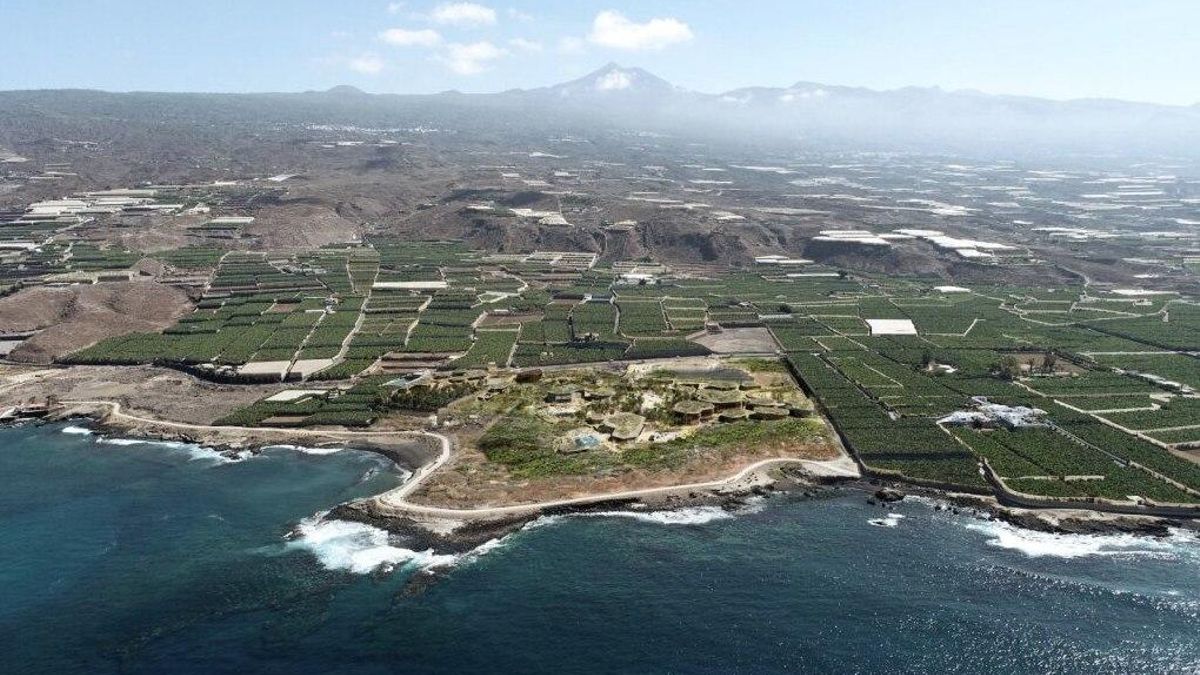
The project was presented as a regenerative park in the town of Punta Blanca (Guía de Isora), combining scientific, educational, and recreational activities linked to the conservation and restoration of marine ecosystems. The initiative was divided into two parts: one at sea (Sea Garden) and one on land. The land-based section occupied both common rural land and environmentally protected rural land. Only publicly initiated projects of island interest can be carried out on the latter. As the director explained, the Cabildo of Tenerife only has jurisdiction over the planning of the land area, and within that, only the common rural land.
During the planning process, the island corporation required the developer to reformulate the project to bring it into line with current legal frameworks, while maintaining the regenerative nature that had justified its initial declaration of island interest.
Marine and terrestrial scope
The marine section covers 750,000 square metres and affects the Teno-Rasca Special Area of Conservation (SAC), a habitat for species such as the loggerhead sea turtle, the bottlenose dolphin, and the short-finned pilot whale. At the time of the island interest declaration, the land area covered 172,000 square metres and included an education and knowledge centre, a biodiversity centre, swimming pools, and a central plaza with food stalls, children’s paddling pools, and cafés.
What was not known until now was that 25% of the land was slated for tourist accommodation. In a press release, the Cabildo stated that following the technical and legal analysis of the documentation submitted in 2026, “the reports issued conclude that significant deficiencies persist which prevent the process from continuing favourably”.
Reasons for refusal
The main reasons underpinning the proposal for refusal are the failure to reconfigure the project as required, the insufficient technical definition of the planned works, and the lack of detail on essential aspects of the park’s planning and management. Other causes include “the absence of adequate economic justification and the lack of essential administrative authorisations for the marine regeneration works that form the conceptual and functional basis of the initiative”.
Since its approval, the project has faced strong social and environmental opposition. Various environmental groups, including Save Punta Blanca, Greenpeace, and Ecologistas en Acción, have labelled Underwater Gardens as an example of greenwashing.
The Cabildo has also highlighted the numerous requests it made to the developer to complete and correct the submitted documentation, which went unheeded. Before a final proposal is put before the Cabildo plenary, and in accordance with current administrative law, the developer has been granted a 15-working-day hearing period in which to present any submissions and documentation it deems appropriate. Once this period has ended and any submissions have been analysed, the file will continue its process so that the plenary can adopt the appropriate resolution as the competent substantive body.
What’s happening in the Canaries – straight to your phone
News, weather alerts and practical updates – direct from the islands, in English. We live here and know what’s going on – before the international media catch up. Everything lands on our WhatsApp channel – no middlemen, no algorithm. Curated for families, expats and travelers.

Canary Islands sea hits second-hottest year on record

Legal bid to halt tree felling in Santa Cruz’s La Salud

Fiesta del Charco: A journey through La Aldea’s past

Corralejo dunes power line set for removal

ULPGC launches 14 research projects at Las Canteras

TMT will never be built, says Canary Islands astrophysics chief

Pedro Duque: Canarias is the “ultimate dream” for rockets

Court blow to Tenerife motor circuit project
La Palma faces new volcanic risk planning deadline
