Transvulcania finds its voice: an anthem born on La Palma
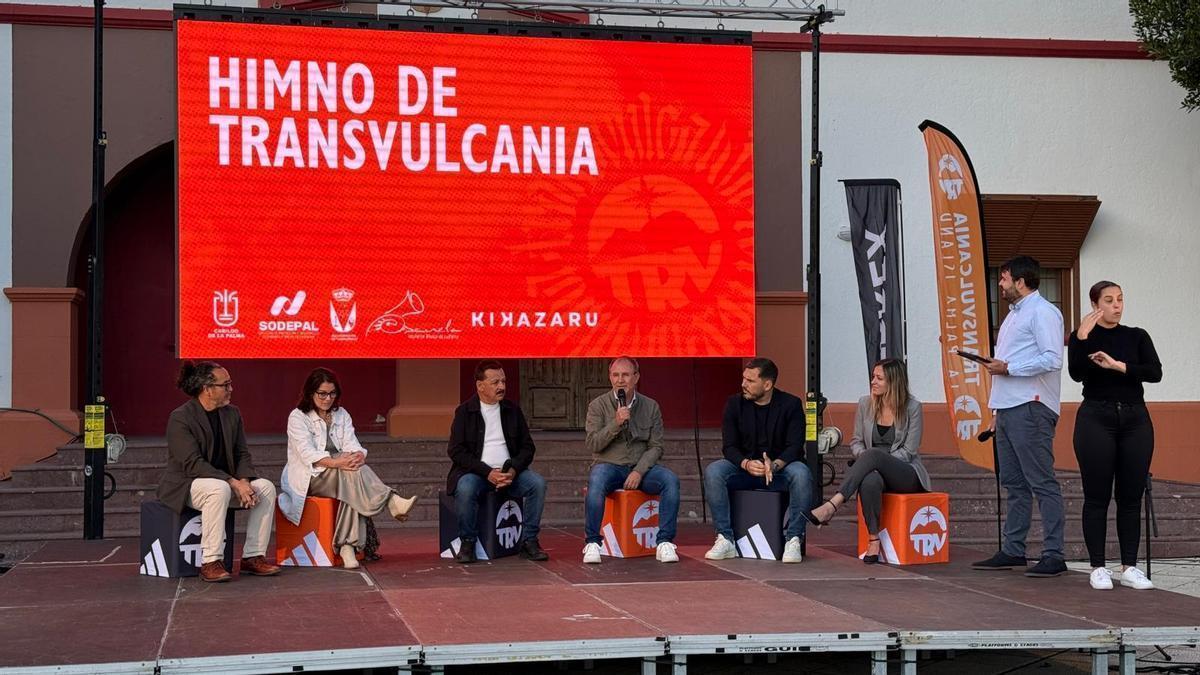
The Transvulcania trail running event now has an official anthem. The Cabildo of La Palma has unveiled a musical piece created and performed entirely on the island, with the involvement of the Escuela Insular de Música, its teaching staff, students, adult choir and soloists, alongside other local artists and the production company KIKAZARU Producciones. The new anthem is designed to strengthen the bond between the race and the people of La Palma, in what promises to be a particularly symbolic edition for an event that has become one of the great benchmarks of international trail running.
A bilingual tribute to the island’s identity
The composition is presented in a bilingual format, in Spanish and English, to project La Palma’s identity beyond the Canary Islands and match the global scale of the Transvulcania. The president of the Cabildo of La Palma, Sergio Rodríguez, argued during the presentation that the piece is “born from within, from the island” — a collective work that captures the essence of La Palma and projects it to the world. The race is scheduled for 7–9 May 2026, with categories including Kilómetro Vertical, Transvulcania Kids-Junior, Half Marathon, Marathon and the Ultramarathon.
A school at the heart of the project
The creation of the official anthem is both an artistic and educational project, with the Escuela Insular de Música de La Palma playing a central role. The piece has been performed entirely by the educational community of the centre, with participation from students, teachers, the adult choir and soloists. The Escuela Insular de Música, which falls under the Cabildo of La Palma, has its main base in the Plaza de San Francisco, in Santa Cruz de La Palma, and runs music teaching activities across the island. With this initiative, the organisers aim for the anthem to be more than just a race soundtrack — they want it to be a creation rooted in the territory and local talent.
Sport meets culture on the international stage
The proposal combines the sporting character of the Transvulcania with the island’s cultural expression, incorporating voices, musicians and artists from La Palma in a project with international ambition. The anthem has been created in both Spanish and English, a decision that reflects the outward-facing nature of the race. Each year, the Transvulcania attracts runners of various nationalities, turning La Palma into a meeting point for athletes, fans, support crews and visitors. The managing director of Sodepal, Miriam Perestelo, highlighted the collaborative nature of the project and its cultural reach. She argued that the international visibility of the race allows the island to showcase its artistic and educational talent, reinforcing the idea that the Transvulcania also serves as a shop window for La Palma.
A route shaped by local roots
Race organisation is handled by the Cabildo of La Palma through the public company Sodepal, with support from various institutions and collaborating bodies. The official Transvulcania website outlines the race structure, its categories and the route through some of the most iconic landscapes of La Palma, known as the Isla Bonita (Beautiful Island). The new anthem aims to capture the essence of the Transvulcania from a local perspective. The race is not just a sporting competition; it is an event that involves municipalities, volunteers, clubs, families, businesses and the general public. In the words of Sergio Rodríguez, the piece is “deeply connected to the territory” and born from local talent. This idea ties in with the Cabildo’s desire to give the Transvulcania back to the people of La Palma and strengthen the sense of belonging around a race that has grown into an international reference point.
Fuencaliente: the volcanic starting line
The mayor of Fuencaliente, Gregorio Alonso, also took part in the event and recalled the town’s connection with the history of the Transvulcania. Fuencaliente is one of the most symbolic points on the course, with the Fuencaliente Lighthouse serving as the start of the Ultramarathon and the Half Marathon, two of the most popular categories. The link between Fuencaliente and the Transvulcania is key to understanding the race’s story. From the volcanic south of La Palma, some of the most recognisable routes begin, with runners climbing from sea level towards the Ruta de los Volcanes and the island’s peaks. Gregorio Alonso emphasised the importance of the race for the development and revitalisation of the area, as well as its role in the sporting calendar. The event generates economic and social activity across various parts of La Palma, from accommodation and catering to transport, commerce and services linked to the race.
What’s happening in the Canaries – straight to your phone
News, weather alerts and practical updates – direct from the islands, in English. We live here and know what’s going on – before the international media catch up. Everything lands on our WhatsApp channel – no middlemen, no algorithm. Curated for families, expats and travelers.

Sonora Festival 2026 draws 16,000 to Las Palmas

Two men injured in fall from wall in Playa de Troya
Tenerife-forged bell rings again in tiny Rioja village

Canarian journalists to discuss a world in conflict at Las Palmas theatre
Festival del Sur returns to Agüimes with theatre from three continents
Man, 24, seriously hurt in buggy crash on Gran Canaria track

Woman, 81, rescued from sea at Las Vistas beach in Adeje

Tenerife to receive ES-Alert volcano drill messages
Canary film Benito Pérez Buñuel to premiere in Venezuela