
Key Bureaucratic Hurdle Removed for Tenerife’s First Railway
The Tenerife Island Council has smoothed the path to accelerate the southern train project, the most costly and crucial infrastructure the island envisages for improving medium and long-term mobility. A deal struck by the island’s governing team with Aena eliminates one of the main remaining bureaucratic obstacles for the southern railway line.
Airport Redesign to Incorporate Railway Station
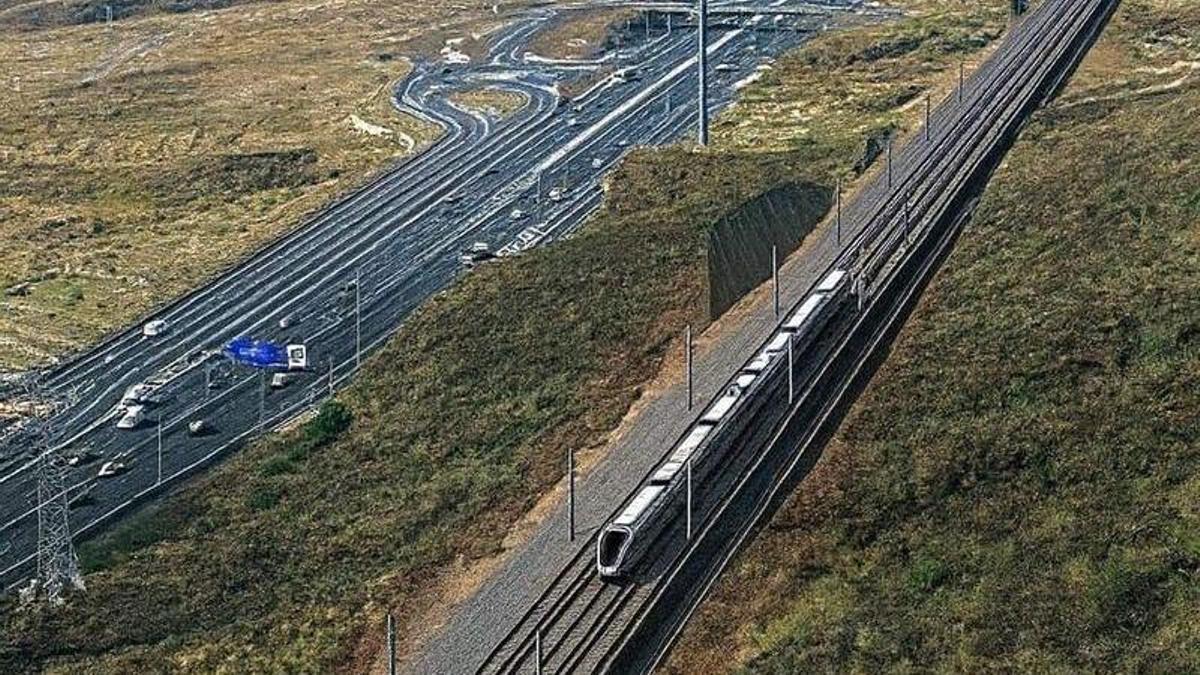
The manager of Spanish airports has committed to modifying the plans for the complete overhaul of Tenerife South airport, encompassing both the terminal and exterior areas, in order to incorporate a train station. The president of the island corporation, Rosa Dávila, explained on Wednesday 8 April that the pact reached with Aena not only allows for the integration of the train stop into the new Tenerife South airport but also speeds up the procedures for the final approval of the environmental impact report—another of the pending steps needed to secure funding and begin deploying the new public transport line. This is a key piece of infrastructure to end the congestion on the Southern Motorway (TF-1).
Timeline for Construction and Phased Approach
Dávila detailed, in the press conference following the Government Council meeting, that the Council will sign the agreement with Aena “shortly”, now with the modified airport rehabilitation project, to in turn submit this change to the environmental impact report and obtain a definitive declaration that paves the way for the start of construction. The island government has a major advantage: most of the building projects for the train’s first phase are already completed. The first railway line that Tenerife will have will begin construction on the section from Adeje to San Isidro (in the municipality of Granadilla de Abona). The Councillor for Mobility, Eulalia García, clarified that until this phase is finished, the southern line will not be extended to Santa Cruz.
The total cost is €2.5 billion for a route that, once all phases are concluded, will allow travel from the capital to the municipality of Adeje in just 39 minutes.
Financial and Technical Support Secured
The Tenerife president announced another advance in the complex bureaucratic process to deploy the Adeje-Santa Cruz railway line. The island corporation, following the example set by both the Canary Islands Government and the Gran Canaria Council for their train project, has entered the shareholding package of Ineco, a public company of the Ministry of Transport and Sustainable Mobility, to drive forward the southern railway. The objective of this financial operation is for the Tenerife Council to receive “technical assistance” from Ineco.
Entry into this company, the aforementioned agreement reached with Aena—which only lacks the final signature—and the definitive approval of the environmental impact report—which Dávila clarified on Wednesday is “already updated”—represent a fundamental step forward for a project which aspires to become the third most used commuter rail network in Spain.
Project History and Updated Schedule
In September 2024, the island’s Government Council awarded the contract to update the environmental impact study for the Southern Train project, which had expired. Its drafting cost €89,500. Seven months have passed since the previous step taken by the administrations to make the island’s first railway a reality. On 4 September 2025, the Spanish Government signed the first protocol guaranteeing the co-financing of the Southern Train through the General State Budget. The state investment will be added to that contributed by the Canary Islands Government and the Tenerife Council, although European funds will also be sought given the project’s high cost.
This agreement reached by the State with the Canary Islands Government and the Tenerife Council established the first roadmap for the construction of the Adeje-Santa Cruz railway line. This protocol stipulates that construction of the southern line will begin with the first phase between San Isidro and Costa Adeje. The idea is for the works to go out to tender between the end of 2027 and the beginning of 2028.
More than 28 years after this alternative to island transport was first proposed and following the new steps taken by the Council, the updated schedule is as follows: once the agreement with Aena is signed and the environmental impact report is approved by the end of this year or early 2027, the island corporation calculates that the works will go out to tender between the end of 2027 and the beginning of 2028.
Why the Southern Line Takes Priority
The island government has prioritised the southern project, relegating the northern train, taking into account demographic and topographic criteria when quantifying the level of difficulty and priority: the South is by far the part of the island with the fastest-growing population and which receives the most tourists. Furthermore, this infrastructure has a simpler route to build as it will require fewer compulsory purchases, the terrain is flatter, and there are fewer dispersed population centres.
In reality, the first official document establishing the need to build a train in Tenerife dates from much earlier. It is from 15 September 1909 and is signed by the then civil governor, a position equivalent to the current central government delegate in the Islands. In it, Joaquín Santos speaks of the public utility of a project to create a railway line from the capital, Santa Cruz, to Garachico, running through the northern municipalities.
What’s happening in the Canaries – straight to your phone
News, weather alerts and practical updates – direct from the islands, in English. We live here and know what’s going on – before the international media catch up. Everything lands on our WhatsApp channel – no middlemen, no algorithm. Curated for families, expats and travelers.

Vueling plane lands with landing gear fault at Los Rodeos

Ferry contract to Canary Islands declared void

Bomb threat on Vueling flight triggers Gran Canaria airport security operation

Cruise to Canaries cancelled after collision in port

Tenerife tram delays worsen amid staff shortages

Titsa adjusts night bus times for clock change on Tenerife

Night roadworks to disrupt TF-1 traffic from Sunday

Public service obligation for Canary inter-island flights announced

Iberia accused of ejecting passengers from paid seats
