
A historic electrical link-up
From today, Wednesday 1 July, Tenerife and La Gomera have become, in effect, a single island – at least when it comes to their power grids. The two islands have been permanently connected via the deepest submarine cable in the world, reaching depths of 1,145 metres below sea level. Switched on this Wednesday, the infrastructure marks a historic milestone in the Canary Islands’ energy development and represents an enormous technological challenge, requiring an investment of more than €170 million.
The link will prevent the kind of blackouts that have affected both islands in recent years. According to Casimiro Curbelo, president of the La Gomera Cabildo, the connection is especially decisive for his island. “La Gomera is the biggest beneficiary,” he said. “The strengthening of its grid means that in the event of problems, it can rely on a much more robust network like Tenerife’s.”
How the connection works
Curbelo confirmed that Red Eléctrica, the company responsible for the exclusive management of Spain’s high-voltage transmission grid and the lead firm behind the cable’s deployment, had informed him on Wednesday morning that the link had been activated as planned. The cable is a double-circuit alternating current (AC) connection operating at 66 kilovolts, with a transport capacity of 50 megawatts and a total length of more than 36 kilometres.
This is the first time in history that two islands in the province of Santa Cruz de Tenerife have joined their electrical systems. By contrast, in the neighbouring province of Las Palmas, Lanzarote and Fuerteventura have been connected since 1977, with that cable undergoing upgrades in 2005 and 2022.
Ending blackouts and boosting renewables
Putting an end to energy blackouts – such as the one La Gomera suffered on 18 January this year, and between 30 July and 1 August 2023 – is not the only major advantage of this energy merger. Curbelo stressed that it also opens the door for La Gomera to be supplied entirely by clean energy, made possible by the strengthening of the island grid.
“The imbalance of the previous independent electrical system forced us to waste a large part of the energy generated by the wind farms installed on La Gomera, but that is now over,” the Cabildo president explained. “Thanks to this connection with Tenerife, the whole island can now be supplied by electricity from these wind farms and photovoltaic installations, which have the capacity to generate 11 megawatts – the amount consumed by the people of La Gomera.”
Thanks to this link, La Gomera will be able to generate and integrate a renewable energy surplus exceeding the island’s total demand, reducing reliance on the El Palmar thermal power station, which runs on polluting fuels, and improving the quality of the island’s power supply. Meanwhile, Tenerife’s grid will be able to absorb La Gomera’s excess renewable generation, further reducing fossil fuel use and contributing to lower greenhouse gas emissions.
Substations and investment
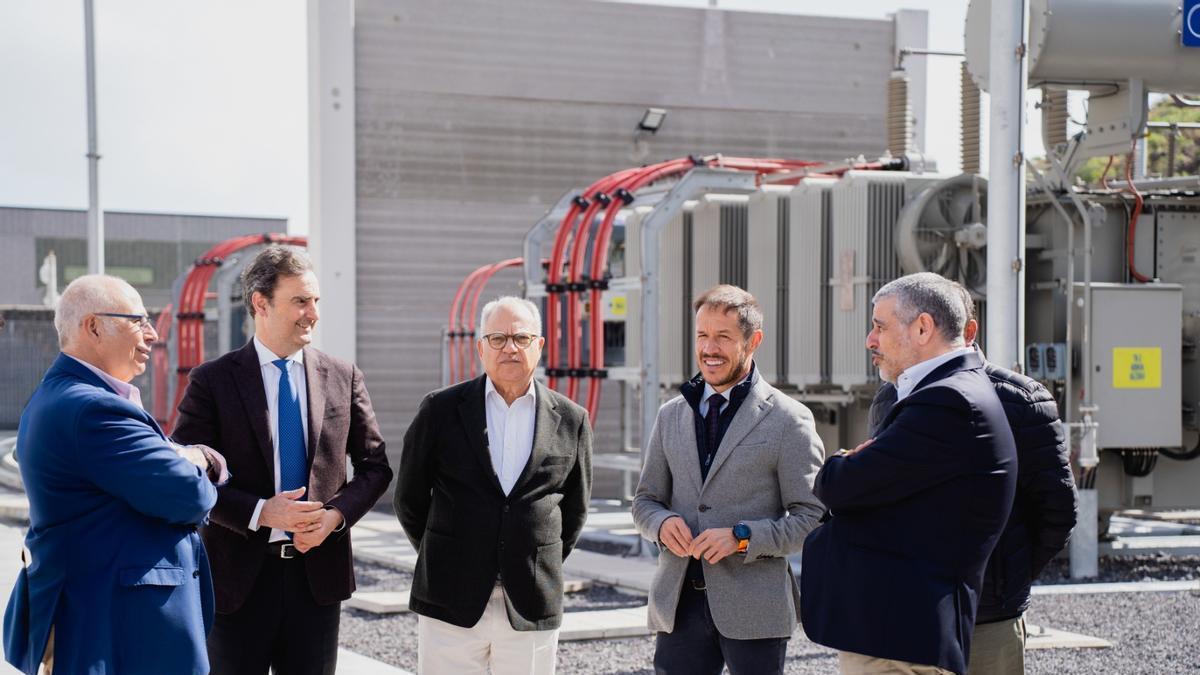
To bring the cable into operation, two new substations had to be built: one in El Palmar on La Gomera and another in Chío on Tenerife. These cost an additional €32 million on top of the €145 million spent on the submarine cable itself. The substations, which act as connection points for the interconnector, were built by Endesa, the exclusive electricity distributor in the area.
A world record for deep-sea cables
The Tenerife-La Gomera connection has been a major technological challenge due to the depth, the volcanic nature of the terrain and the rugged orography, both on land and under the sea. It is considered the deepest three-phase AC link on the planet. A three-phase link is a submarine electrical infrastructure project – such as this one from Chío to El Palmar – that uses a double-circuit AC submarine cable with three conductors (tripolar), designed to improve the resilience and reliability of the electricity supply.
What this means for the future
Included in the Electricity Transmission Grid Development Plan for 2021-2026, this connection represents the culmination of a major milestone in the history of the Canary Islands’ electrical system. With this significant advance, only three island systems in the archipelago remain isolated: those of La Palma, El Hierro and Gran Canaria. According to the Government of the Canary Islands and Red Eléctrica, the strategic project has been carried out with “the highest environmental safeguards”.
What’s happening in the Canaries – straight to your phone
News, weather alerts and practical updates – direct from the islands, in English. We live here and know what’s going on – before the international media catch up. Everything lands on our WhatsApp channel – no middlemen, no algorithm. Curated for families, expats and travelers.

Canary Islands sea hits second-hottest year on record

Legal bid to halt tree felling in Santa Cruz’s La Salud

Fiesta del Charco: A journey through La Aldea’s past

Corralejo dunes power line set for removal

ULPGC launches 14 research projects at Las Canteras

TMT will never be built, says Canary Islands astrophysics chief

Pedro Duque: Canarias is the “ultimate dream” for rockets

Court blow to Tenerife motor circuit project
La Palma faces new volcanic risk planning deadline
