
Teide’s stomach rumbles again
Mount Teide’s stomach is rumbling once more. After two days of very weak activity, Tenerife’s deep interior recorded fresh pulses of seismic activity west of Las Cañadas early on Thursday. In the past 24 hours, more than a hundred earthquakes and small, interlinked pulses have been detected. Of these, 24 have so far been located, though the activity is not yet over.
Third seismic swarm since last week
After two days of activity but relative calm deep inside the great volcano, Spain’s National Geographic Institute (IGN) has detected a new increase in seismic-volcanic activity beneath Tenerife – the third such episode since last week. Since midnight, several pulses have been recorded, the most notable occurring at around 3:54am.
At the same time, several low-magnitude volcano-tectonic earthquakes have occurred in other parts of the island. Specifically, three were detected in the strip separating Gran Canaria and Tenerife – the area known as the Enmedio volcano – the largest measuring magnitude 2.6. Beneath the island itself, most epicentres are located to the west of Las Cañadas, mainly under the municipal districts of Guía de Isora and Vilaflor de Chasna.
Earthquakes at depths of 10 to 16 kilometres
This unusual seismic activity – which has now become part of the new normal under Teide – is occurring at depths of between 10 and 16 kilometres below sea level. The earthquakes are low in energy, as on previous occasions, although this time they have reached 2.0 MbLg. Despite this, none of the 107 events have been felt by the population.
During this episode, pulses of different types were recorded, including earthquakes, low-frequency (LP) events and hybrid events (a mix of the two), the latter being the most common in this process. This kind of activity is similar to what has been recorded since the start of the year and does not increase the probability of an eruption in the short or medium term on the island of Tenerife.
What is causing the tremors?
Researchers believe these seismic events are linked to the movement of magmatic fluids (whether liquid or gas) circulating and interacting with the rocks deep beneath the island. This type of seismicity, when occurring in isolation, does not necessarily imply an evolution towards an eruption, either in the medium or long term. However, the persistence of activity in the same area is consistent with the continuation of an active, localised process.
Monitoring round the clock
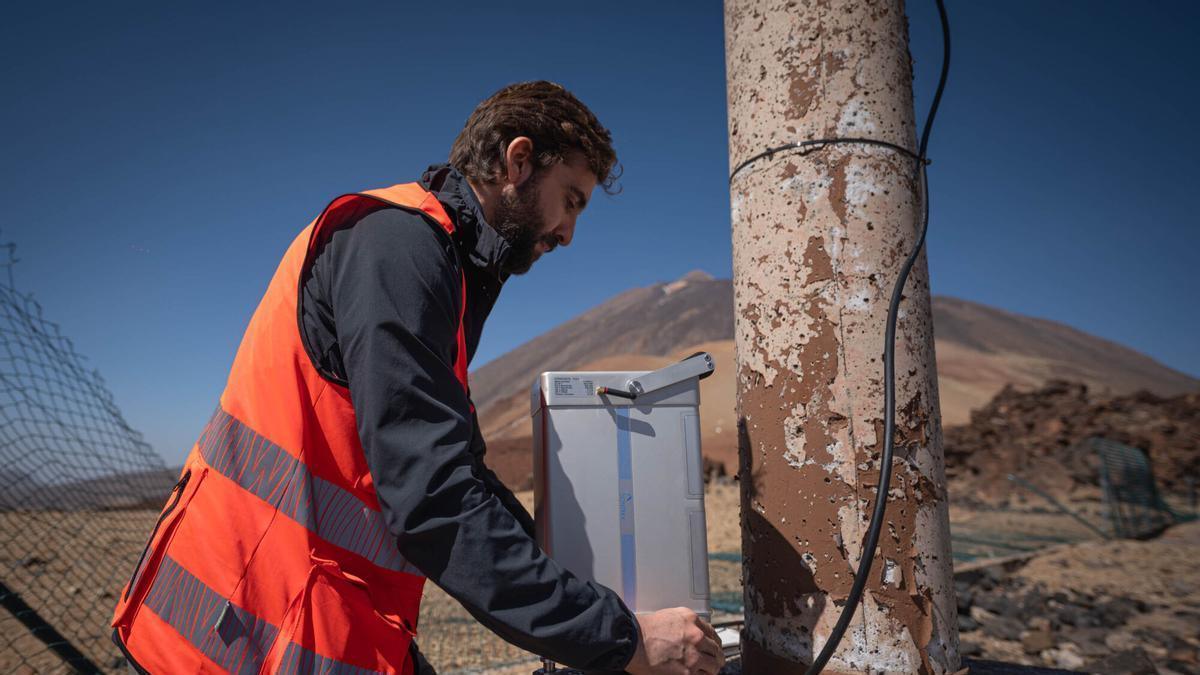
The IGN, as the body responsible for volcanic monitoring in Spain, has deployed a network of more than 100 fixed stations, equipment and sampling points on the island. These monitor and evaluate the key parameters using current technology, enabling round-the-clock, real-time tracking of any change, alteration or anomaly in seismicity, ground deformation and geochemistry that could indicate an evolving hazard in the short, medium or long term.
What’s happening in the Canaries – straight to your phone
News, weather alerts and practical updates – direct from the islands, in English. We live here and know what’s going on – before the international media catch up. Everything lands on our WhatsApp channel – no middlemen, no algorithm. Curated for families, expats and travelers.

Canary Islands sea hits second-hottest year on record

Legal bid to halt tree felling in Santa Cruz’s La Salud

Fiesta del Charco: A journey through La Aldea’s past

Corralejo dunes power line set for removal

ULPGC launches 14 research projects at Las Canteras

TMT will never be built, says Canary Islands astrophysics chief

Pedro Duque: Canarias is the “ultimate dream” for rockets

Court blow to Tenerife motor circuit project
La Palma faces new volcanic risk planning deadline
