Resident challenges Santa Cruz noise rules for mega-concerts
To what extent should the quality of music take precedence over residents’ right to rest? That is the question now sitting on the desks of Santa Cruz de Tenerife town hall, after a resident decided to challenge the new municipal regulation that will allow up to twenty large-scale events a year in the capital, with fewer restrictions on noise.
Decree published in July sparks controversy
The controversy dates back to a decree published on 8 July in the Official Provincial Gazette. Instead of drawing up a new municipal ordinance to regulate the holding of large concerts, the town hall has opted to modify existing rules to extend the exceptions that allow noise limits to be exceeded.
According to the claimant, the decision is a shortcut that turns what the law reserves for exceptional situations into a routine occurrence. Under the new rules, the biggest concerts—those attracting more than 5,000 attendees or held in large open-air spaces—would be exempt from installing automatic sound limiters, the devices that reduce volume when certain levels are exceeded.
Councillors cite artistic reasons for sound limiter exemption
The town hall justifies the exemption on artistic grounds. It argues that the available technology could affect the acoustic quality of performances and hinder the sound perception that musicians need on stage. Instead of using limiters, organisers would be required to control noise through manual measurements and a specific monitoring plan.
It is precisely this substitution that makes no sense to the resident, who has filed a preliminary appeal for reconsideration, to which Canarias Ahora has had access. She points out that the events with the greatest capacity and the highest sound output would, paradoxically, be the ones with the fewest automatic control mechanisms, leaving the protection of local residents in the hands of human supervision rather than making use of technological resources.
Twenty events a year across two venues
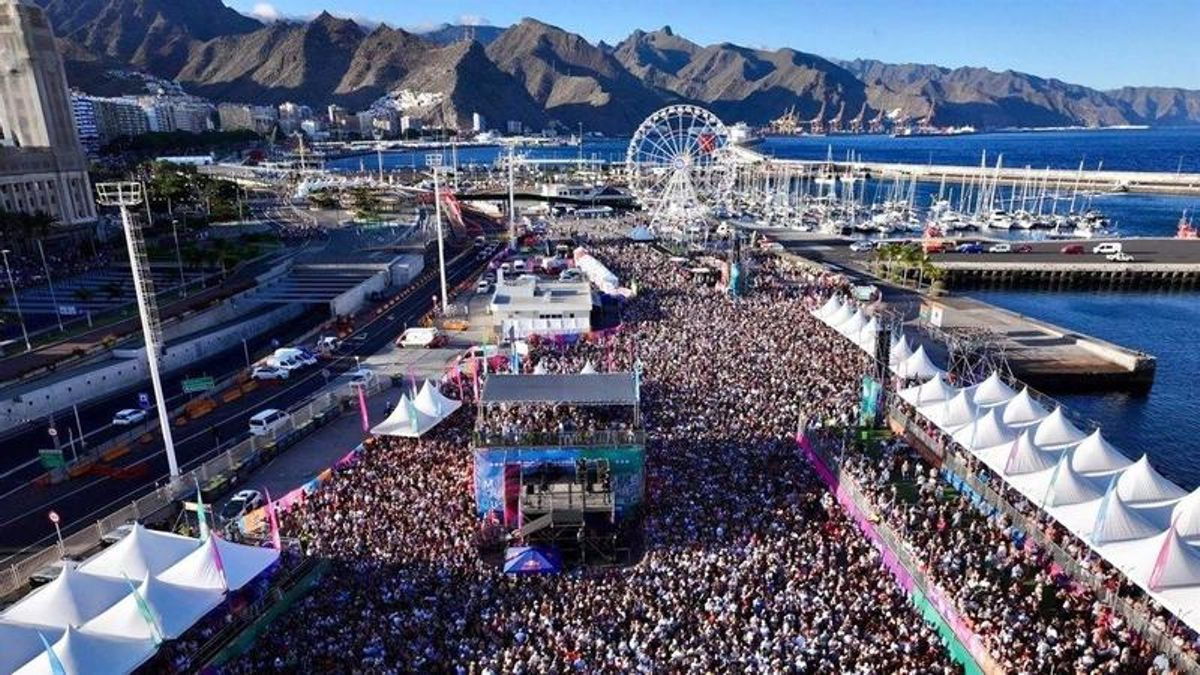
The council’s modification states that the Dársena de Los Llanos dock area could host up to ten large events a year, and the Heliodoro Rodríguez López stadium a further ten, with a maximum of three per quarter at each venue. In addition, performances could run until 2am when they coincide with weekends or the eve of public holidays.
The claimant questions whether these limits were set without a study analysing the cumulative effect of twenty large events a year on the resident population, and without citizen participation. She argues that the problem is not the noise of a single night, but the repetition of episodes of high acoustic pollution and its consequences for the rest and health of those living near these spaces.
Previous appeals unanswered
This is not the first such challenge. The same resident previously lodged an appeal in December 2025, coinciding with the XXXI Christmas Concert by Puertos de Tenerife. She says the town hall has still not responded to that appeal, nor to the objections she submitted that same month during the processing of the Noise Action Plan, a procedure in which the Los Llanos para Vivir residents’ association also made representations.
Asked by this newspaper, the town hall stated that any appeal will be studied by its technical officers and answered in due course.
Cook Music Fest reignites long-running dispute
All of this has put the spotlight on the Cook Music Fest, held between 16 and 18 July at the Dársena de Los Llanos. The resident alleges that this year the stage was installed closer to the Auditorio de Tenerife and facing south, a layout that directed the sound directly towards homes along the seafront, roughly 600 metres away and with no barriers to cushion the impact.
The unrest affected up to 15 residents’ communities in the capital, which filed complaints about the acoustic pollution generated by the festival. Noise reached neighbourhoods including El Chapatal, Los Gladiolos, Cabo Llanos, the central area and Avenida de Anaga, forcing many residents to keep their windows shut and even use earplugs to sleep for three nights.
For the claimant, the Cook Music Fest confirmed a conflict that had been brewing for months, and which she has now taken to the administrative route. She is seeking the full annulment of the decree, arguing that suspending noise limits is a tool intended for genuinely exceptional situations, not for organising a city’s cultural calendar on a regular basis.
Alternative proposals and looming deadline
Should that request fail, she proposes as an alternative that the Dársena de Los Llanos and the Heliodoro Rodríguez López stadium be removed from the list of venues subject to recurring acoustic exceptions, and that stages and sound towers be banned from the area of the dock closest to the Auditorio de Tenerife, where the impact on homes is greatest.
Beyond the appeal itself, the debate goes beyond the contents of a decree. It pits two visions of the city against one another: those who want to consolidate Santa Cruz as a major venue for concerts and festivals, and those who insist that cultural ambition cannot be built at the expense of the right to rest of those living next to the chosen sites.
The deadline for lodging an appeal ends this Saturday, 8 August. After that, it will be up to the town hall to decide whether to keep a regulation designed to turn two of the city’s venues into regular stages for big concerts, or to introduce changes to limit the acoustic impact on local residents.
What’s happening in the Canaries – straight to your phone
News, weather alerts and practical updates – direct from the islands, in English. We live here and know what’s going on – before the international media catch up. Everything lands on our WhatsApp channel – no middlemen, no algorithm. Curated for families, expats and travelers.

Canary Islands approves new €1.6bn development fund

Mogán mayor says her €65,000 salary is too low

Abandoned cars in Canary Islands: hundreds left to rot
Work resumes on 27 affordable rental homes in Las Palmas

Los Realejos residents fight on against propane gas plant

Canarias among Spain’s poorest regions as 36.2% live on low incomes

Canary Islands bananas lose ground to imported bananas
Canary Islands bottom of Spain’s social housing table

Three migrant boats reach Canary Islands in 24 hours