Morocco’s tourism surge is closing the gap
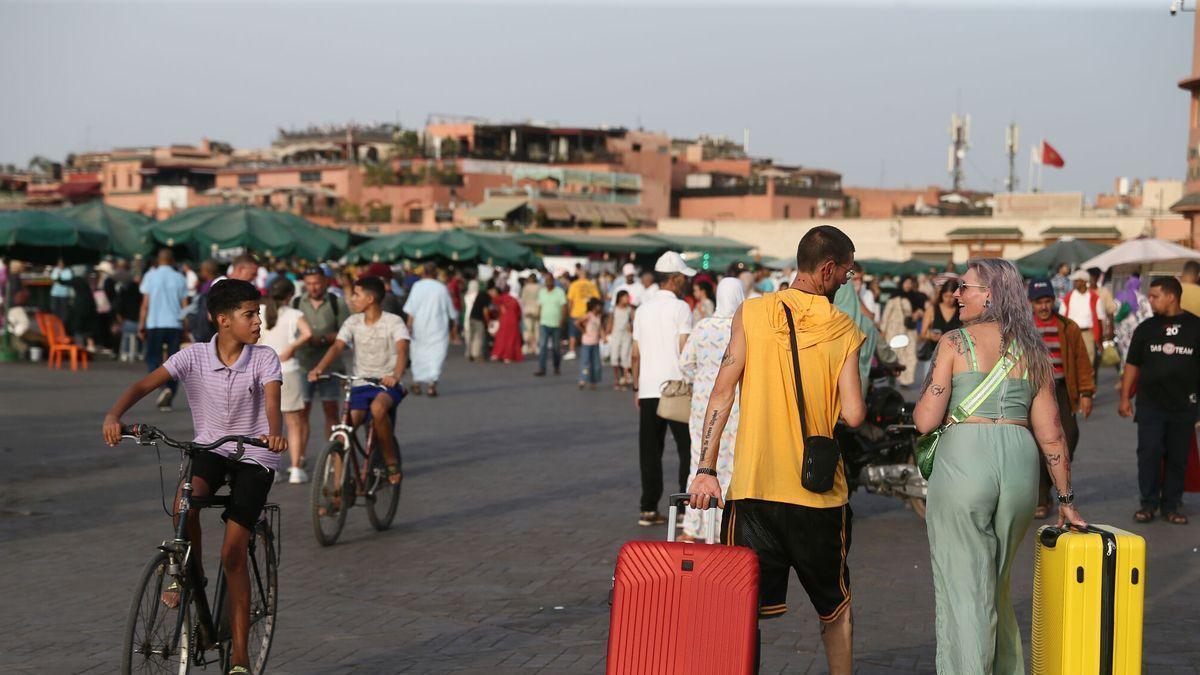
Less than 500 kilometres away from the Canary Islands, a competitor is emerging with ambitions to build a tourism sector as robust as the archipelago’s. And it is well on its way. Morocco’s hotel capacity has grown by 23.6% in 2026 compared with 2025, and last year the North African country overtook the Canary Islands in tourist numbers for the first time, reaching nearly 20 million visitors – a 14% increase on the year before.
Morocco has stepped up its tourism strategy, intensifying investment in key infrastructure such as airports and transport in recent years. More competitive prices for hotels and dining make it an attractive alternative alongside the Canary Islands’ coasts.
Business leaders: competition is not a threat
Canarian business associations are not blind to this growth, but for now they dismiss the idea that it represents “a threat” to the islands. “I am not particularly worried. It is only logical that others should try to develop their own tourism model,” says Pedro Alfonso, president of the Tenerife branch of the Spanish Confederation of Business Organisations (CEOE). He argues that what matters is “understanding that the greater the competition, the greater our capacity to be efficient and competitive must be.”
Pedro Ortega, president of the Canarian Confederation of Business Owners (CCE), takes a similar view. He warns that “the boy is growing up”, meaning the islands must “do things well” to hold onto the advantage they currently have. Both business organisations agree that the Canary Islands have strengths that are “very difficult to replicate.”
“We are Europe. We have legal certainty, experience, connectivity, top-tier airport and port infrastructure, a very well-established hotel sector, and a highly diversified tourism offering,” Alfonso points out.
Forty years of experience and record figures
The Canary Islands boast a robust model built on four decades of experience and historic visitor numbers. The archipelago closed the first quarter of 2026 with record highs for international arrivals and tourist spending, welcoming 1.5 million foreign tourists who together spent 2,478.87 million euros.
“Some destinations may come in with aggressive pricing strategies, but sustaining that over time is complex. Real competitiveness does not depend solely on being cheap; it depends on generating trust, quality, and loyalty,” Alfonso argues.
Hoteliers confident in the Canarian model
Jorge Marichal, president of the hotel association in Santa Cruz de Tenerife (Ashotel), does not dismiss the progress being made in Morocco but has faith in the success of the Canarian model. “We need to stay focused on our own business – improving our infrastructure, our services, and our capabilities. We should look at what is happening there, but with the clarity that we are 40 years ahead,” he explains. Marichal, who also heads the Spanish Confederation of Hotels and Tourist Accommodation (Cehat), is clear that success does not come simply from increasing accommodation stock. “You need the right staff, good management, a tourism experience around the hotels, and many other things,” he says.
Rising taxes are the real concern
What does worry business leaders is the impact of rising taxes – in particular, the increase announced by Aena (the Spanish airport operator) and the carbon dioxide emissions charge imposed by Europe, from which the Canary Islands are exempt until 2030. Airlines such as Ryanair have decided to cancel or reduce their operations in destinations like the archipelago because of higher costs, and are instead increasing capacity in countries they consider “more competitive,” such as Morocco.
“The authorities have the opportunity to help and support an ultra-peripheral territory that belongs to Europe,” Ortega argues. José María Mañaricua, president of the Las Palmas Federation of Hospitality and Tourism Entrepreneurs, blames Europe itself. “They need to understand that the only way to get to the Canary Islands is by plane; there is no alternative. We cannot shoot ourselves in the foot with these taxes,” he urges, adding that the sector’s success lies in the hands of the Canarians themselves. “We are masters of our own destiny. We do not need to keep an eye on what our neighbour is doing; competition has always been there,” he insists.
A positive spin on Morocco’s growth
Mañaricua also believes that Morocco’s development has a very positive aspect for the archipelago. “It is good to have neighbours who are raising their GDP and per capita income, because that helps curb the crises the region suffers, and consequently the mass migration that ends up affecting the Canary Islands,” he explains.
The president of Ashotel plays down the significance of airlines like Ryanair “threatening” to cut air capacity to the Canary Islands. “Airlines will go where people want to go. What we have to do is keep focusing on making people want to come, and we will find someone to bring them,” Marichal concludes.
What’s happening in the Canaries – straight to your phone
News, weather alerts and practical updates – direct from the islands, in English. We live here and know what’s going on – before the international media catch up. Everything lands on our WhatsApp channel – no middlemen, no algorithm. Curated for families, expats and travelers.

Tenerife faces huge tourism expansion despite moratorium calls

El Bejeque in Las Canteras adds sea to its fire

Siam Park Gran Canaria must build its own desalination plant
Fuerteventura’s biggest resort to open on 1 November

Gran Canaria to teach tourism history in schools
Canary Islands see 0.3% rise in foreign tourists in August

Row over 368-bed hotel project in La Gomera
Spanish astronaut trains in Lanzarote for Moon mission

Tivoli La Caleta hosts first red tuna Kaitai in Canarias