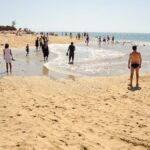
Scientists denounce ‘scientific greenwashing’ in Tenerife park project
More than 20 scientists from the Canary Islands have signed a public declaration expressing concern over the instrumental use of science to justify commercial projects across the islands. Specifically, they have voiced their opposition to Underwater Gardens, a park planned for the Punta Blanca area in southern Tenerife.
In their letter, the researchers criticise the way restoration efforts are being turned into a “narrative for accessing public funds, protected spaces and territories” that would otherwise remain out of reach of “commercial and speculative activity”.
“We are writing this declaration because we observe, with growing concern, a trend that we consider ethically unacceptable: the appropriation of the scientific language of ecological restoration to legitimise projects whose nature and purpose are predominantly commercial,” they warn.
How commercial interests adopt the vocabulary of ecology
The scientists warn that actors with very specific economic interests “have understood that joining research consortia, adopting the vocabulary of ecology and associating with academic institutions gives them a cloak of credibility that no communications campaign could replace”.
Along these lines, the signatories denounce what they term “scientific greenwashing”: the use of an appearance of academic rigour to “confer technical legitimacy on an initiative that cannot withstand independent scrutiny”. According to the scientists, this phenomenon is “more serious” than conventional corporate environmental posturing because it “weaponises the credibility of science itself, damaging its social reputation”.
Concerns over Underwater Gardens and Sea Garden
“We are particularly concerned about the specific case of the Underwater Gardens Park theme park, on the south-west coast of Tenerife, whose marine section, Sea Garden, received €11 million for research and development. These funds will end up serving the theme park on a coastline which, despite being a Special Area of Conservation, cannot withstand any further pressure,” the letter states, which has been seen by Canarias Ahora.
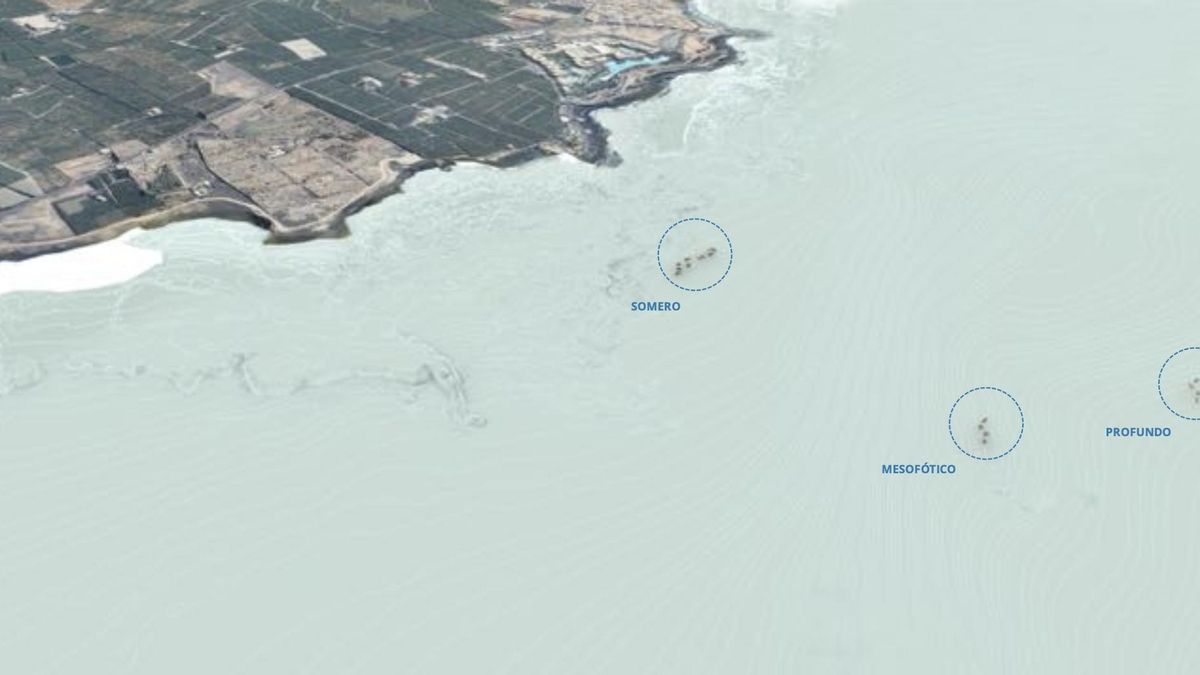
Among the experts who have signed the letter are members of scientific groups from the University of La Laguna and the University of Las Palmas de Gran Canaria, as well as researchers from the National Museum of Natural Sciences (CSIC) and CONICET. They all support the objections submitted by the Salvar Punta Blanca platform against the project submitted by Underwater Gardens to occupy protected coastal zone for the installation of artificial reefs and oceanographic monitoring stations in the municipality of Guía de Isora.
A regenerative park for 3,000 daily visitors
In the same area, the Cabildo of Tenerife declared a separate Underwater Gardens project to be of island interest in 2022. This project was described as a “regenerative park” to offer tourists and residents “unique experiences of connection with the sea and nature”. According to the project documentation, the facilities would attract around 3,000 daily visitors.
On 26 March this year, the Government of the Canary Islands put the artificial reef project out to public consultation. The Salvar Punta Blanca platform, made up of 34 different groups, has demanded that this process be declared void because “the document submitted for consultation deliberately omits the identity of the technical experts who signed it”. In their place, several black boxes appear.
Ecological concerns over artificial reefs
The environmentalists also maintain that installing artificial reefs on this site would alter a sandy seabed of high ecological value that is home to protected species such as the angel shark and the green turtle. The groups extend their concern to the regenerative park, planned across 17,000 hectares and promoted by Underwater Gardens.
Although the project currently open to public consultation focuses on the occupation of the coast, Salvar Punta Blanca warns that these are “not two independent projects, but two legs of the same business project, processed before different public authorities to avoid them being assessed together”.
Project director defends the initiative
On this point, Sergio Rossi, scientific director of the European Ocean Citizen project under which the initiative falls, told this newspaper that the authorisation requested to occupy the protected coastal zone “cannot be interpreted as a first construction phase of the regenerative park”. “The relationship between the two must be understood in scientific and methodological terms, not as a covert execution of a phase of the park,” he responded.
A call to protect the integrity of science
The signatories of the declaration work in environmental sciences, marine ecology, conservation biology, geography and the social sciences. “We do so from public institutions and with largely public funding. That condition imposes on us a responsibility that goes beyond scientific production: it obliges us to safeguard the integrity of the knowledge we generate,” they assert.
Along these lines, they call on the rest of the scientific community and remind them that “participation in a research project carries a responsibility that does not end with the production of data”.
“It also carries the responsibility of knowing who funds this project, what interests they represent, how the results will be used, and what consequences the intervention will have on the ecosystems and communities involved,” they stress.
“The science of ecological restoration is one of the most valuable tools we have to respond to the environmental crisis. Precisely because of that, it deserves to be protected from those who use it as a cover,” they conclude.
What’s happening in the Canaries – straight to your phone
News, weather alerts and practical updates – direct from the islands, in English. We live here and know what’s going on – before the international media catch up. Everything lands on our WhatsApp channel – no middlemen, no algorithm. Curated for families, expats and travelers.

Tenerife’s Char Fuego y Brasas named 13th best steak restaurant in Europe

Gran Hotel Taoro: a foodie destination in Puerto de la Cruz

Canary Islands hotel prices rise 4.11% in September

Icod de los Vinos launches twelve self-guided routes
Four new openings shaking up Las Palmas dining scene

Tenerife faces huge tourism expansion despite moratorium calls
El Bejeque in Las Canteras adds sea to its fire
Siam Park Gran Canaria must build its own desalination plant
Fuerteventura’s biggest resort to open on 1 November