Beyond Teide: La Orotava’s tourism challenge
The Villa de La Orotava must broaden its tourism activity beyond visits and excursions to Mount Teide. This is the stark reality set out in the diagnosis of the municipality’s second strategic tourism plan, which identifies the expansion and diversification of tourism as one of the main requirements for establishing a model that suits the town.
An updated vision after the pandemic
The document is an evolution of the first plan, which was presented in 2019, and which the town council requested to review following the pandemic. It was drawn up by the European University of the Canary Islands and the University of La Laguna, with support from Turismo de Tenerife. La Orotava Council presented the document – based on an up-to-date demographic and economic report – this Monday. Spanning more than 150 pages, it identifies shortcomings in overnight stays, pedestrian areas and insufficient tourism positioning.
What locals and visitors say
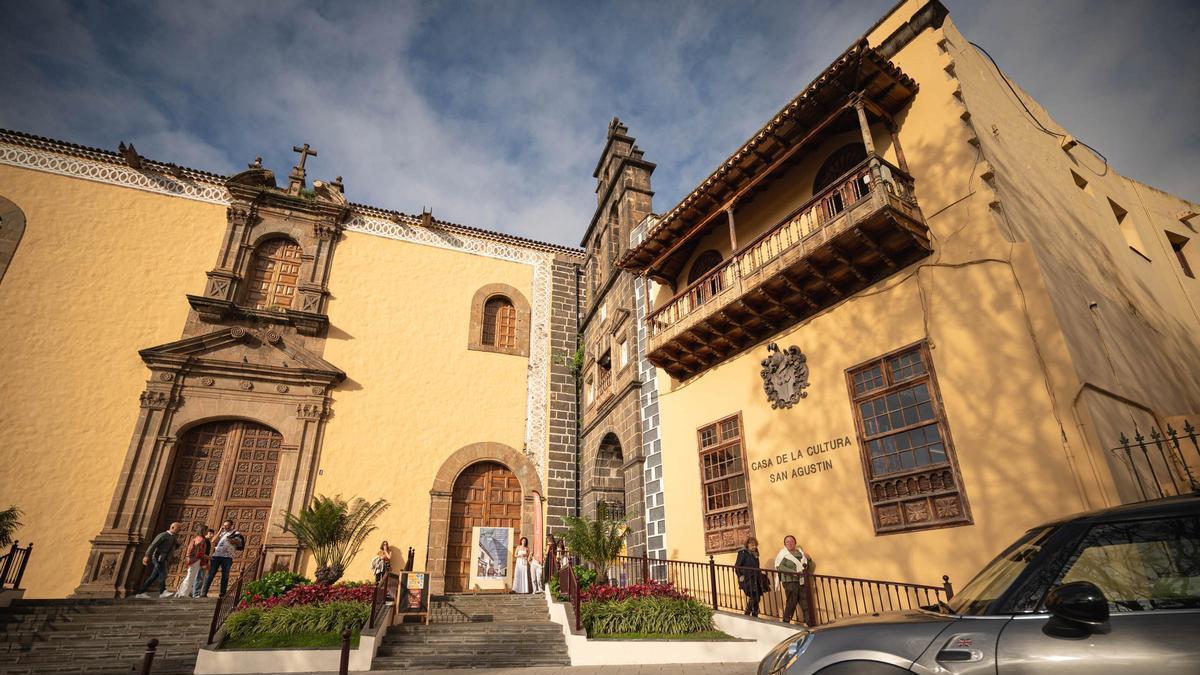
Using a methodology of surveys and focus group interviews, experts from both universities determined that the shared opinion among respondents is that La Orotava “has significant cultural and heritage potential, but it is not sufficiently positioned or communicated”. This weakens the town’s tourism appeal compared with neighbouring municipalities. More specifically, testimonies point to the saturation of the historic centre in some areas, such as the Casa de los Balcones, and traffic congestion. To address these issues, the plan recommends pedestrianisation strategies, diversifying walking routes and territorial decentralisation.
Water, housing and energy concerns
Another issue worrying surveyed residents is the water emergency, together with pressure on housing and energy. The solution, the plan suggests, lies in revitalising agro-ecological circuits, strengthening the management of agricultural terraces and promoting sustainable mobility through electric micro-vehicles or pedestrian paths.
The slow city paradox
La Orotava joined the Cittaslow network in 2018. This is an international movement that promotes a slow, sustainable, high-quality urban lifestyle, seeking to improve the well-being of both residents and visitors through the preservation of traditions, local gastronomy, environmental sustainability and the creation of pedestrian spaces. This is the philosophy at the heart of the strategic plan, which recommends its application. However, the plan warns that “the transition from certification to daily practice reveals a series of tensions”, with survey respondents stating that “the slow label does not always correspond with lived experience (noise, traffic, paralysed licences)”.
A call for inclusive and sustainable development
The indicators suggest that La Orotava needs to integrate employment, income and sectoral diversification policies in order to balance its tourism vocation with inclusive and sustainable socio-economic development. In other words, it must create a symbiosis between its character as a tourist destination and its more local identity. A large proportion of the testimonies collected also suggest the need to establish this circular relationship. “This convergence demonstrates that tourism can become a vector for redistribution and the driving force behind a new productive narrative for the municipality,” part of the study notes.
Structural problems and the path forward
Finally, the strategic plan refers to structural problems such as the proliferation of holiday rentals in the historic centre and delays in granting rehabilitation licences for heritage buildings, which leads to “degradation and gentrification”, the document states. In 2024, La Orotava was visited by 1.2 million tourists. This is equivalent to 15.9% of the total for the island of Tenerife. However, it only has 104 hotel beds and 1,688 holiday rental places. In the face of these figures, the experts argue that the tourism challenge for achieving a sustainable model lies in applying the slow city approach.
What’s happening in the Canaries – straight to your phone
News, weather alerts and practical updates – direct from the islands, in English. We live here and know what’s going on – before the international media catch up. Everything lands on our WhatsApp channel – no middlemen, no algorithm. Curated for families, expats and travelers.

Tenerife’s Char Fuego y Brasas named 13th best steak restaurant in Europe

Gran Hotel Taoro: a foodie destination in Puerto de la Cruz

Canary Islands hotel prices rise 4.11% in September

Icod de los Vinos launches twelve self-guided routes
Four new openings shaking up Las Palmas dining scene

Tenerife faces huge tourism expansion despite moratorium calls
El Bejeque in Las Canteras adds sea to its fire

Siam Park Gran Canaria must build its own desalination plant
Fuerteventura’s biggest resort to open on 1 November