
La Palma reopens one of the Canary Islands’ most spectacular trails
The Cabildo (island council) of La Palma has reopened the famed 13 Tunnels route, known as the Marcos and Cordero trail (PR LP 06), which has been closed for two years for improvement works. This is a partial reopening, however, as only the first phase of a major safety reinforcement project — underway since 2024 — has been completed on one of the island’s most important and heavily used hiking routes.
What has reopened and what remains closed
The section now open runs from Casa del Monte to the entrance of tunnel number 12. The stretch from this tunnel to Espigón Atravesado will remain closed until works on that part of the trail are finished. The full reopening will not be long in coming, however. According to the island council, the entire route will reopen progressively over the coming weeks as conditioning works and safety assessments are completed.
A journey through geology and botany
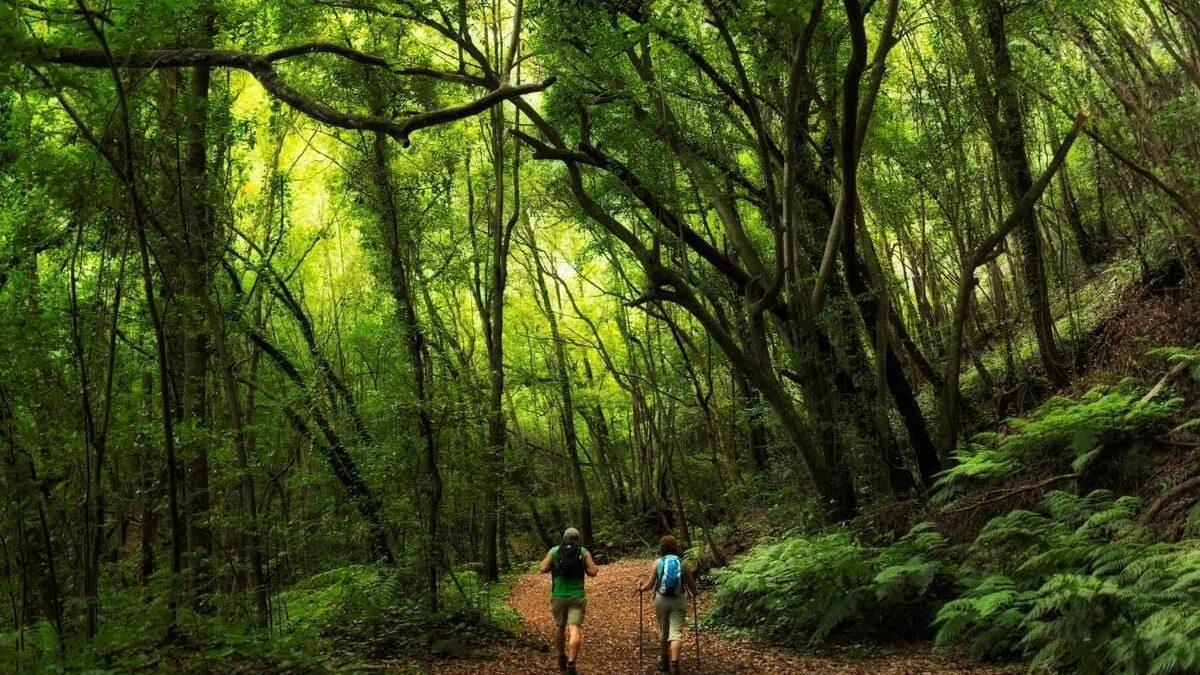
In the northern heart of La Palma, water is more than a resource — it is a living force that sculpts the landscape. Walking the Marcos and Cordero trail is like reading the pages of a one-of-a-kind geology and botany textbook. The path cuts through the core of the Canary Islands’ first Biosphere Reserve, a natural sanctuary where Macaronesian biodiversity — encompassing the archipelagos of the Canaries, Cape Verde, the Azores and Madeira — is at its most exuberant.
At 24.5 kilometres in total, the real botanical star of this adventure is the humid laurisilva forest. This ecosystem is a living fossil, an exact replica of the subtropical jungles that covered the Mediterranean basin millions of years ago, before ice ages swept them from the continent. As hikers descend the slopes of the ravine, they experience a stunning vegetational transition from summit pine forest to laurisilva. Gradually, the pines give way to colossal trees such as limes, laurels and majestic viñátigos (a species of laurel endemic to Macaronesia).
Safety upgrades and investment
Mónica Gómez, the island’s environment councillor, said the council administration is committed to ensuring that the island’s network of trails — especially one as popular as Marcos and Cordero — is “in the best possible condition for users.” The works have involved an investment of €730,000, which has included partial renewal and reinforcement of handrails, as well as installation of protective netting against rockfalls in the Chícharo gully, aimed at increasing safety and improving passage conditions.
The Environment Service will continue working on the trail. The next phase involves opening the section between tunnel 12 and the Cordero spring, followed by a final phase linking the Cordero spring to the Los Tilos Visitor Centre. This will involve inspection and assessment of ravine stability, as well as removal of accumulated plant debris and materials.
Route options and practical tips
The route lends itself to several different itineraries. The most common approach is to take a 4×4 taxi to Casa del Monte (via a 14-kilometre track) and then descend to the Visitor Centre. Another popular excursion starts at the Visitor Centre, reaches the springs, and then returns via the same path or exits at Casa del Monte. Finally, some hikers complete the entire trail, either starting from Los Sauces or from the Visitor Centre. Checking the trail profile and opening hours will help each walker decide which option suits them best. A torch is essential, and waterproof clothing is recommended for crossing the tunnels.
Water, wildlife and the legendary tunnel 12
Beyond its biological and geological riches, the Marcos and Cordero trail is a tribute to the water cycle. The path snakes alongside a historic hydraulic channel. Emerging from the legendary tunnel 12, nature spills over at the Marcos Springs: a series of vertical waterfalls that seemingly burst miraculously from bare rock, feeding the constant flow of pure water that sustains the entire region.
The soundtrack of the route is provided by a unique fauna that has evolved in the island’s isolation. Walking with care and respect, visitors may be rewarded with encounters with some of its most celebrated inhabitants: La Palma’s blue chaffinches and the laurel pigeons of the laurisilva forest.
What’s happening in the Canaries – straight to your phone
News, weather alerts and practical updates – direct from the islands, in English. We live here and know what’s going on – before the international media catch up. Everything lands on our WhatsApp channel – no middlemen, no algorithm. Curated for families, expats and travelers.

Canary Islands sea hits second-hottest year on record

Legal bid to halt tree felling in Santa Cruz’s La Salud

Fiesta del Charco: A journey through La Aldea’s past

Corralejo dunes power line set for removal

ULPGC launches 14 research projects at Las Canteras

TMT will never be built, says Canary Islands astrophysics chief

Pedro Duque: Canarias is the “ultimate dream” for rockets

Court blow to Tenerife motor circuit project
La Palma faces new volcanic risk planning deadline
