
Compiled with the help of artificial intelligence, based on Spanish-language information. Source below the article.
La Palma prepares deep drilling to test geothermal potential
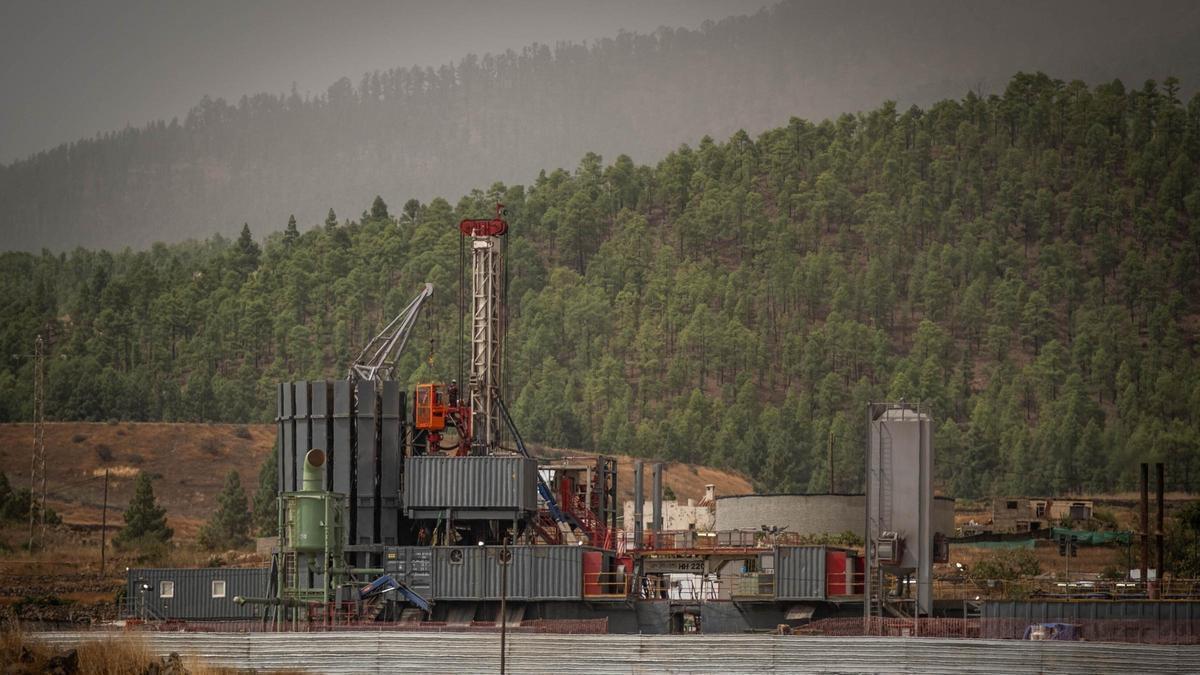
La Palma is preparing a deep drilling campaign to establish whether geothermal energy, generated by the heat of its volcanic subsoil, can be harnessed to produce electricity. The boreholes will reach between 2,500 and 3,000 metres in depth, with deviated drillings of up to 3,500 metres in length, and will be carried out from platforms of around 6,500 square metres. The model is at Vilaflor, on the island of Tenerife, where water at more than 150 degrees and permeable rocks with potential geothermal value have been found.
Details published in the Official Gazette of the Canary Islands
The details appear in the documentation attached to the resolution published this Tuesday in the Official Gazette of the Canary Islands (Boletín Oficial de Canarias). The regional government has decided that the prospections do not need to be subject to a simplified environmental impact assessment, although they will have to comply with environmental conditions, which speeds up the process on the island known as “la isla bonita”. The project, promoted by Energía Geotérmica de La Palma, envisages sites in Breña Alta, Villa de Mazo and El Paso. The platforms will house the drilling towers, auxiliary equipment and the facilities needed for the circulation of fluids. The estimated duration of this research campaign is a full year, including the restoration of the land.
Most volcanically active island in the Canaries
It is worth remembering that La Palma is currently the most volcanically active island in the Canaries, five years after the Tajogaite eruption. The vertical wells will allow the volcanic formations located several kilometres below the surface to be investigated. The deviated boreholes can be directed towards geological targets away from the vertical of the platform. This technique widens the exploration without moving all the machinery. The drillings will seek to determine the temperature, the presence of water, the pressure and the permeability of the rocks. The combination of these factors will make it possible to establish whether there is a usable hydrothermal reservoir. Finding heat is not enough: fluids capable of transporting it and geological formations that allow its circulation are also needed.
Research first, power station later
The research campaign does not yet include the construction of a power station. Its purpose is to obtain direct information from the subsoil and to check whether it meets the conditions for future exploitation. Geothermal energy makes it possible to generate electricity continuously, without depending on the sun or the wind. Each platform will be marked out and fenced off during operations. The company will have to justify its final location on the basis of geological studies and obtain the corresponding authorisations. The margin for moving the initially selected points will be 100 metres, except at sites LP3, LP4 and LP5, where it is reduced to 50 metres because of their proximity to Natura 2000 areas.
Environmental conditions and protection of groundwater
The environmental conditions also cover access, the transport of materials and the protection of groundwater. Before drilling, a report will have to be requested from the Island Water Council of La Palma (Consejo Insular de Aguas de La Palma) on possible effects on aquifers, galleries, wells and water catchments. If risks are detected, protection and monitoring measures will have to be put in place. During the works, accidental spills of fuels, oils and drilling muds will have to be prevented. Vehicles will be limited to 30 kilometres per hour on access routes and construction areas, loads liable to give off dust will travel covered and surfaces will be dampened down where necessary. The project requires provision to be made for the possible release of natural gases, including toxic or flammable ones. Before work begins, the platforms and their access routes must also be inspected to detect protected species, nesting birds or sensitive vegetation. After the investigations, the installations will be removed, the wells sealed and the land restored with native vegetation.
The Tenerife precedent at Vilaflor
The technical precedent is at Trevejos, in Vilaflor de Chasna, where Tenerife has taken a decisive step forward in geothermal research. The first well reached 3,000 metres in depth and made it possible to confirm, at around 2,300 metres, the presence of water at more than 150 degrees, pressure and permeable rocks. These are the essential elements of a hydrothermal system capable of generating electricity through a conventional geothermal power station. The find is unprecedented direct evidence in Spain, although tests are still needed to determine whether it would allow commercial exploitation. The research is promoted by Energía Geotérmica de Tenerife, a company part-owned by the Cabildo through the Institute of Technology and Renewable Energies (Instituto Tecnológico y de Energías Renovables), Disa and Reykjavík Geothermal. The Tenerife campaign envisages three boreholes, two at Trevejos and another some four kilometres to the east, with a joint investment of more than 85 million euros. The first drilling was carried out from a platform of around 8,000 square metres, with specialised machinery, international teams and activity around the clock. The logistics required moving hundreds of containers and thousands of metres of piping. La Palma is following that model, but does not yet know whether a system with comparable characteristics exists beneath the selected sites. Its boreholes will have to measure the temperatures, fluids and permeability of the volcanic formations before determining whether any of them meets the conditions for a future power station.
What’s happening in the Canaries – straight to your phone
News, weather alerts and practical updates – direct from the islands, in English. We live here and know what’s going on – before the international media catch up. Everything lands on our WhatsApp channel – no middlemen, no algorithm. Curated for families, expats and travelers.
Iberdrola plans Tenerife’s biggest battery storage plant

The wild canary that gave its name to the Canary Islands
Canary Islands sea hits second-hottest year on record
Legal bid to halt tree felling in Santa Cruz’s La Salud
Fiesta del Charco: A journey through La Aldea’s past

Corralejo dunes power line set for removal

ULPGC launches 14 research projects at Las Canteras

TMT will never be built, says Canary Islands astrophysics chief

Pedro Duque: Canarias is the “ultimate dream” for rockets
