Compiled with the help of artificial intelligence, based on Spanish-language information. Source below the article.
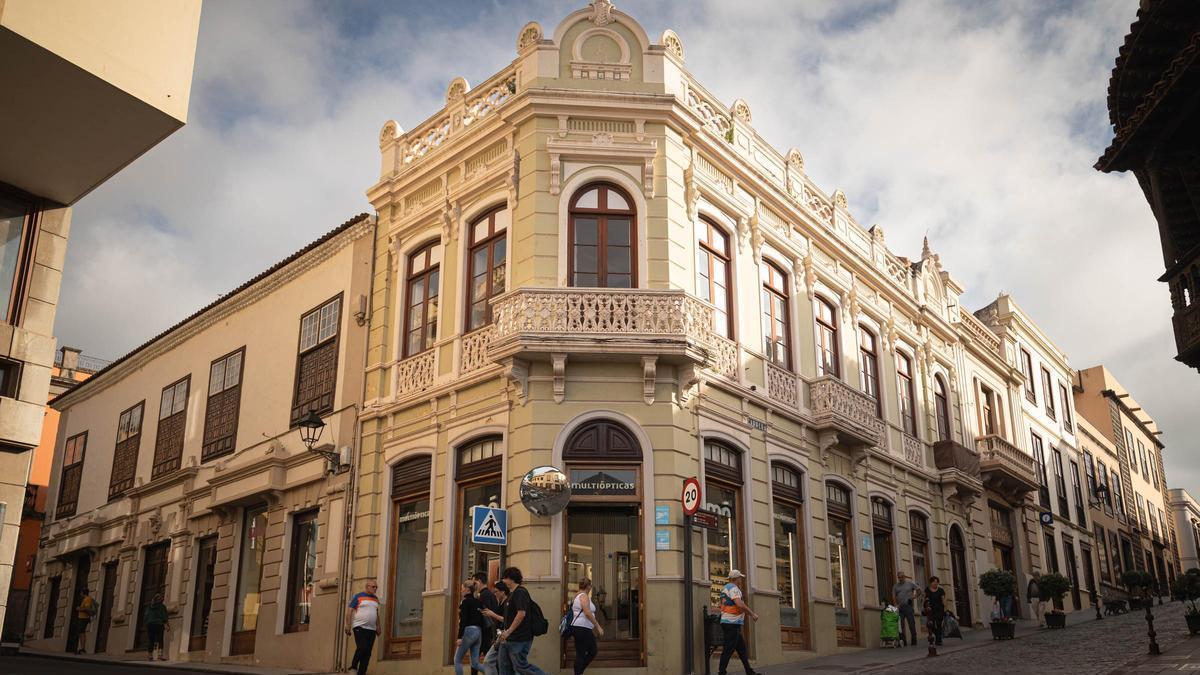
Renting a 100-square-metre flat in La Orotava now costs the average household 42% of its income, according to a property report commissioned by the town council and compiled at the end of 2024. The affordability threshold for housing is generally set at 30% of income, meaning this northern Tenerife town is running 12 percentage points above what is considered normal expenditure.
Renting less affordable than buying
The document analyses the residential market in La Orotava and concludes that renting presents greater difficulties than buying, with the latter standing at 21% of household income. The rising cost of renting is accompanied by exponential price growth: between 2019 and 2023, rental prices shot up by 67.9%, while household purchasing power grew far more modestly at just 22.9%. The gap between these two indicators explains why the rental effort has increased so sharply.
The report divides La Orotava into six districts and identifies the worst-affected areas for rental increases as Bebedero-Pinolere-Aguamansa (+129%) and Chasna (+53%). “These differences reflect very distinct local dynamics and consolidate renting as the most pressurised segment of the property market,” the document states. In Bebedero-Pinolere-Aguamansa, the rental effort ratio soars to 70%, compared with 22% for buying. Chasna, despite having fewer than 1,000 residents, shows a 53% rental ratio against 21% for purchasing.
Stalled stressed-area application
The town council began the process of having the municipality declared a “stressed area” before the Canary Islands Government. However, several years on, that declaration has still not materialised, and the property situation continues to deteriorate in the meantime.
An ageing housing stock
The study establishes that almost the entire residential market in La Orotava revolves around second-hand properties: in 2023, 95% of transactions involved resale homes and just 5% new builds. All the evidence suggests La Orotava is neither renewing nor expanding its housing stock with newly built properties, but rather absorbing demand with existing homes.
The property snapshot also reveals that the town’s housing stock is ageing. Some 47% of homes predate 1982, 28% were built between 1983 and 2000, 25% between 2011 and 2013, and only 1% postdate 2013. The report also highlights a mismatch between what has been built and the current structure of families. More than 80% of the housing stock has three or more bedrooms, while the average household size is shrinking. In other words, demand is focused on smaller properties due to the transformation of the family unit.
Demographic pressures
The demographic aspect is crucial to the report, which reveals that between 2019 and 2023 the population of La Orotava grew by just 0.3%, while the number of households increased at a rate of 1.1% per year. This is placing greater pressure on the housing stock. Meanwhile, the foreign-born population rose by 8.6% over the same period.
Future housing pipeline
Looking ahead, La Orotava’s property outlook hinges on new home construction alongside a review of urban growth. Land is available for the development of 5,554 new homes, split between urban and developable land. Of that total, only 974 are expected to come on stream in the short term, with the majority located in the central district, which will deliver 884 urban homes in quick order.
The estimated activation period for the bulk of the housing is between under two years and up to five years, with 3,966 units on developable land, representing 85% of the planned total. These figures do not include any publicly owned land banks.
In this regard, the document also discusses six plots of land, with the most interesting one for the consultancy that produced the report being San Antonio, where an estimated 742 homes could be built. According to the analysis, this land bank is “interesting because it ties in with the municipal strategy of declassifying land”. The new General Town Planning Plan (PGO), still awaiting approval, is expected to reclassify most of this developable land as rustic land in San Antonio. There is an obligation to allocate half of it to affordable housing.
Council silent on next steps
La Orotava Town Council, which commissioned the report, has not commented publicly on the town’s residential situation, nor has it announced its intentions regarding the request to have the town declared a stressed area. That process, backed by all political groups in the plenary, was initiated nearly three years ago.
What’s happening in the Canaries – straight to your phone
News, weather alerts and practical updates – direct from the islands, in English. We live here and know what’s going on – before the international media catch up. Everything lands on our WhatsApp channel – no middlemen, no algorithm. Curated for families, expats and travelers.

Canary Islands approves new €1.6bn development fund

Mogán mayor says her €65,000 salary is too low

Abandoned cars in Canary Islands: hundreds left to rot
Work resumes on 27 affordable rental homes in Las Palmas

Los Realejos residents fight on against propane gas plant

Canarias among Spain’s poorest regions as 36.2% live on low incomes

Canary Islands bananas lose ground to imported bananas
Canary Islands bottom of Spain’s social housing table

Three migrant boats reach Canary Islands in 24 hours