Historic licence for the archipelago
The cultivation of cannabis for medicinal purposes is now a reality in the Canary Islands. Spain has made progress in recent years towards regulating this activity for pharmacological and scientific uses, but it is only now, with the arrival of Nivaria Tech, that the industry has landed in the archipelago. The company has become the first in the Canary Islands to obtain authorisation from the Spanish Agency of Medicines and Medical Devices (Aemps) to cultivate the plant for medical use. This leap places the islands on the national map of the industry and opens the door to new connections and opportunities on the international stage.
A long road to approval
Consolidating Nivaria Tech has been no easy task. Its beginnings date back to 2022. “We waited 21 months for the town council to grant us the licence to build the facilities, then in 2025 we applied for authorisation from Aemps, and we did not receive it until March this year,” explains Valeriano Rodríguez, the company’s plant manager. One of the factors that has delayed the creation of the company is that there is no physical Aemps office in the Canary Islands. “Setting up here could be an opportunity for the agency to develop an active delegation with inspection functions, and for the regional health department to take an interest in this sector,” he adds.
Rodríguez describes Nivaria Tech as a strategic company. “Our intention is to serve as a flagship project, to attract new businesses and make the development of this industry possible in the islands,” says the founder of the consultancy International Canarian Cannabis.
What the authorisation allows
The Aemps authorisation allows Nivaria Tech to cultivate cannabis to obtain the plant material needed for the manufacture and validation of medicines for medical purposes. This is a different type of authorisation from those granted by the agency for research or for the production of seeds and cuttings – the plant material used to start cannabis crops intended for medical or scientific use.
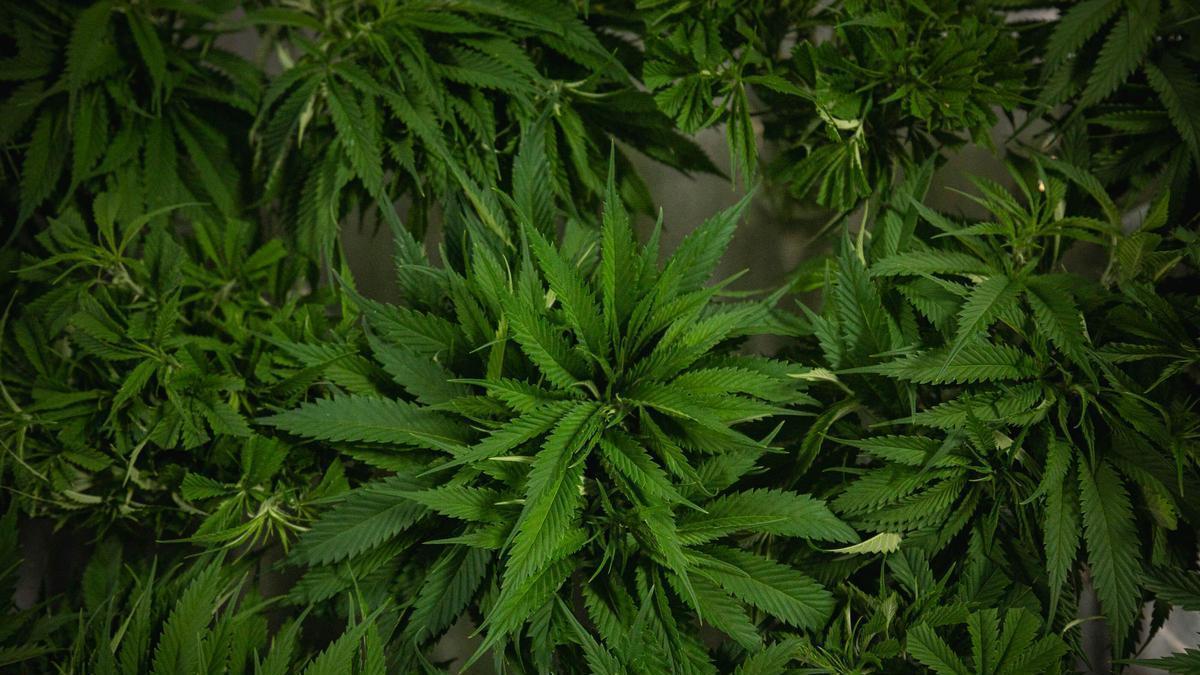
Medicinal cannabis cultivation is nothing like growing a plant at home for personal consumption; it is based on a completely controlled system from the very beginning. The company starts with clones of an authorised genetic strain to create its own mother plants, from which they extract new cuttings that maintain the same characteristics batch after batch. The process takes place in climate-controlled rooms where parameters such as temperature, humidity, light and irrigation are regulated, while also taking advantage of the Canarian climate.
The advantage of the Canarian climate
According to Rodríguez, the Canary Islands have optimal conditions for this industry. “The stable photoperiod in the islands allows us to rotate crops and achieve six harvests a year,” he says. The stable temperature also minimises the temperature fluctuation between day and night, and the fact that the Canary Islands is one of the sunniest regions in the world works in its favour. “Thanks to these conditions, we do not use artificial lights for the flowering of cannabis; instead, it happens through sunlight,” he explains.
This encourages the production of active ingredients such as THC-V, a substance that is only produced when the plant is stimulated by ultraviolet rays. “In relation to the medicine, this active ingredient acts as a modulator of the psychoactive effects of THC, without losing its therapeutic benefits,” he explains. The aim is for patients to undergo treatment with fewer side effects, taking advantage of the interaction of these compounds with the body’s endocannabinoid system – a network of receptors that regulates functions such as pain, sleep and mood.
High-tech greenhouse and processing
Unlike other greenhouses, Nivaria Tech’s incorporates a plastic adapted to medicinal cultivation and automated systems that regulate the environment according to the plant’s needs. Once the harvest is collected, the more pharmaceutical side of the process begins. The flower passes through preparation, drying and control areas where plant residues are removed and the active ingredients are analysed before each batch is released.
Among the most striking tools is a machine from the United States that automatically removes leaves and excess material. They also have a cold technology that disinfects the flower without applying heat or radiation, preserving the plant’s compounds better. “There are only three machines like this in Europe,” Rodríguez says. The facility also has strict security and traceability protocols: clean rooms with special filters, contamination controls, quarantine areas and monitored storage until batch release authorisation is received.
Destruction and custody of waste
One of the most striking aspects is what happens to the plant waste after cultivation. It is neither reused nor leaves the facility without control; instead, it is managed through a destruction system. “The agency requires us to guard and incinerate it; we have even arranged an agreement with a crematorium,” he notes. Finally, the batch remains under custody until Aemps authorises its release to a laboratory.
Rodríguez insists that this infrastructure is not only designed for medicinal cannabis but as a technological model applicable to other high-value crops. In the future, he would like to incorporate artificial intelligence to anticipate environmental changes and further automate the process.
Extreme security measures
Obtaining a licence from Aemps is no mean feat. Beyond technical requirements, the institution demands extreme security measures to guarantee the protection of such facilities. “Specifically, they asked us to have efficient custody measures and intrusion delay systems.” In this context, the facilities have a comprehensive security system including a three-metre-high perimeter fence, continuous video surveillance with thermal cameras and intruder detection systems. There is also a 24-hour security room with armed personnel, a direct connection to state security forces, a reinforced room and fingerprint access controls in the most sensitive areas. The crown jewel, however, is the bunker, necessary to preserve the batches once production is complete.
Validation and next steps
Nivaria Tech is getting closer to fulfilling the dream with which it was born four years ago. The company now has Aemps authorisation, a milestone for the Canary Islands, but it still needs to validate its production process. To do this, it must obtain three consecutive batches with the same quality and stability, a standard requirement in the pharmaceutical industry to demonstrate that a product can be manufactured safely and reproducibly. Once this phase is completed, the company can move towards the next authorisations required for commercialisation.
Although patients in Spain cannot yet directly access the medicinal cannabis flower, Nivaria Tech produces it under pharmaceutical standards as a raw material for manufacturing extracts and active ingredients. The company aims to position itself in the international market, where some countries already allow different forms of medicinal cannabis. Its next phase involves incorporating the extraction process into its own facilities in the Canary Islands, so that it can complete the entire production chain from cultivation to the final product.
Political support and regulation
It comes as no surprise that this industry is gaining ground in the archipelago. In May 2024, the Parliament of the Canary Islands, with the exception of Vox, supported the development and establishment of the cannabis industry for medicinal use through a proposal by the Agrupación Herreña Independiente (AHI). The initiative urged the regional government to ask the state executive to comply with the recommendations of the subcommittee on Health and Consumer Affairs regarding the regulation of cannabis active ingredients. It also proposed the archipelago as a strategic location for the development of this new industry due to its climatic conditions.
A year after the regional initiative, the Council of Ministers approved the Royal Decree regulating the use of standardised magistral formulas made from standardised cannabis preparations for medicinal use. The government itself described the step as decisive for integrating medicinal cannabis into the health system, ensuring its use with scientific, clinical and sanitary guarantees.
Medical applications and scientific evidence
Cannabis is a substance subject to international control. However, scientific evidence regarding specific conditions – such as spasticity (a motor disorder in which muscles remain tense) associated with multiple sclerosis – is what has allowed Spain to commit to its medicinal use. It is also used for certain severe forms of epilepsy, nausea and vomiting caused by chemotherapy, and some cases of refractory chronic pain. In these cases, when available treatments are insufficient, standardised cannabis preparations can offer a therapeutic alternative – always under medical and pharmaceutical supervision.
What’s happening in the Canaries – straight to your phone
News, weather alerts and practical updates – direct from the islands, in English. We live here and know what’s going on – before the international media catch up. Everything lands on our WhatsApp channel – no middlemen, no algorithm. Curated for families, expats and travelers.
El Bejeque in Las Canteras adds sea to its fire

Siam Park Gran Canaria must build its own desalination plant

Fuerteventura’s biggest resort to open on 1 November
Gran Canaria to teach tourism history in schools
Canary Islands see 0.3% rise in foreign tourists in August

Row over 368-bed hotel project in La Gomera
Spanish astronaut trains in Lanzarote for Moon mission

Tivoli La Caleta hosts first red tuna Kaitai in Canarias
La Laja natural pools reopen in Las Palmas