Compiled with the help of artificial intelligence, based on Spanish-language information. Source below the article.
La Laguna holds its own in global top 1,000
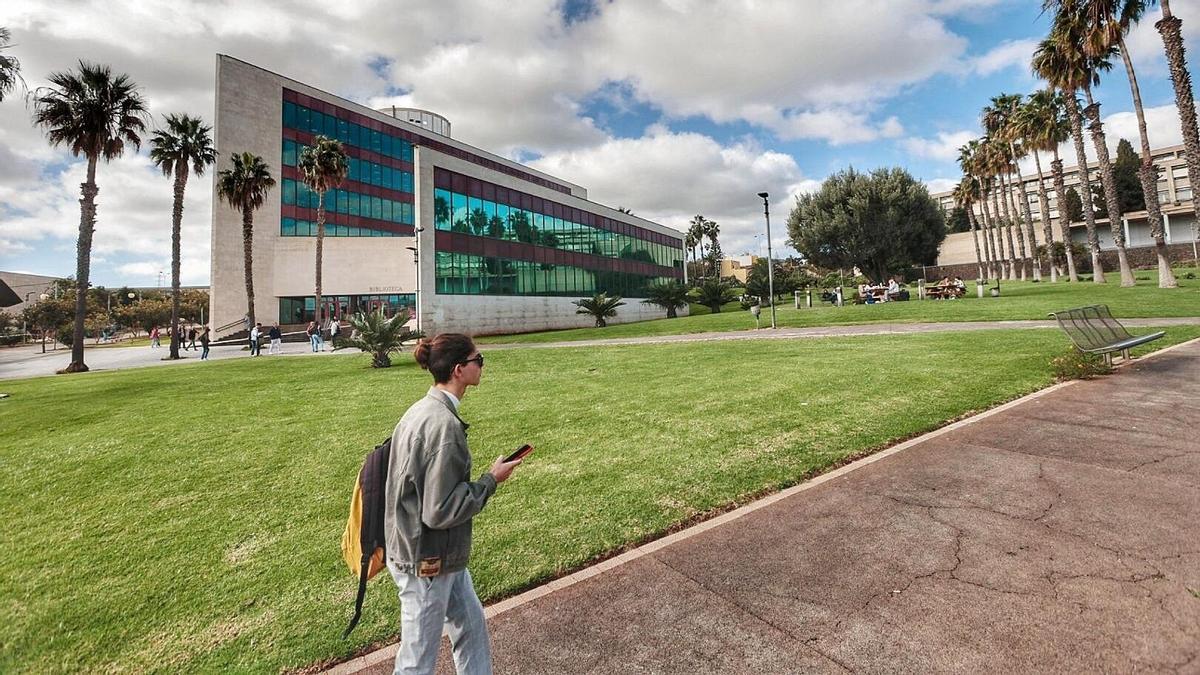
The University of La Laguna (ULL) has, for the second consecutive year, retained its place among the 1,000 best universities in the world. The Tenerife-based institution has secured a position in the 601-700 bracket of the prestigious global Shanghai Ranking, placing it among the top 20 universities in Spain.
The University of Las Palmas de Gran Canaria (ULPGC), however, has suffered another setback and has once again disappeared from this international list, which assesses the research prestige of universities worldwide.
What is the Shanghai Ranking?
The Academic Ranking of World Universities (ARWU), commonly known as the Shanghai Ranking after the consultancy firm that produces it, analyses 2,500 institutions from across the globe each year, whittling them down to a select list of the top 1,000. Published worldwide this Saturday, the 2026 edition is once again headed by Harvard.
Indeed, the United States continues to dominate the upper echelons of the table. However, Asian universities are expanding their presence among the world’s top 100. China is the country with the most institutions in the top 1,000, with 234. The United States follows in second place with 187 campuses, ahead of the United Kingdom (57), Germany (51) and Italy (42). Spain, for its part, has 30 centres on the list, out of a total of 96 public and private campuses nationwide.
Mixed fortunes for Spanish universities
Within Spain, the ranking is led by the University of Barcelona (UB), the Autonomous University of Barcelona (UAB) and the Complutense University of Madrid (UCM). This year, the ULPGC is not the only institution to have fallen out of the classification. The Carlos III University of Madrid – where Princess Leonor is due to begin her studies next academic year – has suffered the same fate, as have several Andalusian universities (Cádiz, Córdoba and Jaén), along with those in Cantabria and the Balearic Islands.
By contrast, the King Juan Carlos University in Madrid and the University of Valladolid have both managed to break into the world’s top 1,000 this year.
A bitter-sweet edition for the Canary Islands
The results of this new edition are decidedly bitter-sweet for the Canary Islands’ universities. The ULPGC has lost its place after having managed to return to the ranking the previous year, following a two-year absence. It is worth remembering that the University of Las Palmas has only featured on this prestigious list for five of the last ten years. Specifically, it only managed to secure a spot between 2019 and 2022, and again in 2025.
The University of La Laguna, meanwhile, has retained the position it has held most frequently over the past decade. Since first entering the ranking in 2017, it has spent five years between 701st and 800th place, three years in the 601-700 bracket, and one year – in 2024 – among the world’s 501-600 best universities. According to the university itself, that sudden rise was down to the scientific productivity of one of its researchers.
During this period, the ULL has excelled in two specific fields: Physics and Earth Sciences. Both are closely linked to the work of the Institute of Astrophysics of the Canary Islands (IAC), which shares its results and scientific output with the ULL.
Why no Spanish university cracks the global top 100
No Spanish campus features in the world’s top 100. This is explained, among other factors, by the fact that the universities that do make the cut possess several characteristics that are beyond the reach of their Spanish counterparts, which suffer from chronic underfunding. In his book La privatización de la universidad (The Privatisation of the University), Professor Carles Ramió explains that most top-ranking global universities are private institutions with “a financial capacity 20 times greater than that of Spanish universities”.
Furthermore, the public universities in the world’s top 100 receive “extraordinary” additional public funding and typically operate under a hybrid public-private management model, giving them the flexibility to be more competitive.
The world’s top ten
Harvard University remains the number one university in the world, followed by Stanford and the Massachusetts Institute of Technology (MIT). Cambridge holds fourth place, while the University of California, Berkeley completes the global top five. Princeton has risen to sixth, ahead of Oxford, which drops to seventh. Columbia University is eighth, the University of Chicago ninth, and the California Institute of Technology (Caltech) rounds out the top ten.
Despite the recent conflict between the Trump administration and several universities whose funding it sought to freeze, the United States continues to dominate the top positions, occupying eight of the world’s top ten places and 14 of the top 20.
The United Kingdom has two universities in the top ten – Cambridge and Oxford – and three in the top 20, thanks also to University College London, which sits in 17th place globally.
Continental Europe and Asia on the rise
In continental Europe, the leading campus is Paris-Saclay (13th), followed by the Swiss Federal Institute of Technology in Zurich (ETH Zurich, 19th). The Technical University of Munich, in 45th place, is the highest-ranked German institution. The University of Copenhagen leads Denmark from 34th position, while the Karolinska Institute has climbed nine places to share 41st spot, becoming the highest-placed Swedish university.
Despite the Anglo-Saxon dominance, Asian universities are expanding their presence among the world’s top 100. Tsinghua University remains the best university in Asia, in 18th place worldwide. Peking University has risen one place this year to 22nd, while Zhejiang University shares 24th and Shanghai Jiao Tong University has advanced three places to 27th. The University of Tokyo occupies 30th place and remains the highest-ranked in Japan. The National University of Singapore has risen to 53rd, and Nanyang Technological University has advanced to share 84th place.
What’s happening in the Canaries – straight to your phone
News, weather alerts and practical updates – direct from the islands, in English. We live here and know what’s going on – before the international media catch up. Everything lands on our WhatsApp channel – no middlemen, no algorithm. Curated for families, expats and travelers.

Canary Islands approves new €1.6bn development fund

Mogán mayor says her €65,000 salary is too low

Abandoned cars in Canary Islands: hundreds left to rot

Work resumes on 27 affordable rental homes in Las Palmas

Los Realejos residents fight on against propane gas plant

Canarias among Spain’s poorest regions as 36.2% live on low incomes

Canary Islands bananas lose ground to imported bananas

Canary Islands bottom of Spain’s social housing table

Three migrant boats reach Canary Islands in 24 hours