
Small fish, big potential
What if the most common fish off the Canary Islands held the answer to some of modern medicine’s most challenging diseases? While hospitals struggle to contain cancers that still claim thousands of lives each year, and clinicians worry about the dystopian future of antibiotic resistance, a modest inhabitant of Canarian waters has caught the attention of science.
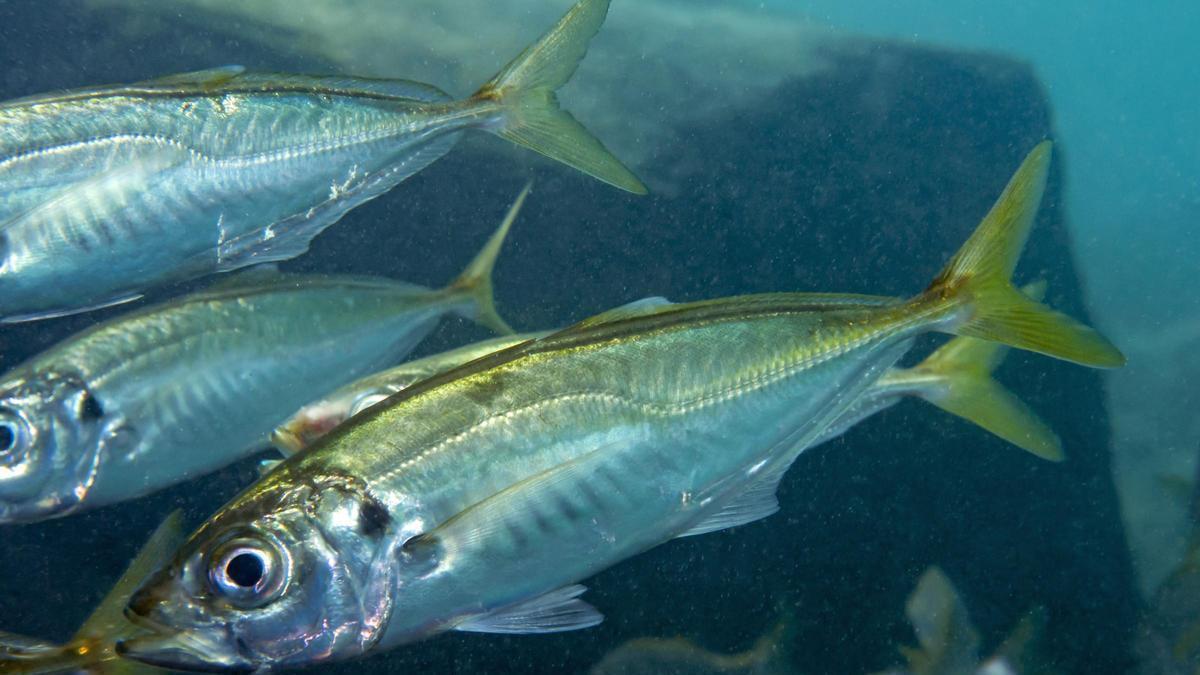
The humble chicharro, or horse mackerel (Trachurus trachurus), a blue fish barely 20 centimetres long, could become an unexpected source of molecules with promising biomedical applications. That is the conclusion of a doctoral thesis by marine biologist Patricia Asensio from the Institute of Natural Products and Agrobiology (IPNA-CSIC).
How piscidins work
This comprehensive research study examines the promising piscidins — the antibody proteins unique to fish — which have demonstrated an extraordinary ability to combat all kinds of human pathogens, from bacteria to tumours. These proteins could revolutionise medicine because, as Asensio has confirmed in her thesis, the antibodies from these small fish can fight up to five types of tumour with reduced toxicity and cure bacterial infections with a low likelihood of generating resistance.
“I chose fish because it was very likely they would have a wide variety of antimicrobial peptides — molecules that the fish itself uses to defend against pathogens,” explains Asensio. “They are part of their nature.”
Why the chicharro?
The researcher studied several species already known to contain these proteins, such as grouper, southern bluefin tuna, amberjack, and meagre, but she also decided to investigate a fish very common in Canarian waters. “We chose the chicharro because it is a fish very characteristic of Tenerife and has the potential to harbour new proteins never before described,” she insists.
Since the protein already had a protective function in the fish’s immune system, the research team thought it worthwhile to explore its potential for human biomedicine. “We tested them in vitro studies and they were quite effective,” the researcher notes.
Fighting cancer and bacteria
Specifically, these proteins were used on two types of cells: those that cause bacterial infections (such as Escherichia coli) and tumour cells that cause breast, lung, pancreas, and prostate cancer. In terms of tumour activity, “they interact with the mitochondria and produce apoptosis (cell death),” explains the researcher.
Regarding pathogenic bacteria, the major advantage of piscidins is that they act through several mechanisms of action simultaneously. This means they “do not create as much resistance as other drugs.” “They not only act on the cell membrane by breaking it, but they also enter inside the cell and somehow interact with the DNA and proteins, generating several toxic mechanisms of action.”
For now, Asensio warns that some of these compounds generate a certain degree of toxicity, meaning ways to prevent this — such as encapsulation — would need to be found.
A novel approach
The methodology used in the study was also innovative. Instead of performing direct extractions and working with them, the researcher used data mining and specific search tools in genomic databases such as those of the National Centre for Biotechnology Information (NCBI).
“What we did was extract several tissues from the chicharro and, using PCR, see in what proportion these new molecules were found in different parts of the fish,” says Asensio. However, for the biomedical study itself, the molecules were synthesised through bioinformatics.
What lies ahead
Although this is basic research, the work establishes a framework for future preclinical phases and in vivo trials. As Asensio noted, currently only one piscidin is in clinical phase worldwide (TP4), which places this research at the forefront of this relatively new field.
For the scientist, “this research leaves a door open so that, in the future, these molecules can become real and affordable drugs to combat diseases that today seem invincible.”
What’s happening in the Canaries – straight to your phone
News, weather alerts and practical updates – direct from the islands, in English. We live here and know what’s going on – before the international media catch up. Everything lands on our WhatsApp channel – no middlemen, no algorithm. Curated for families, expats and travelers.

Canary Islands forests store 25% more carbon than thought

New map reveals 60+ closed beaches in Canary Islands

Tenerife strikes deep geothermal milestone

La Gomera named among world’s quietest islands

Geothermal energy breakthrough in Tenerife

Tenerife strikes geothermal energy in Vilaflor

Canary whales face ship strike risk warns new study

The underwater ‘grandmothers’ of the Canary Islands

Galaxy M74’s hidden star disc discovered by IAC
