Sleep in the sky: Teide’s Altavista Refuge reopens after seven years
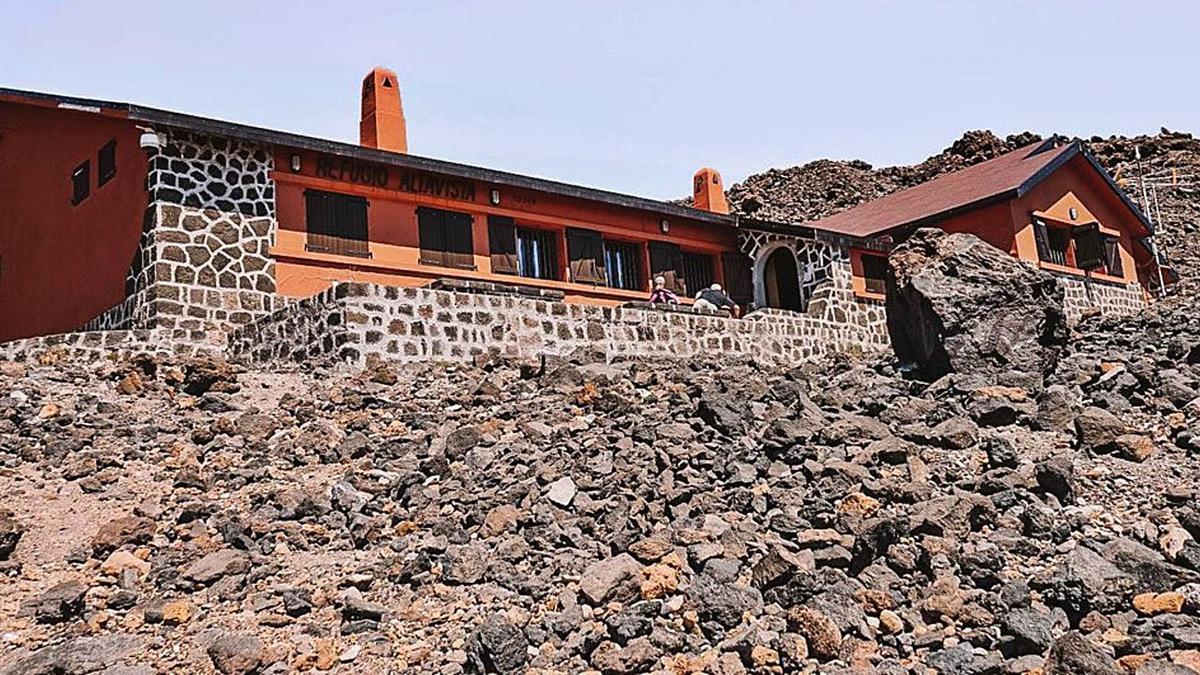
Sleeping in the sky at more than 3,200 metres above sea level is once again possible in Tenerife. The Altavista Refuge on Mount Teide will resume activity from 20 July 2026 following the completion of renovation works designed to modernise the property and reduce its environmental impact. The highest mountain hut in Spain – and one of the highest in Europe – located within Teide National Park, has been closed since November 2019. Since then, the Natural Environment Department of the Cabildo of Tenerife has driven forward projects to improve the structure and put it back on the map for hikers.
Booking and pricing for the Altavista Refuge
What are the conditions for sleeping so close to the stars at Altavista? The refuge will open its doors with an advance booking system that will regulate access and promote sustainable management of this facility in the heart of Teide National Park. The general overnight rate will be €71 per night for non-residents, while residents of Tenerife can stay for €29 – a subsidy designed by the Cabildo to make one of the island’s most emblematic spaces accessible to locals. Federated mountaineers who are not resident in Tenerife will benefit from a reduced rate of €56.80 per night. Stays are limited to one night, and all reservations must be made in advance through the platform operated by the refuge’s management body.
Capacity and facilities at the mountain hut
The refuge now has capacity for up to 49 visitors to Teide National Park, two places reserved for wardens, and three places in the medical room, which provides services to people whether or not they are staying overnight. Altavista sits at more than 3,200 metres above sea level, making it prone to extreme weather conditions, including sub-zero temperatures during the coldest months of the year. Added to this are gusts of wind that can exceed 200 kilometres per hour. For this reason, it is essential to have trained, well-equipped staff who can assist hikers in an emergency. The refuge is equipped with a medical room and direct coordination with the 112 emergency services. Owing to its remote location, it has the resources to respond to emergencies, including equipment for cardiopulmonary resuscitation (CPR) and treatment for burns, fractures, trauma and haemorrhage.
A history dating back to 1856
The first refuge on the summit of Mount Teide was built in 1856, on the initiative of Charles Piazzi Smyth, an Italian astronomer conducting observations on the volcano. While gathering data in the heights of Guajara, he realised that a shelter was needed to protect against the strong winds and freezing temperatures. He chose Altavista after learning that the area was frequented by islanders who extracted ice from a nearby cave. On 28 August 1856, he moved to Altavista and confirmed that the site met the necessary conditions. Immediately, the men accompanying him on the expedition began building protective walls from the stones found on site, creating an enclosed space 55 metres long, 1.20 metres wide and 1.80 metres high, divided into compartments.
In 1890, British photographer, philanthropist and naturalist Graham Toler commissioned the construction of a new facility on the remains of Piazzi’s refuge, replacing the wooden hut to promote tourism on the island – especially mountain tourism. Work began in autumn 1891 and was completed between winter 1892 and early 1893, with the building entering service that same year. The Cabildo of Tenerife took over the mountain hut in 1950. Following successive improvements, the Altavista refuge as it is known today was finished in 1954, although further renovations continued in subsequent years – the most significant taking place in 1995 and 2007. The facility had to close in 2019 due to its very poor condition.
Modernisation and sustainability upgrades
The latest improvement and rehabilitation works involved the renovation and fitting-out of the rooms within the existing building volume, improving the performance of its functions as well as its insulation and ventilation. The renovations – particularly to the energy systems – now allow the building to be self-sufficient. The new high-efficiency solar panels have a capacity of 59.5 kWp, powering the thermal conditioning systems. Furthermore, it can store up to 161 kWh thanks to a battery storage system. This will power the heating, lighting, auxiliary services and other indispensable electronic devices, even on days with little sunshine.
Previously, many of the installations required fossil fuels to operate – a limitation that persisted for years. This not only released carbon dioxide into the atmosphere but also posed a major logistical challenge. Due to the difficult terrain, fuel had to be transported by helicopter. This method not only produced more CO2 but also disturbed the local wildlife. However, the new systems make the Altavista Refuge self-sufficient and completely independent in this regard.
Another former environmental obstacle was the treatment of wastewater. The installation of a purification system now solves this problem and will help reduce the impact of human activity on this natural space.
What’s happening in the Canaries – straight to your phone
News, weather alerts and practical updates – direct from the islands, in English. We live here and know what’s going on – before the international media catch up. Everything lands on our WhatsApp channel – no middlemen, no algorithm. Curated for families, expats and travelers.

Tenerife faces huge tourism expansion despite moratorium calls
El Bejeque in Las Canteras adds sea to its fire

Siam Park Gran Canaria must build its own desalination plant

Fuerteventura’s biggest resort to open on 1 November
Gran Canaria to teach tourism history in schools
Canary Islands see 0.3% rise in foreign tourists in August

Row over 368-bed hotel project in La Gomera
Spanish astronaut trains in Lanzarote for Moon mission

Tivoli La Caleta hosts first red tuna Kaitai in Canarias