Compiled with the help of artificial intelligence, based on Spanish-language information. Source below the article.
A hotel you can visit just to eat
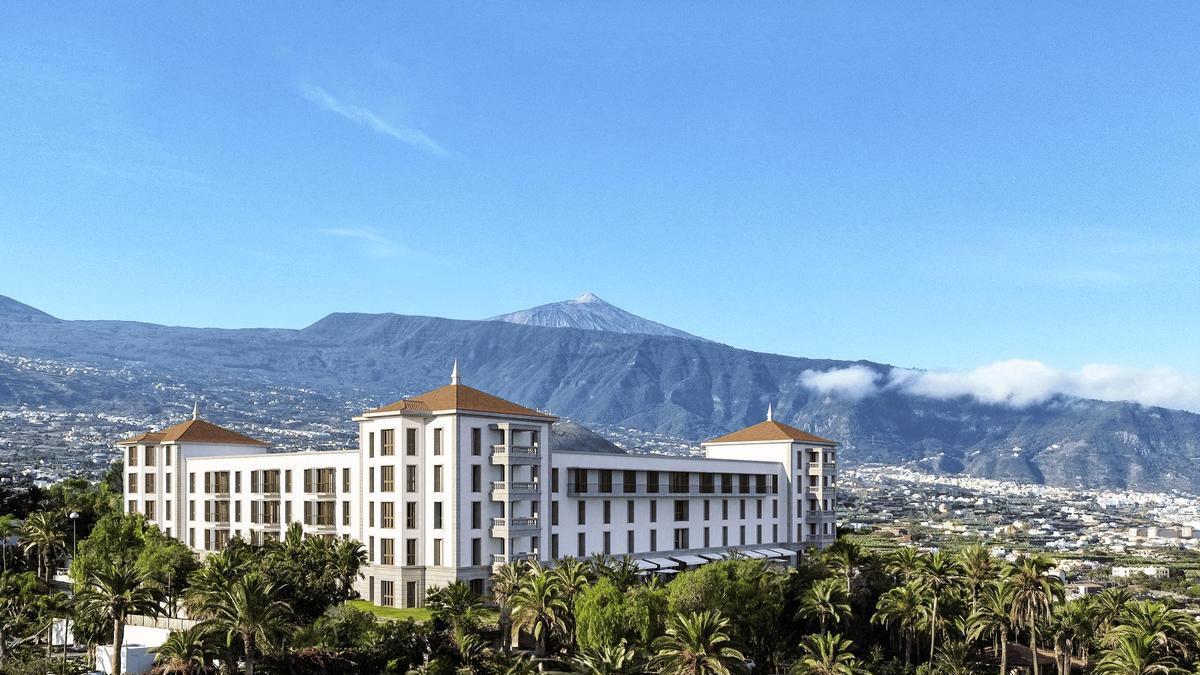
You don’t always have to arrive at a hotel with a suitcase. Sometimes the plan can simply be to book a table for lunch, meet for breakfast or end the day enjoying a cocktail. That equation now includes hotels which have given gastronomy a weight of its own, such as the Gran Hotel Taoro, which a year after reopening is demonstrating that a hotel can also become a destination worth visiting for its food. And the timing could hardly be better. The historic establishment in Puerto de la Cruz has just joined the Michelin Guide’s hotel selection, and two of its restaurants, LAVA and OKA, feature among those recommended for 2027.
The recognition shines a spotlight precisely on one of the elements that has carried the most weight during this new chapter. The question now is what has to happen for someone to decide to head to a hotel simply to eat.
LAVA: fire, embers and smoke for just 18 diners
LAVA is probably the most obvious example. It is Erlantz Gorostiza’s most personal project, with Esteban Sánchez as resident chef, and a cuisine built around produce, fire, embers and smoke. The Picón and Malpaís menus change with the seasons, and everything happens in a space designed for barely 18 diners, with an open kitchen that allows guests to watch the team’s work up close.
That proximity to the kitchen carries a great deal of weight here. Sitting in front of the team allows diners to follow the rhythm of service, understand the produce better and discover the technique behind each course. It is a way of approaching Erlantz’s proposal in an intimate format, where kitchen and dining room practically share the same space.
OKA: Japanese technique with island produce
The journey proposed by OKA is very different. Under the direction of Ricardo Sanz, with Emiliano Liska at the helm, the restaurant starts from high-end Japanese cuisine and Japanese-Mediterranean fusion to work with produce from the islands as well. Its omakase counter, with just five seats, concentrates much of the essence of the project and allows diners to follow closely the dishes being prepared and served on the spot. Sashimi, nigiri and plates combining Japanese technique with more local ingredients make up a proposal that looks towards Japan without losing sight of the place in which it is located.
Amalur, Atlántico, La Carola and Tagoror
For a hotel to work as a gastronomic destination, beyond its fine-dining restaurants it has to offer other ways of approaching it. At this point, the Taoro has spaces such as Amalur, also directed by Erlantz Gorostiza, which starts from Spanish cuisine and local produce in a format closer to a bistro, with a menu that takes the four elements as its reference: earth, sea, air and fire. Then there is Atlántico, where breakfast becomes another reason to head to Puerto de la Cruz; and La Carola, beside the pool and gardens, opts for more informal cuisine.
Meanwhile, Tagoror Lobby Bar & Lounge revives that social dimension that has accompanied the Taoro since it opened its doors in 1890, when its salons became a meeting point and came to bring together numerous personalities of the era. Today, meeting for a cocktail or a glass of wine reconnects with that way of understanding the hotel.
A growing trend in the Canary Islands
For a long time we have thought about hotels from the traveller’s point of view: you arrive, you sleep and you continue your journey. But we can get to know a restaurant inside a hotel just as we know any other restaurant on the island, meet up to enjoy a brunch or a breakfast, or simply pop in for a drink without necessarily having a room booked behind us. And perhaps there lies the answer to the question posed at the start: a hotel becomes a gastronomic destination when its cuisine stops being merely a service for those staying there and begins to attract people who come solely because they want to sit at the table.
The Gran Hotel Taoro is not an isolated case. In the Canary Islands, more and more hotels are giving gastronomy a weight of its own and turning their restaurants into one more reason to visit them. It is undoubtedly a particularly interesting moment for gastronomic hospitality in the islands, and we will have to keep discovering what happens around their tables.
What’s happening in the Canaries – straight to your phone
News, weather alerts and practical updates – direct from the islands, in English. We live here and know what’s going on – before the international media catch up. Everything lands on our WhatsApp channel – no middlemen, no algorithm. Curated for families, expats and travelers.

Tenerife’s Char Fuego y Brasas named 13th best steak restaurant in Europe

Canary Islands hotel prices rise 4.11% in September

Icod de los Vinos launches twelve self-guided routes
Four new openings shaking up Las Palmas dining scene

Tenerife faces huge tourism expansion despite moratorium calls
El Bejeque in Las Canteras adds sea to its fire

Siam Park Gran Canaria must build its own desalination plant

Fuerteventura’s biggest resort to open on 1 November

Gran Canaria to teach tourism history in schools