Compiled with the help of artificial intelligence, based on Spanish-language information. Source below the article.
Twelve routes from coast to forest
The tourism project “Icod de los Vinos, en ruta” was presented today, Saturday, at an event in the plaza of the El Amparo neighbourhood. The initiative is a new scheme from the tourism department and the municipal company Icodtesa, headed by councillor Gerardo Rizo, and consists of twelve self-guided tourist routes that cross the municipality from the coast to the forest crown, passing through the historic centre and the mid-altitude areas.
The aim of “Icod de los Vinos en ruta” is to meet the municipality’s need to offer visitors and residents a series of routes through which they can discover each of its most emblematic spots via its historic, heritage, cultural and natural assets. The tourism department and Icodtesa have worked to respond to the daily demand from visitors at the Municipal Tourist Information Office, where people ask about routes for getting to know the area, and the project expands the municipality’s tourism offering in line with the development of the Strategic Tourism Plan.
Promotional materials and digital tools
The Municipal Tourist Information Office, which operates under the municipal company Icodtesa, has been responsible for developing and managing the tourism project. Together with the advertising agency JFT and the Icod resident Carlos Rodríguez “Calato”, a range of promotional materials has been produced to publicise the twelve routes, along with the digital tools needed so that any visitor or resident wishing to set out on each route has all the necessary information at their disposal.
That information can be found on the official Icod de los Vinos tourism website, www.icoddelosvinosturismo.com, where users can not only download the information leaflet but also the technical sheet with full details of each route, and follow it from a mobile device via the Wikiloc WebApp.
Four blocks of three routes
The twelve self-guided routes are organised into four blocks of three routes each, structured to provide a wide range of routes with different characteristics so that visitors can choose the one that best suits their tastes, fitness level and the time available to complete the activity.
Coastal routes steeped in heritage
The coastal routes start from the historic centre of Icod de los Vinos, specifically from the Plaza de la Pila, and reveal some of the municipality’s main heritage sites, such as the Church of San Marcos, old chapels including El Tránsito, El Calvario and San Felipe Neri, and traditional estates such as Alzola, Vizconde de Buen Paso and Valois. Along old traditional paths, they lead to Playa de San Marcos or the La Coronela area, combining history, heritage and nature throughout.
Mid-altitude landscapes and forest trails
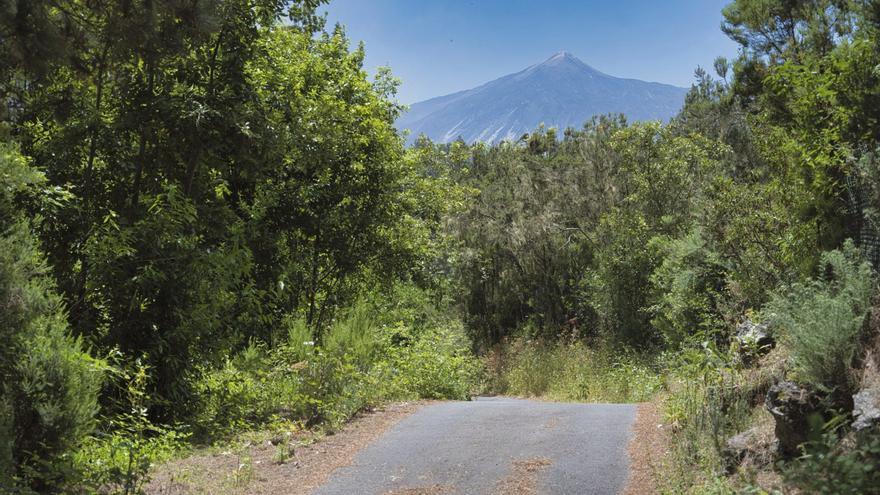
Several of the routes start in the mid-altitude areas, crossing farmland, vineyards and traditional neighbourhoods. Along each of the trails, walkers will discover spots that retain their traditional charm, such as springs, washing places and chapels that form part of the municipality’s history and traditions. As the routes climb towards the higher ground, they enter areas of laurel forest before reaching the Corona Forestal. The landscape changes and offers spectacular views of Mount Teide and the Atlantic Ocean. Walking among extensive Canary Island pine forests, volcanic landscapes and old forest paths, these routes are an invitation to switch off from daily stress and enjoy the clean air and tranquillity of the surroundings, with recreational areas at Las Hayas and El Lagar available for a rest.
Two of the routes that cross the Corona Forestal are suitable for cycling, allowing people to enjoy the natural surroundings while taking part in this activity.
A taste of Icod’s local produce
Another attraction added to this experience is the chance to enjoy the cuisine of Icod de los Vinos, which is deeply tied to the landscapes these routes pass through. The coast, the vineyards and the farmland of the mid-altitude areas provide high-quality produce that brings to life a traditional cuisine based on zero-kilometre ingredients. Along the way, visitors can stop to sample some of the most representative dishes of local gastronomy, such as papas arrugadas with mojo, grilled meats, the traditional condumio — one of the great culinary symbols of Icod de los Vinos — rabbit in salmorejo and fresh fish from the coast, reflecting the essence of home cooking. The experience is completed with local products such as gofio, artisan cheeses and honey. Discovering these routes is also a way of getting closer to the flavours that are born from the landscape.
Vineyards shaped by volcanic soil
The paths cross vineyards cultivated on volcanic soils and under the influence of the trade winds, which, together with traditional techniques, give rise to native varieties such as Listán Negro, Listán Blanco and Malvasía, made in small family wineries that preserve the know-how of generations. These are unique wines in which every glass reflects the history, the landscape and the essence of this land.
What’s happening in the Canaries – straight to your phone
News, weather alerts and practical updates – direct from the islands, in English. We live here and know what’s going on – before the international media catch up. Everything lands on our WhatsApp channel – no middlemen, no algorithm. Curated for families, expats and travelers.

Canary Islands hotel prices rise 4.11% in September
Four new openings shaking up Las Palmas dining scene

Tenerife faces huge tourism expansion despite moratorium calls

El Bejeque in Las Canteras adds sea to its fire

Siam Park Gran Canaria must build its own desalination plant

Fuerteventura’s biggest resort to open on 1 November

Gran Canaria to teach tourism history in schools

Canary Islands see 0.3% rise in foreign tourists in August

Row over 368-bed hotel project in La Gomera