Compiled with the help of artificial intelligence, based on Spanish-language information. Source below the article.
A diplomat with firm convictions
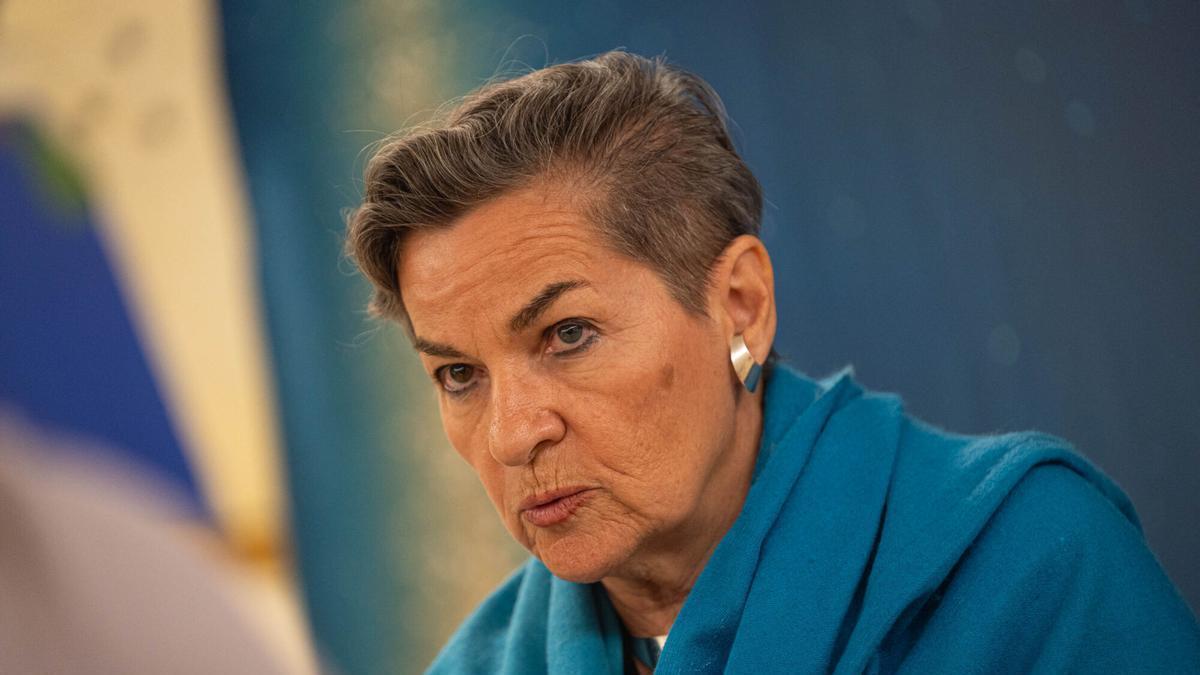
Christiana Figueres (70, Costa Rica) is a serious woman with firm convictions. Her speech still carries a conciliatory tone forged over years of diplomatic experience, despite having retired almost a decade ago from the United Nations Framework Convention on Climate Change. The anthropologist is optimistic about the worldwide uptake of renewables that has been achieved, but warns that military and security priorities are competing directly with the fight against climate change. Today, at the Starmus Festival in Tenerife, she is giving an overview of the state of climate change, international agreements and the future of the planet, while also examining the situation in the Canary Islands.
Eleven years on from Paris
It has been eleven years since the signing of the Paris Agreement, in which she was heavily involved. Has it been worth anything? “Yes and no. It has been worth something because it was the political signal par excellence that the world needs to decarbonise. Since then we have a great many renewable energy technologies that have emerged from the Paris Agreement. And the plain truth is that the uptake of all those technologies is far greater than we could ever have imagined 10 years ago. That signals a great success. What has not improved is the political position of certain central and federal governments. And now military and security priorities are competing with climate change. However, since progress on decarbonisation has moved from federal governments to cities, those without the military or defence burden are still getting on with the work of decarbonising.”
No need to reinvent the wheel
Does she believe that, given the current political situation, an agreement like Paris could be reached today? “No, it could not be reached today, but it is not needed because the Paris Agreement already exists. There is no need to reinvent the wheel.” The planet has for a time exceeded the 1.5-degree temperature limit above the pre-industrial era set out in the Paris Agreement. Is it still possible to stay within that threshold? Should it be changed? “The threshold cannot be changed. It is too dangerous to do so. What we must accept is that there is a very high probability that the threshold will be exceeded temporarily in the coming years. That does not mean it will be exceeded permanently, but rather that there is a period in which it will happen and we do not know how long it will last.”
China steps into the leadership vacuum
Can we aspire to bring those emissions down globally without the major powers that do not want to cut their emissions right now? “It can be done, but not with the speed that it should be. As things stand today, the biggest emitter of greenhouse gases is not the United States but China, which is taking advantage of the leadership vacuum to head up the reduction of emissions worldwide. Not because it wants to save the planet, but because it has a commercial interest in developing all these technologies both for its own economy and for export.”
Climate goals and social justice
To meet climate objectives we have to abandon fossil fuels, but this can also create a problem of social justice. How do we prevent climate policies from worsening inequality between different countries? “Here the strategy has to be to look for the cheapest options that have a double benefit, local and global. Those should be the ones we implement first. The problem is that we have not finished identifying all those opportunities. And, for example, there are options that could benefit some industries but are very, very expensive, such as industrial carbon capture.”
The Canary Islands’ exposure
The Canary Islands, as an island territory, will be significantly affected by climate change, despite not being one of the most polluting regions. What adaptation strategies should be prioritised there? “An important adaptation strategy is to protect the coasts, since a large part of the population lives precisely in these areas. And they would need to be implemented quickly. By contrast, only 14% of the energy produced on an island comes from clean sources, which means that fossil fuels have to be imported to generate electricity on an island with solar radiation far higher than that of other territories in the world. There is plenty of scope here to produce more solar energy and to live off wind turbines, but to do that, clean electricity generation needs to be increased substantially.”
Mass tourism versus environmental limits
The Canary Islands has an economic dependence on mass tourism. Can that mass tourism model fit with the environmental limits we should be implementing? “Hardly. And not only because of the environmental footprint, but because if what attracts that mass tourism is the natural beauty and that beauty starts to disappear, it is a great challenge, and one of the issues that should be addressed is how to protect the Canary Islands’ income without having more environmental impact, and also how to protect the beauty that exists underwater and in the coastal areas.”
What’s happening in the Canaries – straight to your phone
News, weather alerts and practical updates – direct from the islands, in English. We live here and know what’s going on – before the international media catch up. Everything lands on our WhatsApp channel – no middlemen, no algorithm. Curated for families, expats and travelers.

Loquillo and Amaia headline Tenerife Peñón Fest 2026

Fairy advert reignites Canary Islands gentrification row

DJ Symphonic brings electronic and orchestral music together in Tenerife

Sergio Ramos to lead PP list for Congress in Las Palmas

Tenerife stages Spain’s biggest volcanic eruption drill

Sonora Festival 2026 draws 16,000 to Las Palmas

Two men injured in fall from wall in Playa de Troya
Tenerife-forged bell rings again in tiny Rioja village
Canarian journalists to discuss a world in conflict at Las Palmas theatre