Compiled with the help of artificial intelligence, based on Spanish-language information. Source below the article.
Canary aborigines sold as slaves in Valencia and Seville
Valencia and Seville were the main markets where aboriginal Canary Islanders captured during the Conquest of the islands by the Crown of Castile between the 15th and 16th centuries were sold as slaves. That is the conclusion of a study carried out by Rocío Jiménez Díaz, a researcher at the University of Teramo in Italy, as part of a jointly supervised programme run by the two public universities of the Canary Islands.
The research reveals how the enslavement of the aboriginal peoples of the Atlantic islands served as a precedent for what was to come with the then incipient conquest of the Americas. According to the University of Las Palmas de Gran Canaria (ULPGC), Jiménez has reconstructed the dynamics of the enslavement of the islands’ aborigines and how they were inserted into the Atlantic trading circuits that were taking shape at the time, in a preliminary step towards the trade that would take millions of African slaves to the Americas in the centuries that followed.
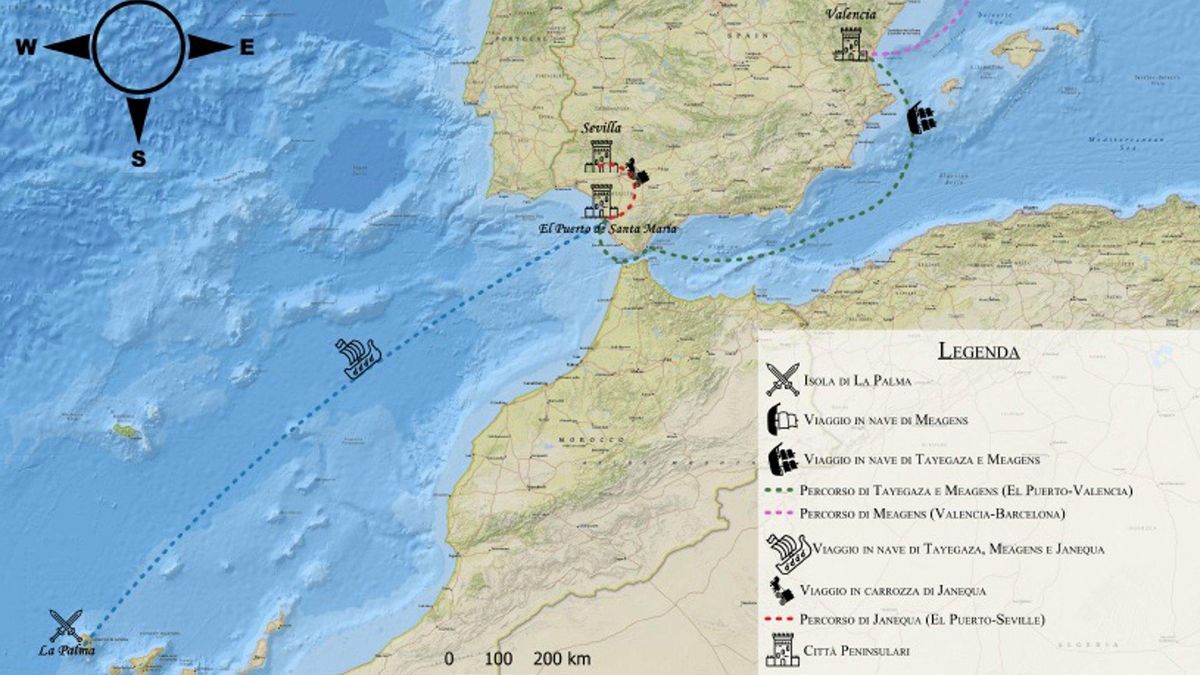
Valencia, the main destination
Most of the people enslaved in the Canary Islands were taken to Valencia, where their value was lower than in Seville, given Valencia’s redistributive role in the Mediterranean context compared with Seville’s dependence on other primary ports. The author notes that these people were used as an economic resource to settle debts and generate profits. Their predominant age range was between 14 and 25, although the presence of enslaved people under the age of 13 in Valencia and over the age of 35 in Seville is documented. Both men and women were traded in these markets.
A subsidiary subject within slavery studies
Jiménez Díaz stresses that enslaved Amazigh-Canarian people have always been a subsidiary subject within monographs or broader studies on slavery in Europe. Her work therefore seeks to deepen understanding of the specific dynamics of slavery originating in the Canary Islands, gathering more information about the lives of these people: who they were, where they came from, how they reached this city, how they fitted into the heterogeneous group of enslaved people, how they were valued and what processes are reflected in the historical documentation.
Similarly, the researcher considers it necessary to review the historiographical language traditionally used. She prefers to dispense with the word “slave”, because it objectifies the person, and to use “enslaved person” instead, as she believes this shifts the action towards the enslaver. In her view, avoiding dehumanising perspectives and not accepting colonial discourse makes it possible to reposition these people at the centre of their own processes and of the geographical dispersal to which they were forced.
Loss of identity and cultural erasure
Another aspect highlighted in the study concerns the depersonalisation suffered by enslaved people, which entailed the loss of their cultural and linguistic identity. Baptism, for example, replaced their aboriginal names with Christian ones, making it harder to trace them in the documentary record.
Living outside their place of origin also encouraged the adoption of European languages and customs, and the gradual erosion of their original identity, the research adds.
What’s happening in the Canaries – straight to your phone
News, weather alerts and practical updates – direct from the islands, in English. We live here and know what’s going on – before the international media catch up. Everything lands on our WhatsApp channel – no middlemen, no algorithm. Curated for families, expats and travelers.

Housing crisis in Canary Islands: a failed legislature

Housing crisis dominates Canary Islands pre-election debate

26 new social homes fast-tracked in Gáldar, Gran Canaria

Blackstone owns 506 homes in Las Palmas de Gran Canaria
Spain’s business cartels and the fight for fair markets
PSOE warns Tenerife fire prevention cuts risk lives
Driverless truck crashes into Air Force gate in Las Palmas

Lanzarote housing assembly demands action on evictions
World’s first octopus farm scrapped in Las Palmas