Compiled with the help of artificial intelligence, based on Spanish-language information. Source below the article.
Supreme Court to rule on solar land value
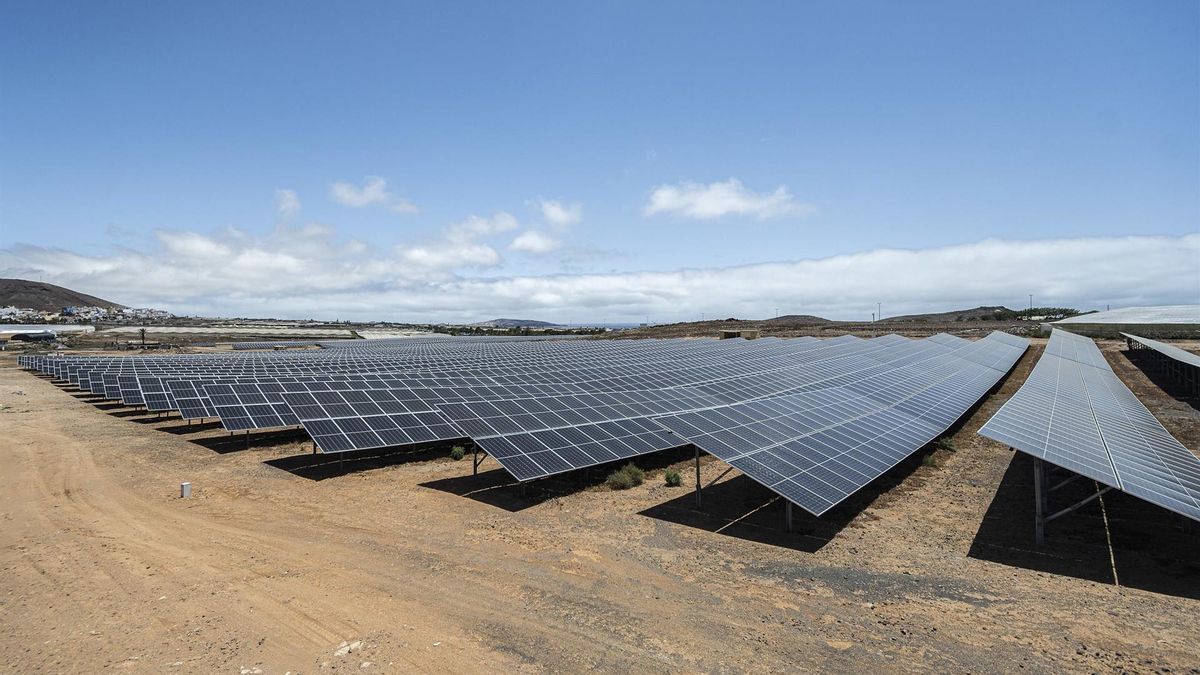
Is rural land worth more if it is suitable for hosting a solar energy plant? That is the question Spain’s Supreme Court must answer in a dispute brought by the four owners of a plot located in the municipality of Telde, on the island of Gran Canaria. The Administrative Litigation Division has admitted for processing the owners’ appeal against a ruling by the High Court of Justice of the Canary Islands (TSJC), which had dismissed their claim to substantially raise the price paid for the expropriation. The Supreme Court considers that the issue is of sufficient interest to establish case law and set a clear criterion on the matter, given the proliferation of renewable energy installations on rural land.
A vast gap between valuations
In the Telde case, the gulf is enormous. The Canary Islands Government’s Valuation Commission set the just compensation – the value of the plot – at €517,000. The claimants are seeking €3.4 million, which would multiply the official valuation more than sixfold.
The plot at the centre of the dispute covers an area of 74,620 square metres, is located in the area known as Lomo Gordo and borders the Barranco de Silva. The land, a piece of waste ground that has been in a notorious state of abandonment for four decades, was conditioned by the General Town Plan approved by Telde Council in 2002. Under the designation Sistema General SG-7 (Cemetery), urban planning regulations reserved nearly 60,000 square metres of this space for municipal funeral facilities. Almost 25 years later, nothing has been done at the site.
Decades of inaction by the council
After the approval of the General Town Plan, Telde Council took no action to acquire the land. Faced with this paralysis, it was the plot’s owners themselves who applied to exercise their right to expropriation more than five years after the municipal urban planning regulations came into force. At that time they were asking for €5.8 million, but the Canary Islands Valuation Commission assessed the land at €485,000 in October 2014. However, the administration did not pay, and in December 2018 the owners requested a fresh valuation of the plot to bring it into line with the legislation then in force – the Land Law approved a year earlier as the flagship project of Fernando Clavijo’s first term in office (Coalición Canaria). The Valuation Commission slightly increased the just compensation, from €485,000 to €517,360.
Owners seek €3.4 million
The plot’s owners disagreed with the revised valuation and went to court to claim €3.4 million. The claimants submitted a technical report arguing that, following the approval of the Land Law, the valuation of rural land must include, for the purposes of any eventual expropriation, the potential income from installing a solar plant. In the claimants’ view, the size of the plot and its strategic and unbeatable location make it ideal for renewable energy production projects, owing to the absence of natural values and its classification as rural land for infrastructure protection, which does not prohibit such a use. Gran Canaria’s Island Planning Plan includes the surface area as a zone of “moderate agricultural value”.
In the event that this primary claim did not succeed, the owners put forward a subsidiary or alternative argument: that the plot should be considered suitable for aloe vera cultivation and therefore more profitable than traditional agricultural use. For this scenario, a second technical report valued the land at €1.4 million.
Setback at the Canary Islands High Court
Those claims were rejected at first instance by the High Court of Justice of the Canary Islands (TSJC). The Second Section of the Administrative Litigation Division dismissed the claim in its entirety in a ruling issued in November 2025. For the regional court, the option of installing a solar energy plant on the plot is nothing more than “a mere, absolutely uncertain expectation”. The ruling states that, while it is true that the Canary Islands Land Law of 2017 does not expressly prohibit the installation of renewables on rural land, their installation is conditional on obtaining municipal licences, declarations of public or social interest and sectoral permits for connection to the electricity grid. According to the TSJC, a plant of this kind requires a level of investment running into millions that exceeds the normal technical means required to calculate the income from rural land.
As for aloe vera cultivation, the Division stressed that the administration’s official valuation, based on traditional cultivation of vegetables and tomatoes under greenhouse, “enjoys a presumption of accuracy in the area”, that such activity is exceptional in the locality and that the plot has been abandoned since the 1980s and that, therefore, considerable works and investment in irrigation and land preparation would be required.
The appeal to the Supreme Court
After that first setback, the plot’s owners turned to the Supreme Court. In their appeal, the affected parties describe as contradictory one of the arguments put forward by the TSJC to reject their claims – the one referring to the need to hold prior authorisations. The owners maintain that agricultural or livestock holdings are not assessed on the personal capacity of their owners either, nor are they required to have all permits processed in advance in order to calculate potential yield.
Spain’s highest court, in an order issued on 15 July with Judge Ángeles Huet de Sande as rapporteur, has decided to admit the appeal in cassation for processing. For the Supreme Court, it is essential to interpret article 36 of the state Land Law and the relevant regulations in order to determine whether the suitability of rural land for a solar plant should be weighed when calculating the potential income of the plot for the purposes of an expropriation. The judges note that previous rulings were issued on legislation that has since been repealed, and therefore consider it urgent to establish a clear criterion given the notable expansion of renewable installations on rural land.
The final decision of the Fifth Section of the Administrative Litigation Division will establish case law of general scope, since it will serve to determine whether the boom in solar photovoltaic installations on such land redefines the cost of expropriations in Spain.
What’s happening in the Canaries – straight to your phone
News, weather alerts and practical updates – direct from the islands, in English. We live here and know what’s going on – before the international media catch up. Everything lands on our WhatsApp channel – no middlemen, no algorithm. Curated for families, expats and travelers.

Canary Islands housing crisis deepens as rent caps ignored
La Laguna awards €18.6m El Cardonal rehabilitation contract

Mass protest in Las Palmas against evictions and overtourism
Canary Islands banana prices finally rise after summer crisis

Police exam scandal reaches Canary Islands Parliament
Gran Canaria woman, 87, finally owns El Lasso home

Tenerife eviction halted after mass protest in Santa Cruz

Canary Islands defy national slump as property sales rise 2.1%

Family demands probe into Fuerteventura demolition operation