
A minor technical fright. The unique location of the Canary Islands – a European region politically and administratively, yet situated more than a thousand kilometres from mainland Europe – causes an involuntary reaction in most islanders when confronted with a map of Europe. “Where are the Canary Islands?” Eyes scan the far left of the image in search of that imaginary square containing the eight islands. More often than not, it is in vain.
Omission from initial designs
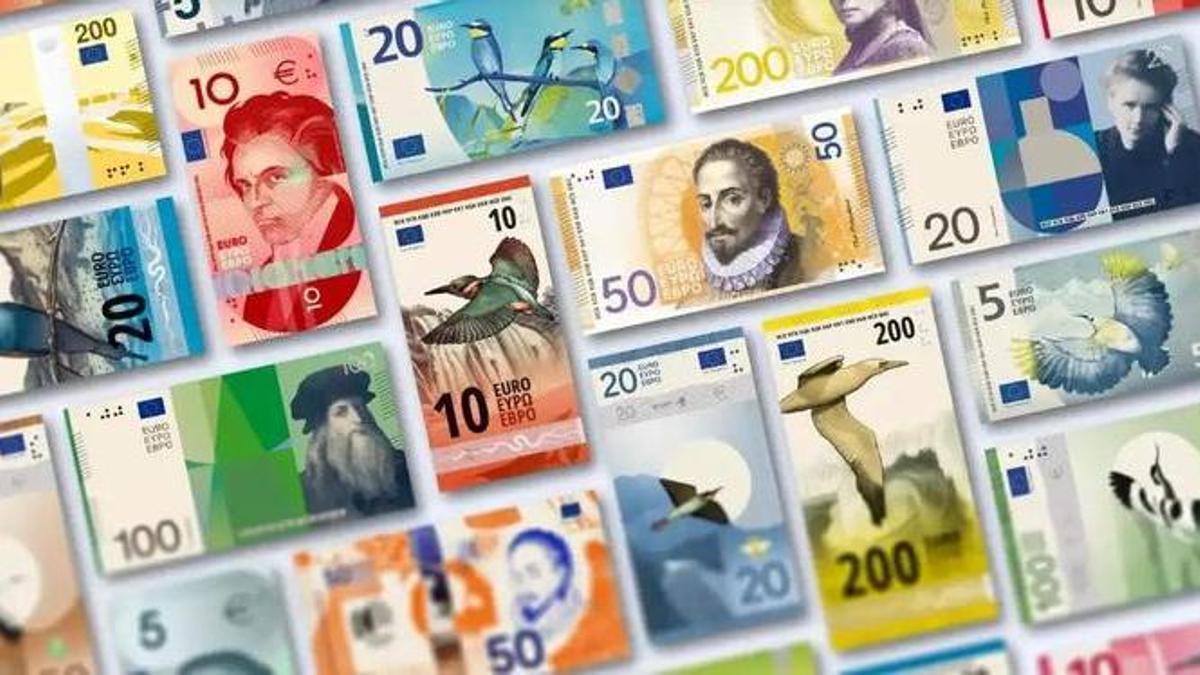
This episode was repeated this week with the new models proposed by the European Central Bank (ECB) to revamp the look of euro banknotes. The ten designs exclude – on the face of it – the Canary Islands from the map accompanying the illustrations of the two finalist themes chosen by the institution: “European culture” and “Rivers and birds”.
Complaints and comments about the absence, not just of the Canary Islands but of all the outermost regions (ORs), prompted the Central Bank itself to issue a clarification this week that the Archipelago will indeed have a place on all new banknotes. Just as with the current designs, the Islands will appear on the map alongside the rest of the eurozone. This will be the case in the definitive versions.
The ECB explains that artists received guidelines for preparing their proposals, but the institution does not take responsibility for the elements that were included or omitted in their sketches. For now, the ECB has only published the artistic images of the proposals that form part of the initial competition phase, in which the mandatory elements that will feature on future euro notes are not yet present.
Legal requirement for outermost regions
The inclusion of the outermost regions on the banknotes is a technical and legal requirement derived from their status as eurozone territory. The Canary Islands will therefore appear alongside the face of Miguel de Cervantes, Marie Curie or Leonardo da Vinci if any of the models linked to the “European culture” theme wins, but it will also have its place alongside the wallcreepers, bee-eaters and storks that feature in the “Rivers and birds” proposals.
The final design – which will be refined during the technical phase – will depend on the vote of European citizens in the online public consultation that the ECB will keep open until 21 September.
A new look after two decades
The renewal of the banknotes comes more than 20 years after the single currency was launched. The windows, doors and bridges that symbolised “openness and cooperation” between the peoples of Europe give way to a proposal aimed at reflecting Europe’s common identity, with designs related to culture and nature.
The cultural proposal seeks to illustrate the euro with great figures from European arts and letters, with universal personalities who have shaped the continent’s collective identity beyond its borders. The second theme replaces the characters with river wildlife and the continent’s great landscapes, thereby reinforcing a message of preservation and environmental awareness.
The ECB has also set out to update the notes to strengthen security against counterfeiting, incorporating new technologies that make copying the paper more difficult. The change also aims to improve accessibility for people with visual impairments by incorporating tactile elements, alongside a commitment to manufacturing with sustainable materials.
When will the change arrive?
There is still no date, but it will not be soon. It will be the ECB’s Governing Council that decides the visual appearance of the next series of banknotes, and it is expected to do so by the end of this year. “The development and production of the banknotes will then begin, although several years will pass before the new notes reach our pockets,” the institution confirms.
What is clear is that the arrival of the new design will not mean that the old notes lose their value. The Eurosystem guarantees, as the ECB clarifies, full legal and financial security throughout the transition process. The new designs will thus coexist in parallel in Europeans’ pockets with the current “Europa series”, which will retain its face value for life.
What’s happening in the Canaries – straight to your phone
News, weather alerts and practical updates – direct from the islands, in English. We live here and know what’s going on – before the international media catch up. Everything lands on our WhatsApp channel – no middlemen, no algorithm. Curated for families, expats and travelers.

Tuesday: heavy showers and storms in El Hierro

El Hierro issued yellow warning for heavy rain

Monday: autumn showers and a cooler feel

Sunday: scattered clouds and showers on the islands

Saturday: cooler air and clearing Saharan dust

Canary Islands weather: rain and storms on the way

Friday: summer heat before an autumnal weekend

Tuesday: cloud, showers and a building swell

Monday: cloud cover and scattered showers
