
New forest plan approved to tackle climate change
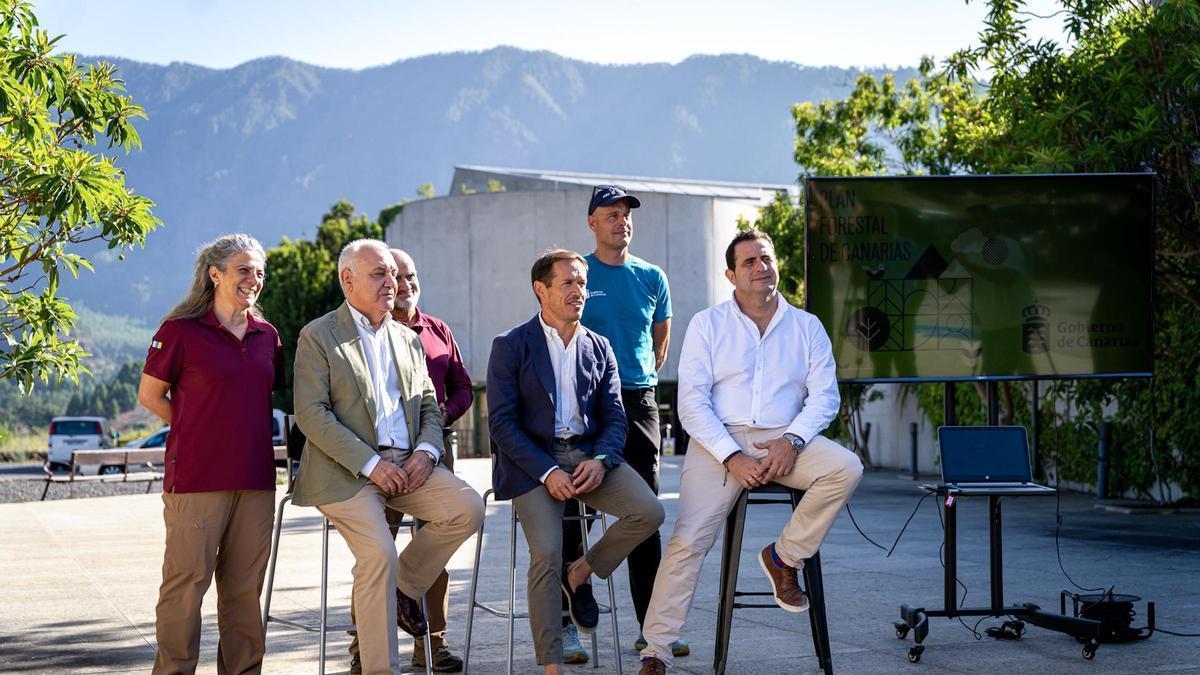
The Canary Islands government has approved a new Forest Plan for the archipelago, replacing the previous one in force since 1999. The document is designed to adapt the management of the islands’ woodlands to rising temperatures and the effects of climate change. The Minister for Ecological Transition and Energy, Mariano Hernández Zapata, presented the updated protocol on Tuesday at the Caldera de Taburiente Visitor Centre on La Palma.
Focus on fire prevention and active forest management
The new plan aims to strengthen fire prevention, promote active management of forest areas, and encourage the sustainable use of natural resources. According to the minister, the review was prompted by a scenario of increased risk of fires due to global warming. Work on the plan began in 2023 through a participatory process that incorporated contributions from public administrations, organisations, and citizens.
Strategic planning tool, not a new law
The Director General of Natural Environment, Miguel Ángel Morcuende, explained that the document is a strategic planning tool which sets out the main lines of action for forest policy in the Canary Islands. He clarified that it is not a regulatory document and does not replace existing legislation. Morcuende said the new framework is based on a thorough diagnosis of the archipelago’s forest area, land ownership, different vegetation formations, and the impact of major wildfires. This analysis, he indicated, will make it possible to adapt actions to the specific reality and needs of each island.
21-year plan structured in three seven-year periods
The project has been designed with a 21-year timeline, structured into three seven-year periods which will each be reviewed to assess whether goals are being met and to adapt measures to new challenges. This planning is also intended to facilitate coordination with various European, national, and regional funding programmes. After starting the process three years ago, the document passed through environmental assessment, public consultations, and citizen participation before receiving final approval. Contributions made during this process were analysed and incorporated into the final text.
Nearly 39 million euros invested in firefighting equipment
One of the cornerstones of the new plan is wildfire prevention. “The best fire is the one that never starts,” said Hernández Zapata, who noted that the regional government has allocated nearly 39 million euros during the current legislature to strengthen its wildfire intervention and reinforcement teams (known as EIRIF), in addition to carrying out preventive work in woodlands and national parks. Of this investment, 15 million euros has been used to reinforce and modernise the operational resources, enabling the acquisition of new helicopters, specialist vehicles, drones, heavy machinery, and cutting-edge technology. These resources are designed to improve both emergency response capacity and year-round prevention work.
Economic development and institutional coordination
The second pillar of the plan promotes socioeconomic development in rural areas by creating jobs, recovering forest land, and encouraging activities compatible with environmental conservation. This includes restoring areas traditionally used for growing almond trees or fig trees. The third pillar focuses on strengthening institutional coordination, ensuring monitoring, funding, and evaluation of the plan, promoting research, and updating the regulatory framework.
Plan covers all islands, even the driest
Zapata made clear during the event that the forest plan applies to each of the islands, stressing that it affects not only the greener ones but also those with less vegetation, such as Fuerteventura and Lanzarote. “That small area of woodland plays an important role in soil retention and preventing the spread of desertification in that area, so it is also highly significant,” he explained. The minister said that this protocol is part of a broader regulatory strategy which has already resulted in the approval of a wildfire prevention decree in December 2025 and will culminate in the future Canary Islands Forestry Law, currently being drafted.
Solidarity with firefighters on the mainland
During his speech, the minister also referred to the large wildfires currently affecting mainland Spain and expressed his recognition for the professionals involved in firefighting efforts. He said the Canary Islands is constantly monitoring the situation and is ready to provide assistance with available resources if needed. Asked about the need for cleaning and clearing work in woodlands to prevent fires, Zapata argued that such work is essential. “It’s not that we can clear the woodland, we must clear it,” he stated. “We have equipped our EIRIF teams not only to fight fires but to prevent them.”
Making woodlands economically attractive
The Canary Islands already carries out cleaning and vegetation fuel reduction work using the EIRIF teams, supported by heavy machinery and unmanned technology, with the aim of reducing the risk of fire spread. Hernández Zapata stressed that these actions must be complemented by projects that make woodland areas economically attractive, promoting the recovery of crops in the interface zones between forests and inhabited areas to strengthen fire prevention and revitalise activity in rural areas. The presentation of the plan comes just hours before the Canary Islands is hit by a fourth heatwave, which significantly complicates the situation given the potential for new wildfires.
What’s happening in the Canaries – straight to your phone
News, weather alerts and practical updates – direct from the islands, in English. We live here and know what’s going on – before the international media catch up. Everything lands on our WhatsApp channel – no middlemen, no algorithm. Curated for families, expats and travelers.

Iberdrola plans Tenerife’s biggest battery storage plant

The wild canary that gave its name to the Canary Islands

Canary Islands sea hits second-hottest year on record

Legal bid to halt tree felling in Santa Cruz’s La Salud

Fiesta del Charco: A journey through La Aldea’s past

Corralejo dunes power line set for removal

ULPGC launches 14 research projects at Las Canteras

TMT will never be built, says Canary Islands astrophysics chief

Pedro Duque: Canarias is the “ultimate dream” for rockets
