
The spark that lit the fire
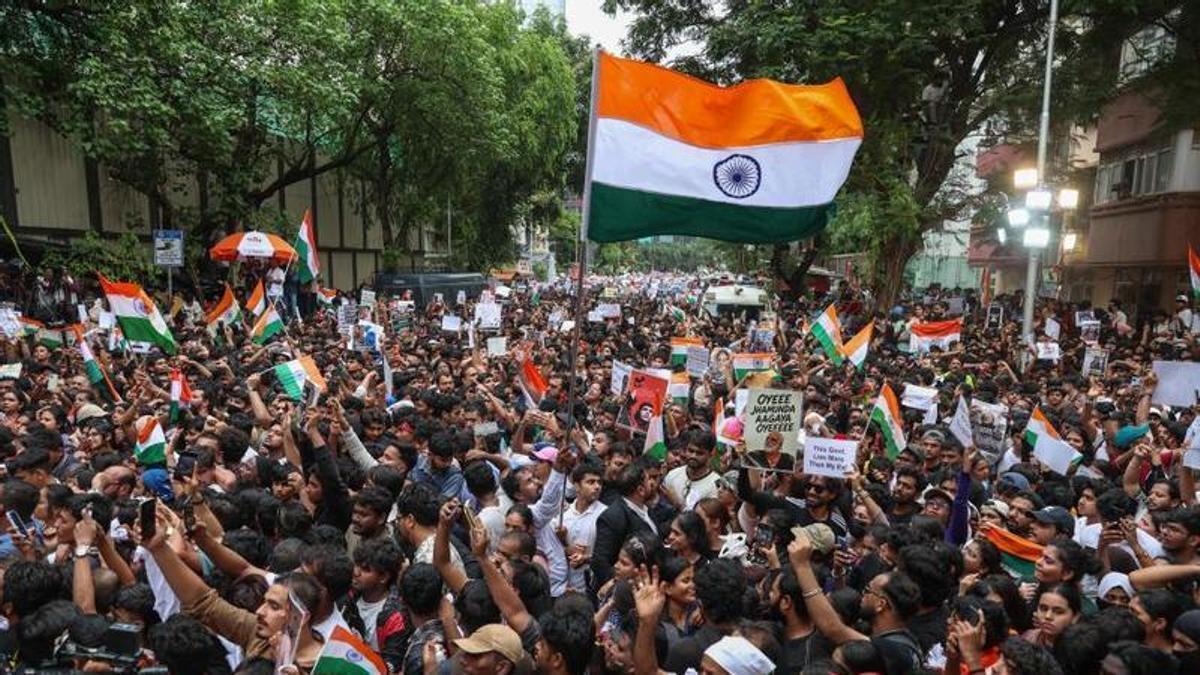
“What if all the cockroaches united?” That was the question a young man in India posted on X after the country’s Supreme Court president, Surya Kant, described unemployed young people as “cockroaches” on 15 May. What might have remained a clumsy remark and a mere online grievance has instead become the symbol of a generation that has taken to the streets to make its voice heard. India is now witnessing one of the biggest waves of youth protests in recent years.
Deeper roots of anger
Although the immediate trigger was the scandal over leaked university entrance exams, the demonstrations reflect a much deeper discontent fuelled by corruption, unemployment, and a lack of opportunities for millions of young people. To understand the origins of the protests, you have to go back to 3 May. That was the day allegations began to spread about a suspected leak of the medical school entrance exams. The suspicions were eventually confirmed, forcing authorities to hold the exam again. For much of India’s youth, the scandal was far more than an academic fraud.
Why the Canary Islands are watching closely
Though the protests are unfolding thousands of miles away, they are being followed with particular interest in the Canary Islands. The ties between India and the archipelago have been woven over decades. As far back as the 1950s and 1960s, numerous Indian families settled in the Islands to start a new life, mainly in trade. That first wave of migration gave rise to a community that today is one of the most established in the Canaries.
Between 7,000 and 8,000 people of Hindu faith now live in the archipelago. Tenerife has the largest concentration, with around 3,500 residents, followed by Gran Canaria with about 3,000, while Lanzarote and Fuerteventura together are home to nearly a thousand. This presence reflects the historic relationship between India and the Islands, shaped by migration flows driven largely by the consequences of the partition of India and Pakistan.
Voices from the community
“When exams of this level are held, thousands of young people spend years preparing to get a good score. In India, where competition is enormous because of the population size, that pressure is even greater,” explains Sunil Rijhwani, president of the Hindu community in Puerto de la Cruz, Tenerife. He has lived in the Canary Islands for 35 years but remains in close contact with relatives still in India, who have told him first-hand about the tense atmosphere gripping the country.
The consequences of the scandal have gone far beyond the re-sitting of exams. “21 young people from different areas committed suicide” after the case became known, he says. The unrest also spread to universities, where part of the academic community went on hunger strike in protest.
Unemployment at the heart of the crisis
Unemployment is, in the view of Naresh Kumar Lalwani, another factor fuelling the discontent of India’s youth. “There is a serious problem with employment,” he sums up. He arrived in Gran Canaria at the age of eight and has lived on the island for 49 years, after his parents and uncles emigrated in 1970. They first worked for a company and later started their own businesses, opening several shops in the Puerto del Parque area and around Santa Catalina Park.
The current climate of tension is particularly striking to Sunil Rijhwani. In his view, India’s young people are highly educated and well-prepared, which makes the scale of the discontent all the more surprising. “Young people in India have incredible talent. They graduate very well prepared,” he says.
A rising global player, with domestic strains
This potential is all the more significant given the progress India has made in recent decades, establishing itself as one of the most important economic and technological players on the Asian continent. And it is precisely this that has cemented the country’s position on the global stage. “Globally, India is an increasingly important actor in Asia. And that is why relations with China are becoming more and more difficult, and at times tense. Because China is no longer in a phase of sustained growth. Quite the opposite. It is gradually moving towards equilibrium,” says Fréderic Mértens, an expert in international relations at the European University.
This is particularly noticeable in demographics. “While India is growing, China is stabilising.” The mobilisations also have an explanation in the labour market. Only one in four university graduates in India finds a job that matches their qualifications. “That is why there is a significant exodus of skilled professionals to other countries,” Mértens explains. A trend that, with the tightening of US immigration policies, is now redirecting part of that flow towards Europe.
What’s happening in the Canaries – straight to your phone
News, weather alerts and practical updates – direct from the islands, in English. We live here and know what’s going on – before the international media catch up. Everything lands on our WhatsApp channel – no middlemen, no algorithm. Curated for families, expats and travelers.

Vivanta shuts all dental clinics including six in Tenerife

Civil Guard warns of digital skimming threat to online shoppers

Tenerife shifts FDCAN funds from roads to housing

PSOE warns Arrecife plan could ‘bury’ El Cable beach in concrete

Canary Islands faces loss of 20% of self-employed workers

Canary Islands to get 26 new substations by 2030

Canary Islands poverty rates stuck since pandemic

Court backs eviction over verbal room rental in Arona

Canary Islands pushes for 10-year residency rule for foreign buyers
