TF-5 third lane: contract signing imminent
The long-awaited expansion of the TF-5 motorway between Guamasa and Tenerife North-Ciudad de La Laguna Airport is finally moving from the drawing board into reality. The Canary Islands Government is expected to sign the contract for the third lane on this stretch within approximately one week, following the provisional award of the works. This will allow construction to begin within a maximum of 30 days.
A major step to ease motorway congestion
The project represents one of the most significant steps taken so far to try to alleviate congestion on the northern motorway, particularly at one of its main bottleneck points. The tender was put out for around €66 million, and the selected bid includes a saving of nearly 10%. The expected completion time is approximately 36 months.
“We are very close, just a few weeks away from the start of these works,” said Pablo Rodríguez, the Canary Islands Government’s Minister for Public Works, Housing and Mobility, during a plenary session of the regional parliament. The announcement updates the original timeline, which had scheduled the start of the work for before the summer.
From provisional award to contract formalisation
Now that the provisional award has been completed, the administration is facing the final step before the actual start of construction: formalising the contract. The project will be carried out between kilometres 11 and 15 of the TF-5, in the direction of Santa Cruz, between Guamasa and the Los Rodeos airport area.
110,000 vehicles daily: tackling the bottleneck effect
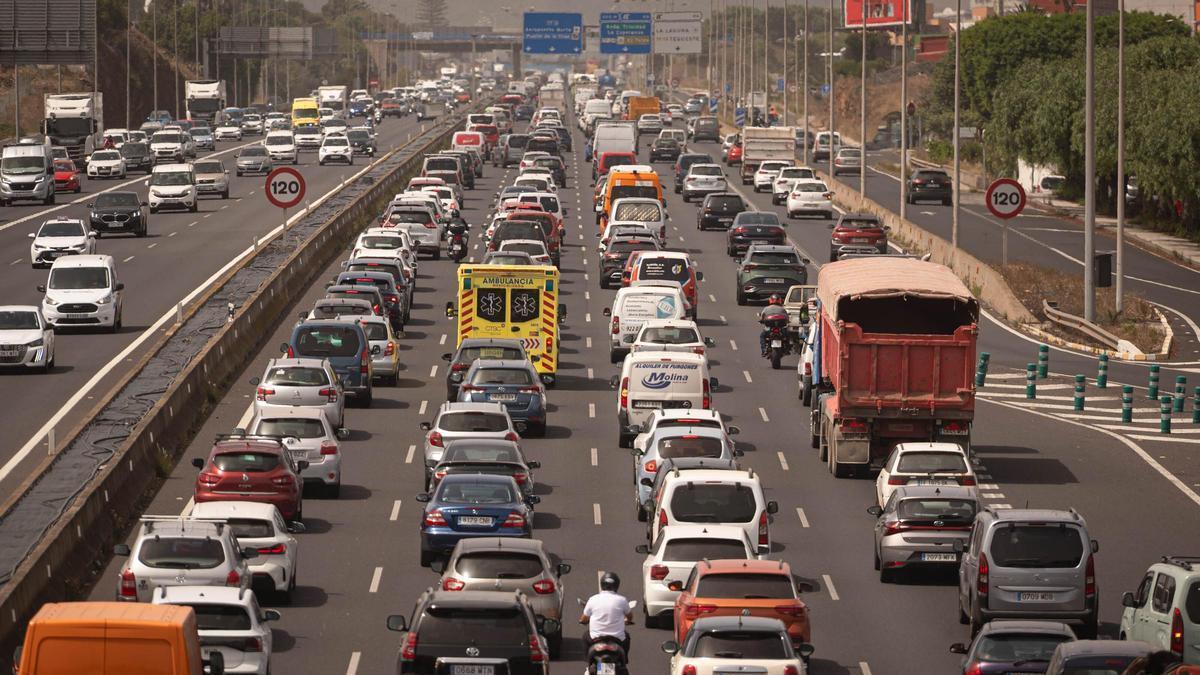
Around 110,000 vehicles travel along this stretch every day, with peak periods reaching 4,500 vehicles per hour. The addition of a third lane aims to significantly increase the capacity of a road under immense daily pressure from commuter traffic between northern Tenerife, La Laguna and the metropolitan area. The main objective is to correct the funnel effect caused by vehicles joining the motorway from Guamasa, the La Laguna area and the north-eastern region.
According to estimates presented when the project was unveiled, the new configuration could increase the current capacity of the stretch by up to 50%. The administrations involved maintain that the expansion will improve traffic flow and enhance road safety. However, the minister himself has admitted that Tenerife’s mobility problems will not be solved by infrastructure alone. Rodríguez argued for the need to accompany the works with other measures and coordinated action from the various administrative bodies.
Nevertheless, he emphasised the importance of finally having an awarded contract to act on one of the main causes of the worst tailbacks, after years of debate over the queues on the TF-5 and the time thousands of drivers lose daily.
More than just a third lane: junction remodelling and new airport access
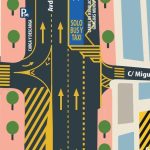
The third lane is only one part of the project. The intervention also includes remodelling the Guamasa, San Lázaro and Tenerife North-Ciudad de La Laguna Airport junctions (interchanges). One of the main new features will be the construction of a direct access route to the airport for vehicles coming from the north of the island. Currently, much of this traffic has to go through the San Lázaro junction, one of the points that concentrates the worst congestion in the area.
The new connection will allow drivers arriving from towns such as Puerto de la Cruz to access the airport facilities directly, without having to merge with the flow of vehicles circulating through San Lázaro. The reorganisation aims to separate northbound and southbound traffic. In this way, journeys to the airport will no longer coincide at the same junction with a large portion of the vehicles heading to La Laguna or Santa Cruz.
Land acquisition and coordination challenges
The expansion will require the occupation of approximately 8,000 square metres of land. A significant part of the affected area corresponds to public domain land and spaces managed by Aena, the Spanish airport authority. The Canary Islands Government will need to formalise a protocol or agreement with the airport operator to use these lands during the project’s execution. The estimated cost of expropriations is around €600,000.
The proximity of the airport and the presence of various other infrastructures mean that work must be coordinated with several administrations and organisations. This factor adds to the complexity of intervening on a motorway that must remain operational throughout the entire process.
An end to years of debate, and a look ahead
The start of construction will mark a change after years of announcements, studies and debates over congestion on the TF-5. The intervention will not solve all of northern Tenerife’s mobility problems on its own, but it will act on one of the motorway’s main bottlenecks. The capacity expansion, the junction remodelling, and the new airport access are all intended to reduce problematic merge points and better organise the different traffic flows.
The Canary Islands Government has also announced that the next major project of this type will be on the southern motorway, the TF-1, where a third lane is also planned for one of its most congested sections. For now, however, the focus is on Guamasa and Los Rodeos. After the contract is formalised, a 30-day countdown will begin before the machinery moves onto the TF-5. It will mark the start of a long-awaited project, an intervention with which the authorities hope to reduce some of the time that thousands of Tenerife residents lose every day trapped on the motorway.
What’s happening in the Canaries – straight to your phone
News, weather alerts and practical updates – direct from the islands, in English. We live here and know what’s going on – before the international media catch up. Everything lands on our WhatsApp channel – no middlemen, no algorithm. Curated for families, expats and travelers.

Work on TF-5 third lane between Guamasa and Los Rodeos to start in November
Canary Islands international air arrivals fall 1.3% in September

Helicopter evacuates US cruise passenger near Tenerife
El Hierro airport sees 3.6% rise in September passengers

Gran Canaria approves €509k works to shore up GC-200 slope

Canary Islands gets €47.5m for free public transport in 2026
Canary Islands airports see 0.9% fall in September passengers
El Rejo road in La Gomera to close for six hours on Tuesday
Man, 65, seriously injured in GC-1 crash in Agüimes