Aena reverses controversial airport fee
Aena has reversed a payment measure it introduced at Tenerife South Airport (Reina Sofía) at the beginning of July, which caused chaos for passenger pick-ups. The state-owned airport operator has suspended the charge for private hire coaches until December this year.
Emergency meeting brings consensus
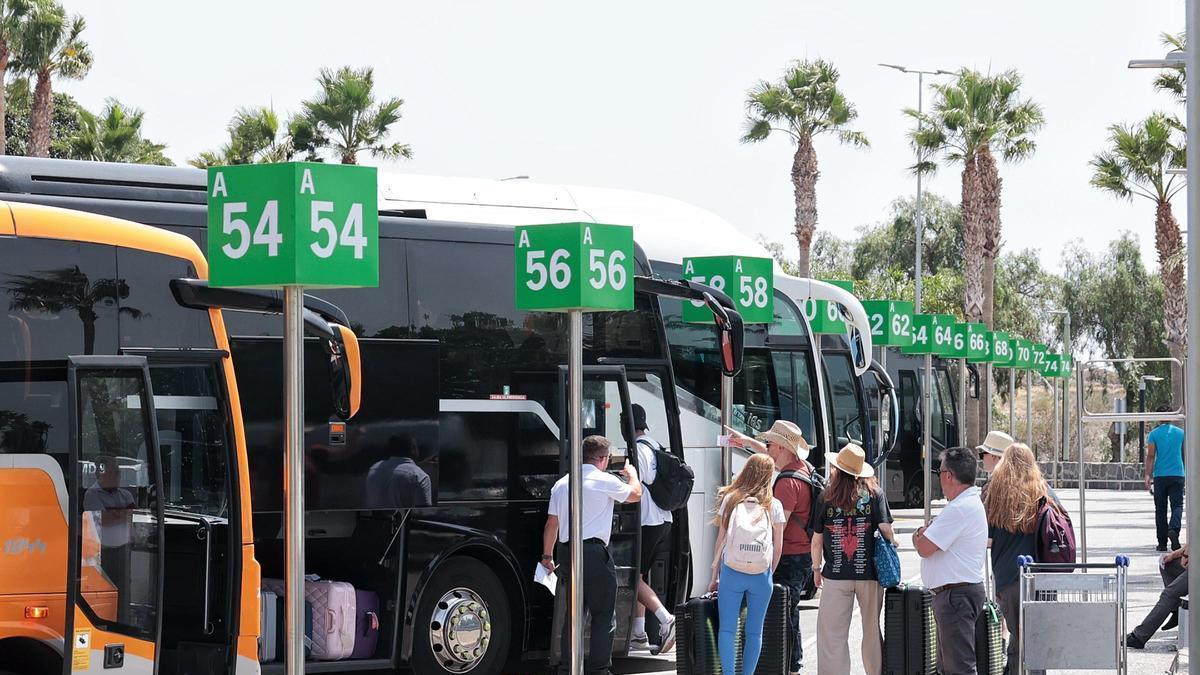
The decision was reached during a meeting held this morning at the southern airport, bringing together Aena, the regional transport trade association, the Cabildo of Tenerife, and the Canary Islands Government. The access barrier will continue to operate, but free of charge until the end of the year. This period will serve as a trial to assess whether one hour is sufficient time for picking up passengers at the arrivals terminal. This was the maximum time set by Aena for coaches to remain in the bay outside the terminal. Beyond that, firms would have been charged for any additional parking time.
Traffic chaos gives way to dialogue
The traffic chaos at Tenerife South Airport and the widespread disagreement over the introduction of what became known as the ‘big fee’ have now given way to consensus and dialogue between all parties involved. As for current operations at the barrier, the airport infrastructure was running normally this Tuesday, with some peaks in passenger numbers but no congestion at the entrance to the coach bay, which has 75 stands.
Alternative parking and driver concerns
Aena has also made available another parking area located at the top of the airport, where coaches can wait free of charge until flights arrive. Once passengers are approaching, drivers come down to the access barrier to minimise their time inside and thus avoid paying. In this regard, transport operators have complained that this waiting zone lacks any facilities: there are no toilets and no shade. During the meeting, the airport authority committed to upgrading this space to ensure the welfare of workers while they wait.
Trial period running until January 2027
A five-month trial period now begins to determine whether the time limit is workable. A definitive measure will be introduced from 1 January 2027.
What’s happening in the Canaries – straight to your phone
News, weather alerts and practical updates – direct from the islands, in English. We live here and know what’s going on – before the international media catch up. Everything lands on our WhatsApp channel – no middlemen, no algorithm. Curated for families, expats and travelers.

Work on TF-5 third lane between Guamasa and Los Rodeos to start in November
Canary Islands international air arrivals fall 1.3% in September

Helicopter evacuates US cruise passenger near Tenerife
El Hierro airport sees 3.6% rise in September passengers

Gran Canaria approves €509k works to shore up GC-200 slope
Canary Islands gets €47.5m for free public transport in 2026
Canary Islands airports see 0.9% fall in September passengers
El Rejo road in La Gomera to close for six hours on Tuesday
Man, 65, seriously injured in GC-1 crash in Agüimes