
Contigo La Palma condemns ‘clientelist’ compensation plan
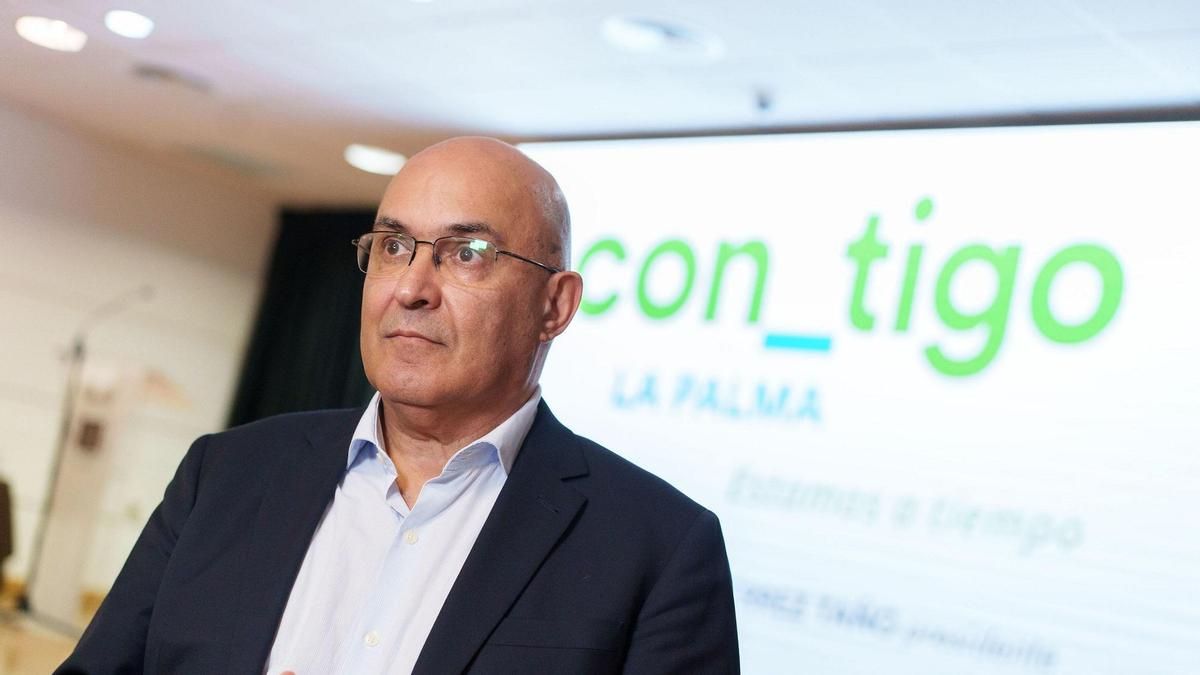
The political party Contigo La Palma, led by Javier Gutiérrez Taño, has denounced as “very dangerous, clientelist and unethical” a formula applied by the Canary Islands Government to compensate banana growers on the island for overpaid subsidies. The overpayment was the result of an administrative error in payments made to farmers affected by the 2021 volcanic eruption.
The subsidies in question related to the 2021-2022 campaign, during which advance payments were made based on an estimated support figure that later proved inaccurate.
How the compensation works
The measure, approved last December as part of the Canary Islands’ General Budget Law for 2026, compensates 1,296 banana farm holders on the island. It spares them from having to repay the excess amounts they received. Only four recipients are excluded from full compensation, as their overpayments exceed €50,000.
The scheme works by granting ‘de minimis’ state aid equivalent to the outstanding debts. According to figures reported by Canarias Ahora this weekend, the total cost of avoiding these repayments amounts to nearly €3.5 million.
Legal challenge: breach of EU law
Contigo La Palma argues that the additional provision drafted by Coalición Canaria in La Palma and inserted into the regional budget contravenes EU law and regulations governing state aid, which are binding on both Spanish and regional legislation.
According to the party, all evidence suggests that the ‘de minimis’ aid is being applied irregularly. “In this case, no real loss is being compensated, because the aid is granted for the same events and costs already covered by subsidies under EU Regulation 702/2014. The sole purpose, therefore, is to cancel an obligation to repay public funds.”
This, the party adds, breaches the accumulation rules of EU Regulation 1408/2013, which prohibit combining ‘de minimis’ aid with exempt category aid when the limits set for the same eligible costs are exceeded.
‘Deliberate removal of legal safeguards’
Contigo La Palma points out that the additional provision itself acknowledges the procedural anomaly by stating that “the grant will not require approval of the expenditure” – in other words, public money is being awarded without the standard spending procedure.
Furthermore, the party maintains that during the parliamentary process, legal controls were deliberately removed. “The obligation to issue the mandatory report from the Directorate General for European Affairs on the measure’s compatibility with EU competition rules was excepted.”
“With this decision,” Contigo La Palma states, “there is a clear risk that the European Commission will consider that ‘de minimis’ aid is being applied irregularly in the banana sector. The Commission can examine these subsidies on its own initiative or following a complaint from any affected person, farmer, agricultural organisation or entity.”
Lack of transparency in distribution
The party also reports that the Ministry of Agriculture has just requested the collaboration of banana producer organisations (OPPs) to notify individual beneficiaries of the ‘de minimis’ aid in person at the Gesplan office in Los Llanos de Aridane – “the ubiquitous public company in the lives of those affected by the Tajogaite volcano.”
At this appointment, farmers will sign a personalised document accepting the ‘de minimis’ aid. However, Contigo La Palma adds that “everything suggests the Ministry will not publish the list of beneficiaries or the grant resolution, continuing the habitual secrecy in the management of the island’s reconstruction after the volcano – an opacity already criticised by the Canary Islands Transparency Commissioner.”
“This action once again violates citizens’ right to know how public money is managed: in-person signing, no publication of the grant order, and no universal access to information about who receives these funds and how much they receive.”
Risk of future repayment with interest
If this happens, Contigo La Palma warns, “the European Commission could demand recovery of the aid on grounds of illegality or incompatibility, since any aid granted under an exemption regulation that does not meet the conditions set out in that regulation is illegal – as appears to be the case here.”
The party believes that “writing off the overpaid amount could cause more harm to the supposed beneficiaries in the medium term than the apparent immediate improvement, because the amounts received will likely have to be repaid with corresponding late-payment interest.”
It also notes that four cases are not even covered by the €50,000 ‘de minimis’ limit, “as there are overpayments that exceed €140,000 in one instance.”
Threat to future EU funding for bananas
The party reminds readers that the new Multiannual Financial Framework 2028-2034 is currently being negotiated with EU institutions, and that the Canary Islands is arguing for the continuation or even increase of POSEI subsidies for bananas, which currently stand at €141.1 million per year.
“Therefore, misuse of state ‘de minimis’ aid in this same sector could well be detrimental to the proposals the EU must adopt for that period – the new seven-year budget cycle,” the party argues.
The ethical alternative: repay the excess
Contigo La Palma concludes that “the most reasonable, ethical and legal solution would have been to continue with the open procedure at the Ministry and repay the excess aid – payments that were not due.”
“In politics,” Gutiérrez Taño stresses, “ethics is the boundary between governing for everyone and doling out favours. If aid has been received improperly, it must be returned. We will continue to defend that public money is managed with transparency, equality and respect for the law.”
What’s happening in the Canaries – straight to your phone
News, weather alerts and practical updates – direct from the islands, in English. We live here and know what’s going on – before the international media catch up. Everything lands on our WhatsApp channel – no middlemen, no algorithm. Curated for families, expats and travelers.

Canary Islands sea hits second-hottest year on record

Legal bid to halt tree felling in Santa Cruz’s La Salud

Fiesta del Charco: A journey through La Aldea’s past

Corralejo dunes power line set for removal

ULPGC launches 14 research projects at Las Canteras

TMT will never be built, says Canary Islands astrophysics chief

Pedro Duque: Canarias is the “ultimate dream” for rockets

Court blow to Tenerife motor circuit project
La Palma faces new volcanic risk planning deadline
