
Compiled with the help of artificial intelligence, based on Spanish-language information. Source below the article.
Squirrel intercepted in Playa Honda
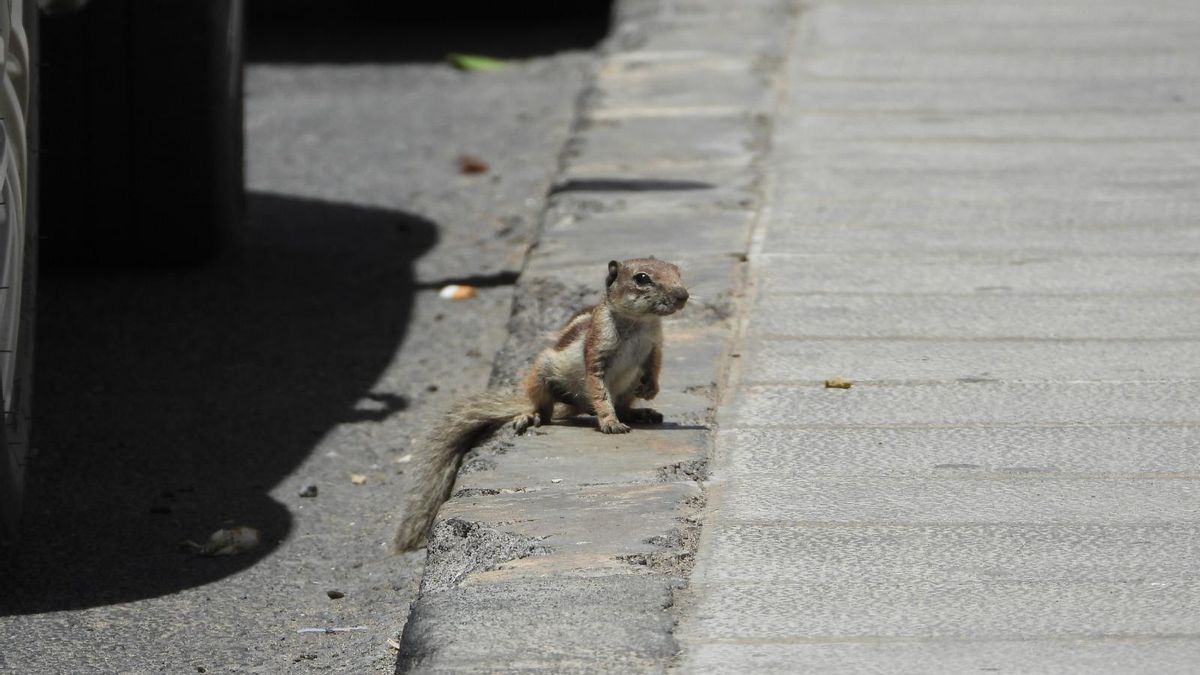
An invasive Barbary ground squirrel (Atlantoxerus getulus) has been intercepted in Lanzarote after arriving as a stowaway. The specimen was discovered on Tuesday in the Playa Honda area of San Bartolomé, having travelled hidden inside the hire car of two tourists who had crossed from Fuerteventura to the island that same day.
Officers managed to capture the squirrel before it could escape and establish itself in the wild, the Cabildo of Lanzarote and La Graciosa has confirmed. The swift intervention prevented what could have become a serious ecological problem for the island.
Origins of a species with a foothold in the Canaries
The Barbary ground squirrel is native to northwest Africa, specifically Morocco, the Sahara and northwest Algeria. It first arrived in the Canary Islands in Fuerteventura in 1965, when a pair of squirrels was brought from Sidi Ifni as pets. The animals were subsequently released, and from the 1980s onwards the species began to colonise almost the entire island.
Today, the population on Fuerteventura is estimated to have reached half a million specimens. The species is not present on the other islands, although in recent years a number of specimens have been captured not only in Lanzarote but also in Gran Canaria.
Threat to biodiversity and crops
Invasive species pose a significant risk to biodiversity, as they multiply and spread through ecosystems where they would not naturally occur. The Barbary ground squirrel is omnivorous, preying on both plant matter and the eggs of small birds. Its expansion therefore affects vegetation, crops and various species of fauna alike.
The Cabildo has gone further, warning that if the species were to become established on the island, the impact could generate economic consequences and risks to public health.
Lessons from Fuerteventura
The island’s president, Oswaldo Betancort, has pointed to the case of Fuerteventura as demonstrating “the importance of acting from the very first moment”, since preventing an invasive species from becoming established is decisive in protecting biodiversity, crops and the territory.
The capture of the specimen found in Playa Honda was made possible, the island corporation added, thanks to public cooperation and the coordinated action of the San Bartolomé Local Police, the Cabildo of Lanzarote’s environmental officers and the Government of the Canary Islands’ RedEXOS intervention team.
Public urged to report sightings
The island’s environment chief, Samuel Martín, has reminded the public that invasive species can arrive accidentally, meaning that “any report could prove decisive”. “Action was taken before the squirrel reached the natural environment, avoiding the risk of it reproducing and beginning to spread across Lanzarote,” he stressed.
The Cabildo has asked that anyone who spots a Barbary ground squirrel in Lanzarote report it immediately and avoid attempting to capture, handle or release it themselves. Reports can be made through 112, the local police of the relevant municipality, the Cabildo of Lanzarote’s environmental officers on 928 598 548, or the RedEXOS intervention team on 646 601 457.
What’s happening in the Canaries – straight to your phone
News, weather alerts and practical updates – direct from the islands, in English. We live here and know what’s going on – before the international media catch up. Everything lands on our WhatsApp channel – no middlemen, no algorithm. Curated for families, expats and travelers.

Canary Islands sea hits second-hottest year on record

Legal bid to halt tree felling in Santa Cruz’s La Salud

Fiesta del Charco: A journey through La Aldea’s past

Corralejo dunes power line set for removal

ULPGC launches 14 research projects at Las Canteras

TMT will never be built, says Canary Islands astrophysics chief

Pedro Duque: Canarias is the “ultimate dream” for rockets

Court blow to Tenerife motor circuit project
La Palma faces new volcanic risk planning deadline
