Political storm over holiday rental law
Just hours before the Canary Islands Parliament votes on the bill designed to speed up urban planning licences and boost housebuilding, political activity has intensified around a change that has nothing to do with planning permissions. An amendment – promoted by the Gomera Socialist Group (ASG), the Socialist Party (PSOE) and New Canaries-Bloc Canarist (NC-BC), and backed by Vox – was incorporated earlier this month during a parliamentary committee. It alters a key aspect of the holiday rental law and has opened a new front between the political groups, sparking a round of last-minute talks aimed at changing the outcome of the final vote, which will take place in the plenary session this Wednesday.
The amendment: A ‘harmless activity’ for small owners
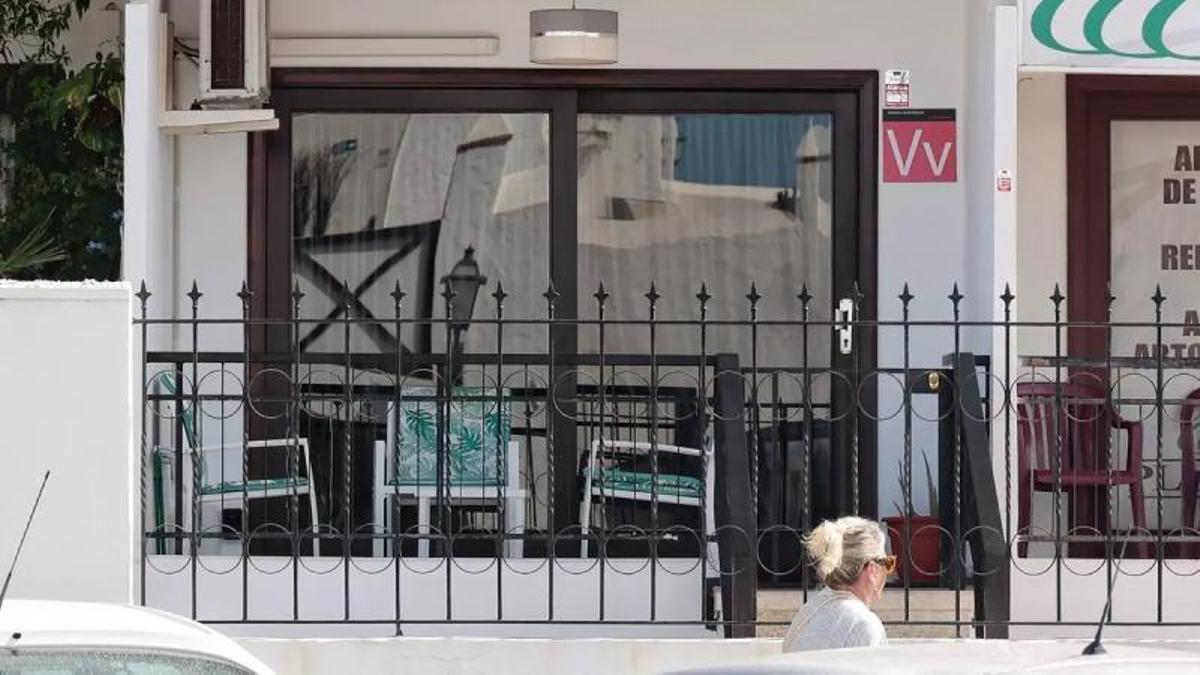
At the heart of the issue is a transactional amendment that changes how holiday homes are classified, from a “classified activity” to a “harmless activity”. This change would remove the special regime for certain owners and alter one of the most restrictive pillars of the legislation. The Gomera group pushed for the change with the idea of protecting small owners – particularly on the Green Islands (La Palma, La Gomera and El Hierro) – who rely on this supplementary income to make a living.
The initiative was incorporated into the committee’s report, and it seemed the parliamentary process would end with its approval. However, the Canarian Coalition (CC) registered a dissenting vote last Monday to exclude this modification from the final text. ASG responded by filing an appeal against the admission of that dissenting vote, arguing it breached certain regulatory requirements. But the Parliament’s steering committee – relying on the advice of its legal services – rejected the appeal and confirmed that the dissenting vote could go ahead during the plenary session. If it gains a majority, it will kill the amendment.
Parliamentary arithmetic in the balance
Under the current parliamentary arithmetic, that scenario appears the most likely. The Canarian Coalition, the People’s Party (PP) and the Mixed Group (AHI) hold 35 seats between them, just one short of an absolute majority. The key once again lies with non-attached MP Marta Gómez, originally elected for Vox. Her vote would provide the 36 votes needed to leave the PSOE, New Canaries, ASG and Vox in the minority – giving them a total of 34 MPs. CC’s move has upended the scenario that seemed to be taking shape after the committee stage and has opened a round of negotiations that is still ongoing. Sources from the Canarian Coalition admit that “everything will remain open” right up until the vote itself and say they will use the coming days to try to bridge the gap, especially with ASG.
Gomera group fights to protect small owners
The Gomera party backed the holiday rental law last December after reaching an agreement with the government that some aspects could be reviewed during its implementation, including the situation of small owners. For this reason, the attempt to now remove one of the modifications has not been well received by Casimiro Curbelo’s party. The Gomera group are not giving up the fight. MP Jesús Ramos Chinea claims the group is still in talks with all parties to try to preserve a change he considers “essential” for thousands of small owners. He insists they will keep working “until the plenary session” to try to get people to understand the importance of a measure that, in his view, protects many families. Although Ramos Chinea acknowledges that the current parliamentary arithmetic makes the amendment’s future difficult, he says his party will keep all lines of dialogue open until the last moment and is even willing to study other alternatives that could achieve the same goal in the future.
Opposition sees ‘inevitable’ defeat
The view from the opposition parties is very different. New Canaries-Bloc Canarist MP Esther González believes the result is practically decided. “The dissenting vote will go through, that’s for sure,” the MP lamented, adding that she criticises the procedure used to try to withdraw a modification that had already been incorporated into the committee report. “This has never happened before. A dissenting vote has never been used to exclude an amendment already approved in committee,” she claims.
Legal experts weigh in on the real impact
Beyond the political squabbling, the debate revolves around one of the most sensitive aspects of the holiday rental law. The amendment removes the “classified activity” status for existing properties seeking to consolidate their operations. A “classified activity” status implies stricter requirements regarding noise, public health, safety and administrative paperwork. Supporters of the amendment argue that this change avoids imposing new administrative burdens on people who were already legally running this activity before the law came into force.
Javier Valentín Peñate, vice-president and legal advisor to the Canary Islands Holiday Rental Association (Ascav), believes the modification provides greater legal certainty and avoids forcing thousands of owners to undergo an administrative procedure that, he argues, was never intended for this type of property. In his view, the current regulations oblige many small owners to face a process designed for activities with a much greater impact, which could prevent many who were already running their business before December 2025 from continuing. Valentín also rejects the idea that removing this requirement would reduce administrative control over holiday rentals. According to him, the island councils (cabildos) would still keep their powers to check compliance with regulations, and local councils would also retain their powers in urban planning matters when they detect potential breaches. The association believes the real problem lies in the legal uncertainty generated by a law that, just six months after coming into force, is already being subject to significant changes.
The plenary session will decide on Wednesday.
What’s happening in the Canaries – straight to your phone
News, weather alerts and practical updates – direct from the islands, in English. We live here and know what’s going on – before the international media catch up. Everything lands on our WhatsApp channel – no middlemen, no algorithm. Curated for families, expats and travelers.

Los Realejos residents fight on against propane gas plant

Canarias among Spain’s poorest regions as 36.2% live on low incomes

Canary Islands bananas lose ground to imported bananas

Canary Islands bottom of Spain’s social housing table

Three migrant boats reach Canary Islands in 24 hours

Canarias proposes 10-year residency rule to buy property

Gran Canaria hotel maid arrested over stolen gold necklace
Canary Islands plan 10-year residency rule to buy a home

Canary Islands launches empty homes rental scheme