New astronomical park opens on El Hierro
The opening of the El Julán Astronomical Park marks a fresh boost for the Canary Islands’ strategy to establish astrotourism as a product capable of complementing the archipelago’s main economic driver. The new facility, located in the El Hierro municipality of El Pinar, aims to turn the island into a leading destination for stargazing holidays, thanks to its exceptional skies and near-total absence of light pollution.
Funding and official inauguration
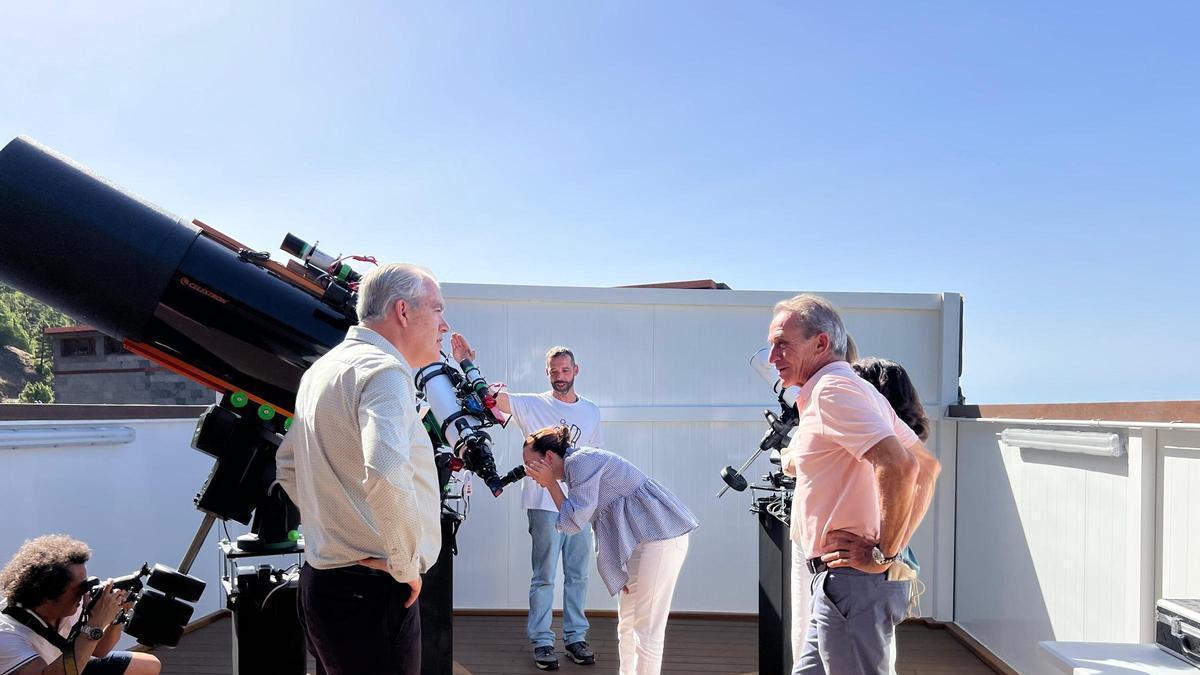
The Canary Islands Minister for Tourism and Employment, Jéssica de León, officially opened the new space on Wednesday, joined by representatives from the El Hierro Cabildo (island council) and El Pinar town hall. The project required an investment of €282,000, financed through Next Generation EU funds via the Biosphere Reserve Destination Tourism Sustainability Plan (PSTD).
Facilities and features
The Astronomical Park has been designed to strengthen El Hierro’s tourism offering through a specialist product combining scientific outreach, research and nature tourism. The installation comprises two distinct modules: an interpretation classroom for educational activities and a professional automated observatory, equipped for research via remote control from anywhere in the world. Both spaces feature state-of-the-art telescopes for observing the Milky Way, planets, star clusters and constellations visible from both hemispheres.
Growing astrotourism sector
The opening of this infrastructure comes at a time of growth for astrotourism in the Canary Islands. According to data recently released by the University of La Laguna, drawing on ISTAC statistics, around 600,000 visitors take part in astronomy-related tourism activities in the archipelago each year, representing 4.3 per cent of all tourists to the islands. On islands such as La Palma, this figure reaches 17 per cent, while there are already around 60 companies specialising in this tourism segment, reflecting growing interest in a product that combines science, nature and sustainable experiences.
Strategic location and cultural heritage
In this context, the El Julán Astronomical Park expands the network of sky-watching facilities in the Canary Islands and strengthens El Hierro’s position within a segment with significant growth potential. The quality of its skies, low light pollution and status as a Biosphere Reserve make the island an ideal location for astronomical observation activities throughout the year. The new facility also forms part of the El Julán Cultural Park, one of the most important heritage sites in the Canary Islands, as it is home to the main settlement of the ancient Bimbache people. The combination of archaeological heritage, volcanic landscape and astronomy makes possible a unique tourism offering that enriches the visitor experience and diversifies the island’s attractions.
Broader sustainability plans
The project forms part of the Biosphere Reserve Destination Tourism Sustainability Plan, which has a budget of €2.8 million. This also includes the renovation of the Las Cancelitas Sustainability Park, the creation of the Los Mocanes-Punta Grande Eco Cycle Path and the implementation of a Big Data Tourism platform to move towards smarter destination management.
A new benchmark for stargazing
With the inauguration of the El Julán Astronomical Park, the Canary Islands have added a new resource set to become a benchmark for astrotourism. The facility reinforces a diversification strategy that seeks to make the most of one of the archipelago’s great natural assets: skies internationally recognised for their quality for astronomical observation, capable of generating new economic opportunities linked to knowledge, sustainability and heritage conservation.
What’s happening in the Canaries – straight to your phone
News, weather alerts and practical updates – direct from the islands, in English. We live here and know what’s going on – before the international media catch up. Everything lands on our WhatsApp channel – no middlemen, no algorithm. Curated for families, expats and travelers.

Tenerife faces huge tourism expansion despite moratorium calls
El Bejeque in Las Canteras adds sea to its fire
Siam Park Gran Canaria must build its own desalination plant
Fuerteventura’s biggest resort to open on 1 November
Gran Canaria to teach tourism history in schools
Canary Islands see 0.3% rise in foreign tourists in August

Row over 368-bed hotel project in La Gomera
Spanish astronaut trains in Lanzarote for Moon mission

Tivoli La Caleta hosts first red tuna Kaitai in Canarias