Canary Islands tourism holds firm against record year
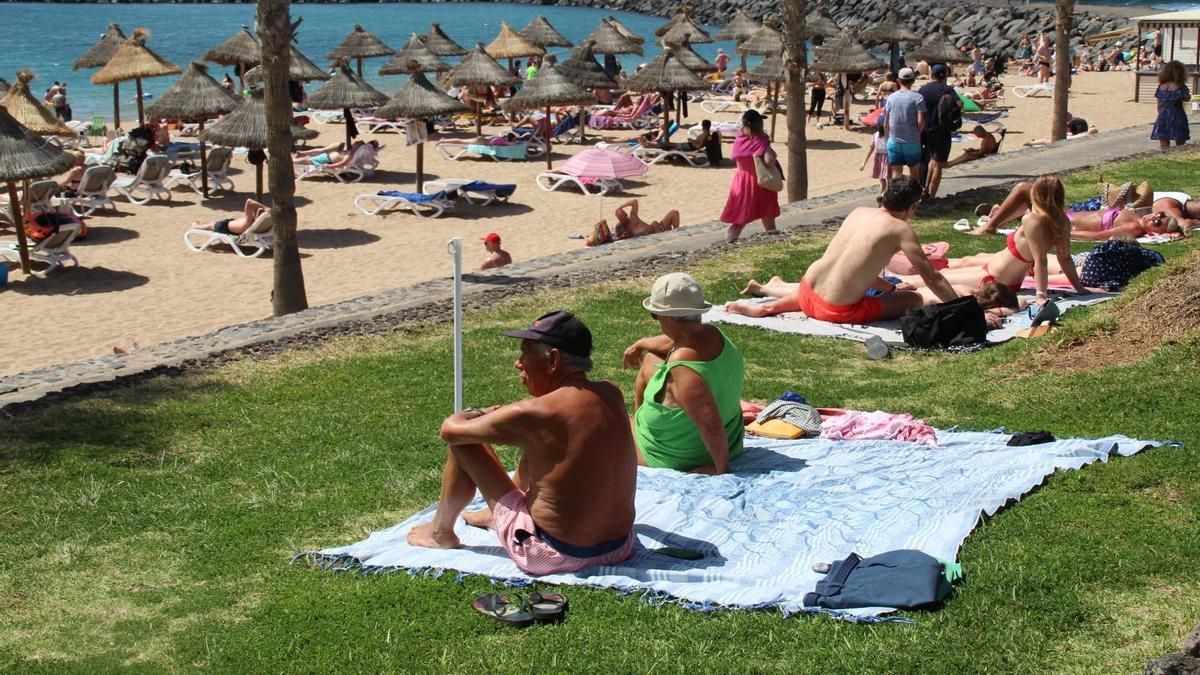
The Canary Islands attracted a remarkable 6.77 million foreign tourists in the first five months of 2026, practically the same cumulative figure as the record-breaking period in 2025, the best year for tourism in the archipelago’s history. This absolute figure represents just 0.1% more than the data for January to May 2025, allowing the first conclusion to be drawn: tourism activity in the islands, from a demand perspective, remains strong and solid, with virtually no growth compared to the previous year. However, it is worth bearing in mind that these figures are being compared with the best year ever for tourist arrivals, both overall and for international visitors, when the Canary Islands received 18.4 million tourists in 2025, 15.7 million of whom came from outside Spain (half a million more than in 2024).
May marks seasonal shift
May is a transitional month for the Canary Islands, marking the shift from the peak autumn-winter season to the quieter summer period. This trend is confirmed by the fact that Catalonia became the top destination for foreign tourists in May 2026, accounting for 21.1% of the national total, followed by the Balearic Islands (20.6%, in their high season) and Andalusia (15.9%). Catalonia saw a 13.1% increase in international visitors compared to May 2025, heavily influenced by French tourists. The Balearic Islands received 5.2% more tourists in the same month, while Andalusia saw a 12.7% increase. The mainland and the Mediterranean archipelago are now gearing up for the summer: mass sun-and-beach tourism along the coast is getting under way, as classic as ever.
The data, released this Thursday by the National Statistics Institute (INE) for May and the five-month cumulative period of 2026, shows that 1.07 million foreign tourists arrived in the Canary Islands in May, 0.5% fewer than in the same month in 2025. This is the second decline in arrivals in 2026, following a more significant drop in April, which marked the end of the peak tourist season and a Holy Week that fell mainly at the end of March.
Spain sees 5% growth in international tourists
In the cumulative figures for the first five months of 2026, according to the INE’s technical report associated with the Frontur statistics for May, the regions receiving the most international tourists were Catalonia (7.5 million visitors, up 4% compared to the same period in 2025), the Canary Islands (second in Spain, with 6.8 million, up 0.1%), and Andalusia (5.8 million, up 8%). Between January and May this year, Spain welcomed 5% more international visitors overall (the Canary Islands saw a 0.1% increase in the same period), reaching a total of 36.8 million people.
Visitor spending remains stable
The INE also published the Egatur survey statistics for May and the first five months of the year on the same day. According to this data, the Canary Islands (with 20.5% of the Spanish total and 10.303 billion euros), Catalonia (18.1%), and the Community of Madrid (16.2%) were the regions with the highest share of this variable at the national level (50.257 billion euros). As was the case with the indicator for international tourist arrivals up to May, the cumulative absolute figure for visitor spending – which should not be confused with the final revenue that remains in the Canary Islands from this productive activity – barely changed, with the January-May cumulative figure for 2025 standing at 10.295 billion euros, compared to 10.303 billion euros for the same period in 2026.
Analysis of foreign tourist spending behaviour in the Canary Islands in May reveals some interesting points: spending rose by 2.4% compared to the same month in 2025, reaching 1.555 billion euros. This was achieved thanks to a 3% increase in per-capita spending by foreign visitors compared to May last year, as well as a 4% year-on-year increase in the length of their holidays.
What’s happening in the Canaries – straight to your phone
News, weather alerts and practical updates – direct from the islands, in English. We live here and know what’s going on – before the international media catch up. Everything lands on our WhatsApp channel – no middlemen, no algorithm. Curated for families, expats and travelers.

Tenerife faces huge tourism expansion despite moratorium calls

El Bejeque in Las Canteras adds sea to its fire

Siam Park Gran Canaria must build its own desalination plant

Fuerteventura’s biggest resort to open on 1 November
Gran Canaria to teach tourism history in schools
Canary Islands see 0.3% rise in foreign tourists in August

Row over 368-bed hotel project in La Gomera

Spanish astronaut trains in Lanzarote for Moon mission

Tivoli La Caleta hosts first red tuna Kaitai in Canarias