
In fact, according to a study by the European consortium Transport and Environment (T&E) titled Investigating the Potential for Electrification of Ferries in Europe, the Canary Islands’ ports of Las Palmas and Santa Cruz de Tenerife, by being excluded from this mandatory regulation (Emission Control Area, ECA) applied across the rest of the European Union, will become the most polluting by 2027. The research, which analyses maritime passenger transport, estimates that without emission controls in the Canary Islands, the Port of Las Palmas will leap from fourth place (in 2023) for pollution to first place by 2027, while Santa Cruz de Tenerife will have climbed from tenth (in 2023) to second in just four years.

Canary Islands sea hits second-hottest year on record

Legal bid to halt tree felling in Santa Cruz’s La Salud

Fiesta del Charco: A journey through La Aldea’s past

Corralejo dunes power line set for removal

ULPGC launches 14 research projects at Las Canteras

TMT will never be built, says Canary Islands astrophysics chief

Pedro Duque: Canarias is the “ultimate dream” for rockets

Court blow to Tenerife motor circuit project
La Palma faces new volcanic risk planning deadline

Fuerteventura launches campaign to rescue young shearwaters
Set to become Europe’s most polluting ports
In fact, according to a study by the European consortium Transport and Environment (T&E) titled Investigating the Potential for Electrification of Ferries in Europe, the Canary Islands’ ports of Las Palmas and Santa Cruz de Tenerife, by being excluded from this mandatory regulation (Emission Control Area, ECA) applied across the rest of the European Union, will become the most polluting by 2027. The research, which analyses maritime passenger transport, estimates that without emission controls in the Canary Islands, the Port of Las Palmas will leap from fourth place (in 2023) for pollution to first place by 2027, while Santa Cruz de Tenerife will have climbed from tenth (in 2023) to second in just four years.
Set to become Europe’s most polluting ports
In fact, according to a study by the European consortium Transport and Environment (T&E) titled Investigating the Potential for Electrification of Ferries in Europe, the Canary Islands’ ports of Las Palmas and Santa Cruz de Tenerife, by being excluded from this mandatory regulation (Emission Control Area, ECA) applied across the rest of the European Union, will become the most polluting by 2027. The research, which analyses maritime passenger transport, estimates that without emission controls in the Canary Islands, the Port of Las Palmas will leap from fourth place (in 2023) for pollution to first place by 2027, while Santa Cruz de Tenerife will have climbed from tenth (in 2023) to second in just four years.
On the contrary. While Europe moves towards decarbonising its ports, the regional government in the Canary Islands pressured the central government to exempt the islands’ ports from the obligation to use less polluting fuels. This happened in 2025, just as it did in 2023 with aviation fuel, when the islands were also exempted from using more sustainable fuels. That exemption was celebrated by the CC-PP (Coalición Canaria and People’s Party) government and tourism industry associations, but it caused concern among experts consulted by Canarias Ahora, who warned that the islands were falling behind in the decarbonisation process while continuing with less sustainable tourism.
Set to become Europe’s most polluting ports
In fact, according to a study by the European consortium Transport and Environment (T&E) titled Investigating the Potential for Electrification of Ferries in Europe, the Canary Islands’ ports of Las Palmas and Santa Cruz de Tenerife, by being excluded from this mandatory regulation (Emission Control Area, ECA) applied across the rest of the European Union, will become the most polluting by 2027. The research, which analyses maritime passenger transport, estimates that without emission controls in the Canary Islands, the Port of Las Palmas will leap from fourth place (in 2023) for pollution to first place by 2027, while Santa Cruz de Tenerife will have climbed from tenth (in 2023) to second in just four years.
On the contrary. While Europe moves towards decarbonising its ports, the regional government in the Canary Islands pressured the central government to exempt the islands’ ports from the obligation to use less polluting fuels. This happened in 2025, just as it did in 2023 with aviation fuel, when the islands were also exempted from using more sustainable fuels. That exemption was celebrated by the CC-PP (Coalición Canaria and People’s Party) government and tourism industry associations, but it caused concern among experts consulted by Canarias Ahora, who warned that the islands were falling behind in the decarbonisation process while continuing with less sustainable tourism.
Set to become Europe’s most polluting ports
In fact, according to a study by the European consortium Transport and Environment (T&E) titled Investigating the Potential for Electrification of Ferries in Europe, the Canary Islands’ ports of Las Palmas and Santa Cruz de Tenerife, by being excluded from this mandatory regulation (Emission Control Area, ECA) applied across the rest of the European Union, will become the most polluting by 2027. The research, which analyses maritime passenger transport, estimates that without emission controls in the Canary Islands, the Port of Las Palmas will leap from fourth place (in 2023) for pollution to first place by 2027, while Santa Cruz de Tenerife will have climbed from tenth (in 2023) to second in just four years.
“Action on port emissions is absolutely essential,” Xavier Querol, a CSIC researcher and expert in atmospheric pollution, told elDiario.es back in 2022. The geologist noted that, among other emissions, the pollution from cruise ships berthed in the port of Barcelona ends up in the city when the sea breeze blows in. “The money they bring in should be invested in reducing emissions,” he commented. A similar situation occurs in Las Palmas de Gran Canaria and Santa Cruz de Tenerife. In both cities, the prevailing trade winds blow from the northeast, pushing port fumes inland. But so far, no administration has singled out cruise ships for the air pollution in the Canary Islands’ cities.
On the contrary. While Europe moves towards decarbonising its ports, the regional government in the Canary Islands pressured the central government to exempt the islands’ ports from the obligation to use less polluting fuels. This happened in 2025, just as it did in 2023 with aviation fuel, when the islands were also exempted from using more sustainable fuels. That exemption was celebrated by the CC-PP (Coalición Canaria and People’s Party) government and tourism industry associations, but it caused concern among experts consulted by Canarias Ahora, who warned that the islands were falling behind in the decarbonisation process while continuing with less sustainable tourism.
Set to become Europe’s most polluting ports
In fact, according to a study by the European consortium Transport and Environment (T&E) titled Investigating the Potential for Electrification of Ferries in Europe, the Canary Islands’ ports of Las Palmas and Santa Cruz de Tenerife, by being excluded from this mandatory regulation (Emission Control Area, ECA) applied across the rest of the European Union, will become the most polluting by 2027. The research, which analyses maritime passenger transport, estimates that without emission controls in the Canary Islands, the Port of Las Palmas will leap from fourth place (in 2023) for pollution to first place by 2027, while Santa Cruz de Tenerife will have climbed from tenth (in 2023) to second in just four years.
“Action on port emissions is absolutely essential,” Xavier Querol, a CSIC researcher and expert in atmospheric pollution, told elDiario.es back in 2022. The geologist noted that, among other emissions, the pollution from cruise ships berthed in the port of Barcelona ends up in the city when the sea breeze blows in. “The money they bring in should be invested in reducing emissions,” he commented. A similar situation occurs in Las Palmas de Gran Canaria and Santa Cruz de Tenerife. In both cities, the prevailing trade winds blow from the northeast, pushing port fumes inland. But so far, no administration has singled out cruise ships for the air pollution in the Canary Islands’ cities.
On the contrary. While Europe moves towards decarbonising its ports, the regional government in the Canary Islands pressured the central government to exempt the islands’ ports from the obligation to use less polluting fuels. This happened in 2025, just as it did in 2023 with aviation fuel, when the islands were also exempted from using more sustainable fuels. That exemption was celebrated by the CC-PP (Coalición Canaria and People’s Party) government and tourism industry associations, but it caused concern among experts consulted by Canarias Ahora, who warned that the islands were falling behind in the decarbonisation process while continuing with less sustainable tourism.
Set to become Europe’s most polluting ports
In fact, according to a study by the European consortium Transport and Environment (T&E) titled Investigating the Potential for Electrification of Ferries in Europe, the Canary Islands’ ports of Las Palmas and Santa Cruz de Tenerife, by being excluded from this mandatory regulation (Emission Control Area, ECA) applied across the rest of the European Union, will become the most polluting by 2027. The research, which analyses maritime passenger transport, estimates that without emission controls in the Canary Islands, the Port of Las Palmas will leap from fourth place (in 2023) for pollution to first place by 2027, while Santa Cruz de Tenerife will have climbed from tenth (in 2023) to second in just four years.
Pollution concerns brushed aside
“Action on port emissions is absolutely essential,” Xavier Querol, a CSIC researcher and expert in atmospheric pollution, told elDiario.es back in 2022. The geologist noted that, among other emissions, the pollution from cruise ships berthed in the port of Barcelona ends up in the city when the sea breeze blows in. “The money they bring in should be invested in reducing emissions,” he commented. A similar situation occurs in Las Palmas de Gran Canaria and Santa Cruz de Tenerife. In both cities, the prevailing trade winds blow from the northeast, pushing port fumes inland. But so far, no administration has singled out cruise ships for the air pollution in the Canary Islands’ cities.
On the contrary. While Europe moves towards decarbonising its ports, the regional government in the Canary Islands pressured the central government to exempt the islands’ ports from the obligation to use less polluting fuels. This happened in 2025, just as it did in 2023 with aviation fuel, when the islands were also exempted from using more sustainable fuels. That exemption was celebrated by the CC-PP (Coalición Canaria and People’s Party) government and tourism industry associations, but it caused concern among experts consulted by Canarias Ahora, who warned that the islands were falling behind in the decarbonisation process while continuing with less sustainable tourism.
Set to become Europe’s most polluting ports
In fact, according to a study by the European consortium Transport and Environment (T&E) titled Investigating the Potential for Electrification of Ferries in Europe, the Canary Islands’ ports of Las Palmas and Santa Cruz de Tenerife, by being excluded from this mandatory regulation (Emission Control Area, ECA) applied across the rest of the European Union, will become the most polluting by 2027. The research, which analyses maritime passenger transport, estimates that without emission controls in the Canary Islands, the Port of Las Palmas will leap from fourth place (in 2023) for pollution to first place by 2027, while Santa Cruz de Tenerife will have climbed from tenth (in 2023) to second in just four years.
Pollution concerns brushed aside
“Action on port emissions is absolutely essential,” Xavier Querol, a CSIC researcher and expert in atmospheric pollution, told elDiario.es back in 2022. The geologist noted that, among other emissions, the pollution from cruise ships berthed in the port of Barcelona ends up in the city when the sea breeze blows in. “The money they bring in should be invested in reducing emissions,” he commented. A similar situation occurs in Las Palmas de Gran Canaria and Santa Cruz de Tenerife. In both cities, the prevailing trade winds blow from the northeast, pushing port fumes inland. But so far, no administration has singled out cruise ships for the air pollution in the Canary Islands’ cities.
On the contrary. While Europe moves towards decarbonising its ports, the regional government in the Canary Islands pressured the central government to exempt the islands’ ports from the obligation to use less polluting fuels. This happened in 2025, just as it did in 2023 with aviation fuel, when the islands were also exempted from using more sustainable fuels. That exemption was celebrated by the CC-PP (Coalición Canaria and People’s Party) government and tourism industry associations, but it caused concern among experts consulted by Canarias Ahora, who warned that the islands were falling behind in the decarbonisation process while continuing with less sustainable tourism.
Set to become Europe’s most polluting ports
In fact, according to a study by the European consortium Transport and Environment (T&E) titled Investigating the Potential for Electrification of Ferries in Europe, the Canary Islands’ ports of Las Palmas and Santa Cruz de Tenerife, by being excluded from this mandatory regulation (Emission Control Area, ECA) applied across the rest of the European Union, will become the most polluting by 2027. The research, which analyses maritime passenger transport, estimates that without emission controls in the Canary Islands, the Port of Las Palmas will leap from fourth place (in 2023) for pollution to first place by 2027, while Santa Cruz de Tenerife will have climbed from tenth (in 2023) to second in just four years.
Nevertheless, the tourism councillor, Jéssica de León, emphasised that this tourism segment also offers the opportunity to boost other value chains, such as the supply and servicing of ships in port, including ship repair. The Canary Islands government, therefore, is not considering placing any limits on this type of tourism—quite the opposite. Nothing was said in the committee about the impact of cruise arrivals on the local population.
Pollution concerns brushed aside
“Action on port emissions is absolutely essential,” Xavier Querol, a CSIC researcher and expert in atmospheric pollution, told elDiario.es back in 2022. The geologist noted that, among other emissions, the pollution from cruise ships berthed in the port of Barcelona ends up in the city when the sea breeze blows in. “The money they bring in should be invested in reducing emissions,” he commented. A similar situation occurs in Las Palmas de Gran Canaria and Santa Cruz de Tenerife. In both cities, the prevailing trade winds blow from the northeast, pushing port fumes inland. But so far, no administration has singled out cruise ships for the air pollution in the Canary Islands’ cities.
On the contrary. While Europe moves towards decarbonising its ports, the regional government in the Canary Islands pressured the central government to exempt the islands’ ports from the obligation to use less polluting fuels. This happened in 2025, just as it did in 2023 with aviation fuel, when the islands were also exempted from using more sustainable fuels. That exemption was celebrated by the CC-PP (Coalición Canaria and People’s Party) government and tourism industry associations, but it caused concern among experts consulted by Canarias Ahora, who warned that the islands were falling behind in the decarbonisation process while continuing with less sustainable tourism.
Set to become Europe’s most polluting ports
In fact, according to a study by the European consortium Transport and Environment (T&E) titled Investigating the Potential for Electrification of Ferries in Europe, the Canary Islands’ ports of Las Palmas and Santa Cruz de Tenerife, by being excluded from this mandatory regulation (Emission Control Area, ECA) applied across the rest of the European Union, will become the most polluting by 2027. The research, which analyses maritime passenger transport, estimates that without emission controls in the Canary Islands, the Port of Las Palmas will leap from fourth place (in 2023) for pollution to first place by 2027, while Santa Cruz de Tenerife will have climbed from tenth (in 2023) to second in just four years.
Nevertheless, the tourism councillor, Jéssica de León, emphasised that this tourism segment also offers the opportunity to boost other value chains, such as the supply and servicing of ships in port, including ship repair. The Canary Islands government, therefore, is not considering placing any limits on this type of tourism—quite the opposite. Nothing was said in the committee about the impact of cruise arrivals on the local population.
Pollution concerns brushed aside
“Action on port emissions is absolutely essential,” Xavier Querol, a CSIC researcher and expert in atmospheric pollution, told elDiario.es back in 2022. The geologist noted that, among other emissions, the pollution from cruise ships berthed in the port of Barcelona ends up in the city when the sea breeze blows in. “The money they bring in should be invested in reducing emissions,” he commented. A similar situation occurs in Las Palmas de Gran Canaria and Santa Cruz de Tenerife. In both cities, the prevailing trade winds blow from the northeast, pushing port fumes inland. But so far, no administration has singled out cruise ships for the air pollution in the Canary Islands’ cities.
On the contrary. While Europe moves towards decarbonising its ports, the regional government in the Canary Islands pressured the central government to exempt the islands’ ports from the obligation to use less polluting fuels. This happened in 2025, just as it did in 2023 with aviation fuel, when the islands were also exempted from using more sustainable fuels. That exemption was celebrated by the CC-PP (Coalición Canaria and People’s Party) government and tourism industry associations, but it caused concern among experts consulted by Canarias Ahora, who warned that the islands were falling behind in the decarbonisation process while continuing with less sustainable tourism.
Set to become Europe’s most polluting ports
In fact, according to a study by the European consortium Transport and Environment (T&E) titled Investigating the Potential for Electrification of Ferries in Europe, the Canary Islands’ ports of Las Palmas and Santa Cruz de Tenerife, by being excluded from this mandatory regulation (Emission Control Area, ECA) applied across the rest of the European Union, will become the most polluting by 2027. The research, which analyses maritime passenger transport, estimates that without emission controls in the Canary Islands, the Port of Las Palmas will leap from fourth place (in 2023) for pollution to first place by 2027, while Santa Cruz de Tenerife will have climbed from tenth (in 2023) to second in just four years.
The regional tourism department responded to Bermúdez by confirming that an increase in berthing requests is expected for the winter, which is the usual trend, and that it is still too early to determine whether the conflict in the Middle East will bring a similar increase for the summer season of 2027. However, it is worth noting that some shipping lines, such as Costa, have already confirmed that the Canary Islands will feature more heavily in next winter’s programme while Middle Eastern itineraries are once again shelved.
Nevertheless, the tourism councillor, Jéssica de León, emphasised that this tourism segment also offers the opportunity to boost other value chains, such as the supply and servicing of ships in port, including ship repair. The Canary Islands government, therefore, is not considering placing any limits on this type of tourism—quite the opposite. Nothing was said in the committee about the impact of cruise arrivals on the local population.
Pollution concerns brushed aside
“Action on port emissions is absolutely essential,” Xavier Querol, a CSIC researcher and expert in atmospheric pollution, told elDiario.es back in 2022. The geologist noted that, among other emissions, the pollution from cruise ships berthed in the port of Barcelona ends up in the city when the sea breeze blows in. “The money they bring in should be invested in reducing emissions,” he commented. A similar situation occurs in Las Palmas de Gran Canaria and Santa Cruz de Tenerife. In both cities, the prevailing trade winds blow from the northeast, pushing port fumes inland. But so far, no administration has singled out cruise ships for the air pollution in the Canary Islands’ cities.
On the contrary. While Europe moves towards decarbonising its ports, the regional government in the Canary Islands pressured the central government to exempt the islands’ ports from the obligation to use less polluting fuels. This happened in 2025, just as it did in 2023 with aviation fuel, when the islands were also exempted from using more sustainable fuels. That exemption was celebrated by the CC-PP (Coalición Canaria and People’s Party) government and tourism industry associations, but it caused concern among experts consulted by Canarias Ahora, who warned that the islands were falling behind in the decarbonisation process while continuing with less sustainable tourism.
Set to become Europe’s most polluting ports
In fact, according to a study by the European consortium Transport and Environment (T&E) titled Investigating the Potential for Electrification of Ferries in Europe, the Canary Islands’ ports of Las Palmas and Santa Cruz de Tenerife, by being excluded from this mandatory regulation (Emission Control Area, ECA) applied across the rest of the European Union, will become the most polluting by 2027. The research, which analyses maritime passenger transport, estimates that without emission controls in the Canary Islands, the Port of Las Palmas will leap from fourth place (in 2023) for pollution to first place by 2027, while Santa Cruz de Tenerife will have climbed from tenth (in 2023) to second in just four years.
The regional tourism department responded to Bermúdez by confirming that an increase in berthing requests is expected for the winter, which is the usual trend, and that it is still too early to determine whether the conflict in the Middle East will bring a similar increase for the summer season of 2027. However, it is worth noting that some shipping lines, such as Costa, have already confirmed that the Canary Islands will feature more heavily in next winter’s programme while Middle Eastern itineraries are once again shelved.
Nevertheless, the tourism councillor, Jéssica de León, emphasised that this tourism segment also offers the opportunity to boost other value chains, such as the supply and servicing of ships in port, including ship repair. The Canary Islands government, therefore, is not considering placing any limits on this type of tourism—quite the opposite. Nothing was said in the committee about the impact of cruise arrivals on the local population.
Pollution concerns brushed aside
“Action on port emissions is absolutely essential,” Xavier Querol, a CSIC researcher and expert in atmospheric pollution, told elDiario.es back in 2022. The geologist noted that, among other emissions, the pollution from cruise ships berthed in the port of Barcelona ends up in the city when the sea breeze blows in. “The money they bring in should be invested in reducing emissions,” he commented. A similar situation occurs in Las Palmas de Gran Canaria and Santa Cruz de Tenerife. In both cities, the prevailing trade winds blow from the northeast, pushing port fumes inland. But so far, no administration has singled out cruise ships for the air pollution in the Canary Islands’ cities.
On the contrary. While Europe moves towards decarbonising its ports, the regional government in the Canary Islands pressured the central government to exempt the islands’ ports from the obligation to use less polluting fuels. This happened in 2025, just as it did in 2023 with aviation fuel, when the islands were also exempted from using more sustainable fuels. That exemption was celebrated by the CC-PP (Coalición Canaria and People’s Party) government and tourism industry associations, but it caused concern among experts consulted by Canarias Ahora, who warned that the islands were falling behind in the decarbonisation process while continuing with less sustainable tourism.
Set to become Europe’s most polluting ports
In fact, according to a study by the European consortium Transport and Environment (T&E) titled Investigating the Potential for Electrification of Ferries in Europe, the Canary Islands’ ports of Las Palmas and Santa Cruz de Tenerife, by being excluded from this mandatory regulation (Emission Control Area, ECA) applied across the rest of the European Union, will become the most polluting by 2027. The research, which analyses maritime passenger transport, estimates that without emission controls in the Canary Islands, the Port of Las Palmas will leap from fourth place (in 2023) for pollution to first place by 2027, while Santa Cruz de Tenerife will have climbed from tenth (in 2023) to second in just four years.
No limits, only growth
The regional tourism department responded to Bermúdez by confirming that an increase in berthing requests is expected for the winter, which is the usual trend, and that it is still too early to determine whether the conflict in the Middle East will bring a similar increase for the summer season of 2027. However, it is worth noting that some shipping lines, such as Costa, have already confirmed that the Canary Islands will feature more heavily in next winter’s programme while Middle Eastern itineraries are once again shelved.
Nevertheless, the tourism councillor, Jéssica de León, emphasised that this tourism segment also offers the opportunity to boost other value chains, such as the supply and servicing of ships in port, including ship repair. The Canary Islands government, therefore, is not considering placing any limits on this type of tourism—quite the opposite. Nothing was said in the committee about the impact of cruise arrivals on the local population.
Pollution concerns brushed aside
“Action on port emissions is absolutely essential,” Xavier Querol, a CSIC researcher and expert in atmospheric pollution, told elDiario.es back in 2022. The geologist noted that, among other emissions, the pollution from cruise ships berthed in the port of Barcelona ends up in the city when the sea breeze blows in. “The money they bring in should be invested in reducing emissions,” he commented. A similar situation occurs in Las Palmas de Gran Canaria and Santa Cruz de Tenerife. In both cities, the prevailing trade winds blow from the northeast, pushing port fumes inland. But so far, no administration has singled out cruise ships for the air pollution in the Canary Islands’ cities.
On the contrary. While Europe moves towards decarbonising its ports, the regional government in the Canary Islands pressured the central government to exempt the islands’ ports from the obligation to use less polluting fuels. This happened in 2025, just as it did in 2023 with aviation fuel, when the islands were also exempted from using more sustainable fuels. That exemption was celebrated by the CC-PP (Coalición Canaria and People’s Party) government and tourism industry associations, but it caused concern among experts consulted by Canarias Ahora, who warned that the islands were falling behind in the decarbonisation process while continuing with less sustainable tourism.
Set to become Europe’s most polluting ports
In fact, according to a study by the European consortium Transport and Environment (T&E) titled Investigating the Potential for Electrification of Ferries in Europe, the Canary Islands’ ports of Las Palmas and Santa Cruz de Tenerife, by being excluded from this mandatory regulation (Emission Control Area, ECA) applied across the rest of the European Union, will become the most polluting by 2027. The research, which analyses maritime passenger transport, estimates that without emission controls in the Canary Islands, the Port of Las Palmas will leap from fourth place (in 2023) for pollution to first place by 2027, while Santa Cruz de Tenerife will have climbed from tenth (in 2023) to second in just four years.
No limits, only growth
The regional tourism department responded to Bermúdez by confirming that an increase in berthing requests is expected for the winter, which is the usual trend, and that it is still too early to determine whether the conflict in the Middle East will bring a similar increase for the summer season of 2027. However, it is worth noting that some shipping lines, such as Costa, have already confirmed that the Canary Islands will feature more heavily in next winter’s programme while Middle Eastern itineraries are once again shelved.
Nevertheless, the tourism councillor, Jéssica de León, emphasised that this tourism segment also offers the opportunity to boost other value chains, such as the supply and servicing of ships in port, including ship repair. The Canary Islands government, therefore, is not considering placing any limits on this type of tourism—quite the opposite. Nothing was said in the committee about the impact of cruise arrivals on the local population.
Pollution concerns brushed aside
“Action on port emissions is absolutely essential,” Xavier Querol, a CSIC researcher and expert in atmospheric pollution, told elDiario.es back in 2022. The geologist noted that, among other emissions, the pollution from cruise ships berthed in the port of Barcelona ends up in the city when the sea breeze blows in. “The money they bring in should be invested in reducing emissions,” he commented. A similar situation occurs in Las Palmas de Gran Canaria and Santa Cruz de Tenerife. In both cities, the prevailing trade winds blow from the northeast, pushing port fumes inland. But so far, no administration has singled out cruise ships for the air pollution in the Canary Islands’ cities.
On the contrary. While Europe moves towards decarbonising its ports, the regional government in the Canary Islands pressured the central government to exempt the islands’ ports from the obligation to use less polluting fuels. This happened in 2025, just as it did in 2023 with aviation fuel, when the islands were also exempted from using more sustainable fuels. That exemption was celebrated by the CC-PP (Coalición Canaria and People’s Party) government and tourism industry associations, but it caused concern among experts consulted by Canarias Ahora, who warned that the islands were falling behind in the decarbonisation process while continuing with less sustainable tourism.
Set to become Europe’s most polluting ports
In fact, according to a study by the European consortium Transport and Environment (T&E) titled Investigating the Potential for Electrification of Ferries in Europe, the Canary Islands’ ports of Las Palmas and Santa Cruz de Tenerife, by being excluded from this mandatory regulation (Emission Control Area, ECA) applied across the rest of the European Union, will become the most polluting by 2027. The research, which analyses maritime passenger transport, estimates that without emission controls in the Canary Islands, the Port of Las Palmas will leap from fourth place (in 2023) for pollution to first place by 2027, while Santa Cruz de Tenerife will have climbed from tenth (in 2023) to second in just four years.
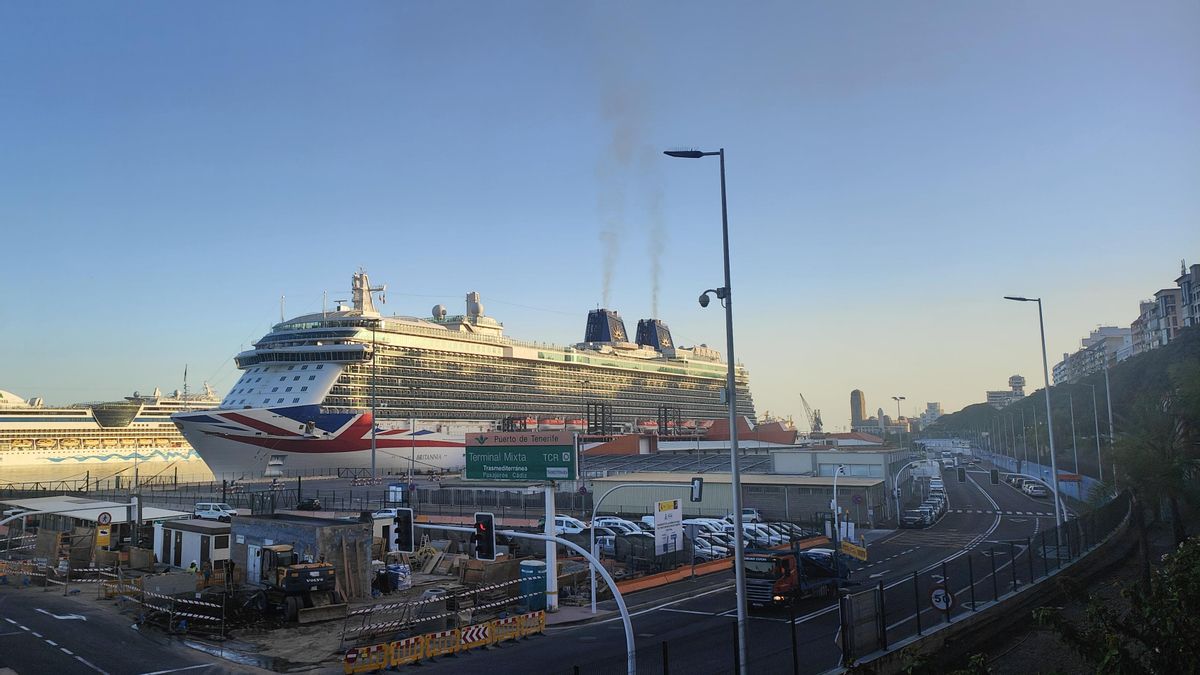
Santa Cruz de Tenerife is one of the main ports in the mid-Atlantic and received nearly 950,000 cruise passengers in 2025. In the first three months of this year alone, more than 477,000 have already passed through, 60% of whom are home-port passengers—meaning their voyage either starts or ends in the city. However, the port receiving the most cruise passengers in Spain is Las Palmas. Across the ports of the eastern province of the Canary Islands, led by the Port of La Luz, the number of cruise passengers exceeded two million in 2025, an all-time record. It also boasts Europe’s largest cruise terminal, which has just been inaugurated.
No limits, only growth
The regional tourism department responded to Bermúdez by confirming that an increase in berthing requests is expected for the winter, which is the usual trend, and that it is still too early to determine whether the conflict in the Middle East will bring a similar increase for the summer season of 2027. However, it is worth noting that some shipping lines, such as Costa, have already confirmed that the Canary Islands will feature more heavily in next winter’s programme while Middle Eastern itineraries are once again shelved.
Nevertheless, the tourism councillor, Jéssica de León, emphasised that this tourism segment also offers the opportunity to boost other value chains, such as the supply and servicing of ships in port, including ship repair. The Canary Islands government, therefore, is not considering placing any limits on this type of tourism—quite the opposite. Nothing was said in the committee about the impact of cruise arrivals on the local population.
Pollution concerns brushed aside
“Action on port emissions is absolutely essential,” Xavier Querol, a CSIC researcher and expert in atmospheric pollution, told elDiario.es back in 2022. The geologist noted that, among other emissions, the pollution from cruise ships berthed in the port of Barcelona ends up in the city when the sea breeze blows in. “The money they bring in should be invested in reducing emissions,” he commented. A similar situation occurs in Las Palmas de Gran Canaria and Santa Cruz de Tenerife. In both cities, the prevailing trade winds blow from the northeast, pushing port fumes inland. But so far, no administration has singled out cruise ships for the air pollution in the Canary Islands’ cities.
On the contrary. While Europe moves towards decarbonising its ports, the regional government in the Canary Islands pressured the central government to exempt the islands’ ports from the obligation to use less polluting fuels. This happened in 2025, just as it did in 2023 with aviation fuel, when the islands were also exempted from using more sustainable fuels. That exemption was celebrated by the CC-PP (Coalición Canaria and People’s Party) government and tourism industry associations, but it caused concern among experts consulted by Canarias Ahora, who warned that the islands were falling behind in the decarbonisation process while continuing with less sustainable tourism.
Set to become Europe’s most polluting ports
In fact, according to a study by the European consortium Transport and Environment (T&E) titled Investigating the Potential for Electrification of Ferries in Europe, the Canary Islands’ ports of Las Palmas and Santa Cruz de Tenerife, by being excluded from this mandatory regulation (Emission Control Area, ECA) applied across the rest of the European Union, will become the most polluting by 2027. The research, which analyses maritime passenger transport, estimates that without emission controls in the Canary Islands, the Port of Las Palmas will leap from fourth place (in 2023) for pollution to first place by 2027, while Santa Cruz de Tenerife will have climbed from tenth (in 2023) to second in just four years.
Santa Cruz de Tenerife is one of the main ports in the mid-Atlantic and received nearly 950,000 cruise passengers in 2025. In the first three months of this year alone, more than 477,000 have already passed through, 60% of whom are home-port passengers—meaning their voyage either starts or ends in the city. However, the port receiving the most cruise passengers in Spain is Las Palmas. Across the ports of the eastern province of the Canary Islands, led by the Port of La Luz, the number of cruise passengers exceeded two million in 2025, an all-time record. It also boasts Europe’s largest cruise terminal, which has just been inaugurated.
No limits, only growth
The regional tourism department responded to Bermúdez by confirming that an increase in berthing requests is expected for the winter, which is the usual trend, and that it is still too early to determine whether the conflict in the Middle East will bring a similar increase for the summer season of 2027. However, it is worth noting that some shipping lines, such as Costa, have already confirmed that the Canary Islands will feature more heavily in next winter’s programme while Middle Eastern itineraries are once again shelved.
Nevertheless, the tourism councillor, Jéssica de León, emphasised that this tourism segment also offers the opportunity to boost other value chains, such as the supply and servicing of ships in port, including ship repair. The Canary Islands government, therefore, is not considering placing any limits on this type of tourism—quite the opposite. Nothing was said in the committee about the impact of cruise arrivals on the local population.
Pollution concerns brushed aside
“Action on port emissions is absolutely essential,” Xavier Querol, a CSIC researcher and expert in atmospheric pollution, told elDiario.es back in 2022. The geologist noted that, among other emissions, the pollution from cruise ships berthed in the port of Barcelona ends up in the city when the sea breeze blows in. “The money they bring in should be invested in reducing emissions,” he commented. A similar situation occurs in Las Palmas de Gran Canaria and Santa Cruz de Tenerife. In both cities, the prevailing trade winds blow from the northeast, pushing port fumes inland. But so far, no administration has singled out cruise ships for the air pollution in the Canary Islands’ cities.
On the contrary. While Europe moves towards decarbonising its ports, the regional government in the Canary Islands pressured the central government to exempt the islands’ ports from the obligation to use less polluting fuels. This happened in 2025, just as it did in 2023 with aviation fuel, when the islands were also exempted from using more sustainable fuels. That exemption was celebrated by the CC-PP (Coalición Canaria and People’s Party) government and tourism industry associations, but it caused concern among experts consulted by Canarias Ahora, who warned that the islands were falling behind in the decarbonisation process while continuing with less sustainable tourism.
Set to become Europe’s most polluting ports
In fact, according to a study by the European consortium Transport and Environment (T&E) titled Investigating the Potential for Electrification of Ferries in Europe, the Canary Islands’ ports of Las Palmas and Santa Cruz de Tenerife, by being excluded from this mandatory regulation (Emission Control Area, ECA) applied across the rest of the European Union, will become the most polluting by 2027. The research, which analyses maritime passenger transport, estimates that without emission controls in the Canary Islands, the Port of Las Palmas will leap from fourth place (in 2023) for pollution to first place by 2027, while Santa Cruz de Tenerife will have climbed from tenth (in 2023) to second in just four years.
While the rest of the world puts the brakes on cruise tourism in its ports and forces the industry to use cleaner fuels, the Canary Islands is heading in the other direction: “Let more ships come.” That was the blunt message from Santa Cruz de Tenerife’s mayor, José Manuel Bermúdez (Coalición Canaria), during a parliamentary committee on tourism earlier this month. In his intervention, he also lamented that the regional tourism department had not included cruise tourism in its strategic lines.
Santa Cruz de Tenerife is one of the main ports in the mid-Atlantic and received nearly 950,000 cruise passengers in 2025. In the first three months of this year alone, more than 477,000 have already passed through, 60% of whom are home-port passengers—meaning their voyage either starts or ends in the city. However, the port receiving the most cruise passengers in Spain is Las Palmas. Across the ports of the eastern province of the Canary Islands, led by the Port of La Luz, the number of cruise passengers exceeded two million in 2025, an all-time record. It also boasts Europe’s largest cruise terminal, which has just been inaugurated.
No limits, only growth
The regional tourism department responded to Bermúdez by confirming that an increase in berthing requests is expected for the winter, which is the usual trend, and that it is still too early to determine whether the conflict in the Middle East will bring a similar increase for the summer season of 2027. However, it is worth noting that some shipping lines, such as Costa, have already confirmed that the Canary Islands will feature more heavily in next winter’s programme while Middle Eastern itineraries are once again shelved.
Nevertheless, the tourism councillor, Jéssica de León, emphasised that this tourism segment also offers the opportunity to boost other value chains, such as the supply and servicing of ships in port, including ship repair. The Canary Islands government, therefore, is not considering placing any limits on this type of tourism—quite the opposite. Nothing was said in the committee about the impact of cruise arrivals on the local population.
Pollution concerns brushed aside
“Action on port emissions is absolutely essential,” Xavier Querol, a CSIC researcher and expert in atmospheric pollution, told elDiario.es back in 2022. The geologist noted that, among other emissions, the pollution from cruise ships berthed in the port of Barcelona ends up in the city when the sea breeze blows in. “The money they bring in should be invested in reducing emissions,” he commented. A similar situation occurs in Las Palmas de Gran Canaria and Santa Cruz de Tenerife. In both cities, the prevailing trade winds blow from the northeast, pushing port fumes inland. But so far, no administration has singled out cruise ships for the air pollution in the Canary Islands’ cities.
On the contrary. While Europe moves towards decarbonising its ports, the regional government in the Canary Islands pressured the central government to exempt the islands’ ports from the obligation to use less polluting fuels. This happened in 2025, just as it did in 2023 with aviation fuel, when the islands were also exempted from using more sustainable fuels. That exemption was celebrated by the CC-PP (Coalición Canaria and People’s Party) government and tourism industry associations, but it caused concern among experts consulted by Canarias Ahora, who warned that the islands were falling behind in the decarbonisation process while continuing with less sustainable tourism.
Set to become Europe’s most polluting ports
In fact, according to a study by the European consortium Transport and Environment (T&E) titled Investigating the Potential for Electrification of Ferries in Europe, the Canary Islands’ ports of Las Palmas and Santa Cruz de Tenerife, by being excluded from this mandatory regulation (Emission Control Area, ECA) applied across the rest of the European Union, will become the most polluting by 2027. The research, which analyses maritime passenger transport, estimates that without emission controls in the Canary Islands, the Port of Las Palmas will leap from fourth place (in 2023) for pollution to first place by 2027, while Santa Cruz de Tenerife will have climbed from tenth (in 2023) to second in just four years.
While the rest of the world puts the brakes on cruise tourism in its ports and forces the industry to use cleaner fuels, the Canary Islands is heading in the other direction: “Let more ships come.” That was the blunt message from Santa Cruz de Tenerife’s mayor, José Manuel Bermúdez (Coalición Canaria), during a parliamentary committee on tourism earlier this month. In his intervention, he also lamented that the regional tourism department had not included cruise tourism in its strategic lines.
Santa Cruz de Tenerife is one of the main ports in the mid-Atlantic and received nearly 950,000 cruise passengers in 2025. In the first three months of this year alone, more than 477,000 have already passed through, 60% of whom are home-port passengers—meaning their voyage either starts or ends in the city. However, the port receiving the most cruise passengers in Spain is Las Palmas. Across the ports of the eastern province of the Canary Islands, led by the Port of La Luz, the number of cruise passengers exceeded two million in 2025, an all-time record. It also boasts Europe’s largest cruise terminal, which has just been inaugurated.
No limits, only growth
The regional tourism department responded to Bermúdez by confirming that an increase in berthing requests is expected for the winter, which is the usual trend, and that it is still too early to determine whether the conflict in the Middle East will bring a similar increase for the summer season of 2027. However, it is worth noting that some shipping lines, such as Costa, have already confirmed that the Canary Islands will feature more heavily in next winter’s programme while Middle Eastern itineraries are once again shelved.
Nevertheless, the tourism councillor, Jéssica de León, emphasised that this tourism segment also offers the opportunity to boost other value chains, such as the supply and servicing of ships in port, including ship repair. The Canary Islands government, therefore, is not considering placing any limits on this type of tourism—quite the opposite. Nothing was said in the committee about the impact of cruise arrivals on the local population.
Pollution concerns brushed aside
“Action on port emissions is absolutely essential,” Xavier Querol, a CSIC researcher and expert in atmospheric pollution, told elDiario.es back in 2022. The geologist noted that, among other emissions, the pollution from cruise ships berthed in the port of Barcelona ends up in the city when the sea breeze blows in. “The money they bring in should be invested in reducing emissions,” he commented. A similar situation occurs in Las Palmas de Gran Canaria and Santa Cruz de Tenerife. In both cities, the prevailing trade winds blow from the northeast, pushing port fumes inland. But so far, no administration has singled out cruise ships for the air pollution in the Canary Islands’ cities.
On the contrary. While Europe moves towards decarbonising its ports, the regional government in the Canary Islands pressured the central government to exempt the islands’ ports from the obligation to use less polluting fuels. This happened in 2025, just as it did in 2023 with aviation fuel, when the islands were also exempted from using more sustainable fuels. That exemption was celebrated by the CC-PP (Coalición Canaria and People’s Party) government and tourism industry associations, but it caused concern among experts consulted by Canarias Ahora, who warned that the islands were falling behind in the decarbonisation process while continuing with less sustainable tourism.
Set to become Europe’s most polluting ports
In fact, according to a study by the European consortium Transport and Environment (T&E) titled Investigating the Potential for Electrification of Ferries in Europe, the Canary Islands’ ports of Las Palmas and Santa Cruz de Tenerife, by being excluded from this mandatory regulation (Emission Control Area, ECA) applied across the rest of the European Union, will become the most polluting by 2027. The research, which analyses maritime passenger transport, estimates that without emission controls in the Canary Islands, the Port of Las Palmas will leap from fourth place (in 2023) for pollution to first place by 2027, while Santa Cruz de Tenerife will have climbed from tenth (in 2023) to second in just four years.
Canary Islands takes the opposite approach
While the rest of the world puts the brakes on cruise tourism in its ports and forces the industry to use cleaner fuels, the Canary Islands is heading in the other direction: “Let more ships come.” That was the blunt message from Santa Cruz de Tenerife’s mayor, José Manuel Bermúdez (Coalición Canaria), during a parliamentary committee on tourism earlier this month. In his intervention, he also lamented that the regional tourism department had not included cruise tourism in its strategic lines.
Santa Cruz de Tenerife is one of the main ports in the mid-Atlantic and received nearly 950,000 cruise passengers in 2025. In the first three months of this year alone, more than 477,000 have already passed through, 60% of whom are home-port passengers—meaning their voyage either starts or ends in the city. However, the port receiving the most cruise passengers in Spain is Las Palmas. Across the ports of the eastern province of the Canary Islands, led by the Port of La Luz, the number of cruise passengers exceeded two million in 2025, an all-time record. It also boasts Europe’s largest cruise terminal, which has just been inaugurated.
No limits, only growth
The regional tourism department responded to Bermúdez by confirming that an increase in berthing requests is expected for the winter, which is the usual trend, and that it is still too early to determine whether the conflict in the Middle East will bring a similar increase for the summer season of 2027. However, it is worth noting that some shipping lines, such as Costa, have already confirmed that the Canary Islands will feature more heavily in next winter’s programme while Middle Eastern itineraries are once again shelved.
Nevertheless, the tourism councillor, Jéssica de León, emphasised that this tourism segment also offers the opportunity to boost other value chains, such as the supply and servicing of ships in port, including ship repair. The Canary Islands government, therefore, is not considering placing any limits on this type of tourism—quite the opposite. Nothing was said in the committee about the impact of cruise arrivals on the local population.
Pollution concerns brushed aside
“Action on port emissions is absolutely essential,” Xavier Querol, a CSIC researcher and expert in atmospheric pollution, told elDiario.es back in 2022. The geologist noted that, among other emissions, the pollution from cruise ships berthed in the port of Barcelona ends up in the city when the sea breeze blows in. “The money they bring in should be invested in reducing emissions,” he commented. A similar situation occurs in Las Palmas de Gran Canaria and Santa Cruz de Tenerife. In both cities, the prevailing trade winds blow from the northeast, pushing port fumes inland. But so far, no administration has singled out cruise ships for the air pollution in the Canary Islands’ cities.
On the contrary. While Europe moves towards decarbonising its ports, the regional government in the Canary Islands pressured the central government to exempt the islands’ ports from the obligation to use less polluting fuels. This happened in 2025, just as it did in 2023 with aviation fuel, when the islands were also exempted from using more sustainable fuels. That exemption was celebrated by the CC-PP (Coalición Canaria and People’s Party) government and tourism industry associations, but it caused concern among experts consulted by Canarias Ahora, who warned that the islands were falling behind in the decarbonisation process while continuing with less sustainable tourism.
Set to become Europe’s most polluting ports
In fact, according to a study by the European consortium Transport and Environment (T&E) titled Investigating the Potential for Electrification of Ferries in Europe, the Canary Islands’ ports of Las Palmas and Santa Cruz de Tenerife, by being excluded from this mandatory regulation (Emission Control Area, ECA) applied across the rest of the European Union, will become the most polluting by 2027. The research, which analyses maritime passenger transport, estimates that without emission controls in the Canary Islands, the Port of Las Palmas will leap from fourth place (in 2023) for pollution to first place by 2027, while Santa Cruz de Tenerife will have climbed from tenth (in 2023) to second in just four years.
From limiting the number of ships that can dock simultaneously to reducing the permitted size of vessels, these cities have recognised that tens of thousands of people arriving at once to spend just a few hours ashore generates little revenue but plenty of friction with local populations, who suddenly feel overwhelmed by hordes of visitors descending on their most iconic spots.
Canary Islands takes the opposite approach
While the rest of the world puts the brakes on cruise tourism in its ports and forces the industry to use cleaner fuels, the Canary Islands is heading in the other direction: “Let more ships come.” That was the blunt message from Santa Cruz de Tenerife’s mayor, José Manuel Bermúdez (Coalición Canaria), during a parliamentary committee on tourism earlier this month. In his intervention, he also lamented that the regional tourism department had not included cruise tourism in its strategic lines.
Santa Cruz de Tenerife is one of the main ports in the mid-Atlantic and received nearly 950,000 cruise passengers in 2025. In the first three months of this year alone, more than 477,000 have already passed through, 60% of whom are home-port passengers—meaning their voyage either starts or ends in the city. However, the port receiving the most cruise passengers in Spain is Las Palmas. Across the ports of the eastern province of the Canary Islands, led by the Port of La Luz, the number of cruise passengers exceeded two million in 2025, an all-time record. It also boasts Europe’s largest cruise terminal, which has just been inaugurated.
No limits, only growth
The regional tourism department responded to Bermúdez by confirming that an increase in berthing requests is expected for the winter, which is the usual trend, and that it is still too early to determine whether the conflict in the Middle East will bring a similar increase for the summer season of 2027. However, it is worth noting that some shipping lines, such as Costa, have already confirmed that the Canary Islands will feature more heavily in next winter’s programme while Middle Eastern itineraries are once again shelved.
Nevertheless, the tourism councillor, Jéssica de León, emphasised that this tourism segment also offers the opportunity to boost other value chains, such as the supply and servicing of ships in port, including ship repair. The Canary Islands government, therefore, is not considering placing any limits on this type of tourism—quite the opposite. Nothing was said in the committee about the impact of cruise arrivals on the local population.
Pollution concerns brushed aside
“Action on port emissions is absolutely essential,” Xavier Querol, a CSIC researcher and expert in atmospheric pollution, told elDiario.es back in 2022. The geologist noted that, among other emissions, the pollution from cruise ships berthed in the port of Barcelona ends up in the city when the sea breeze blows in. “The money they bring in should be invested in reducing emissions,” he commented. A similar situation occurs in Las Palmas de Gran Canaria and Santa Cruz de Tenerife. In both cities, the prevailing trade winds blow from the northeast, pushing port fumes inland. But so far, no administration has singled out cruise ships for the air pollution in the Canary Islands’ cities.
On the contrary. While Europe moves towards decarbonising its ports, the regional government in the Canary Islands pressured the central government to exempt the islands’ ports from the obligation to use less polluting fuels. This happened in 2025, just as it did in 2023 with aviation fuel, when the islands were also exempted from using more sustainable fuels. That exemption was celebrated by the CC-PP (Coalición Canaria and People’s Party) government and tourism industry associations, but it caused concern among experts consulted by Canarias Ahora, who warned that the islands were falling behind in the decarbonisation process while continuing with less sustainable tourism.
Set to become Europe’s most polluting ports
In fact, according to a study by the European consortium Transport and Environment (T&E) titled Investigating the Potential for Electrification of Ferries in Europe, the Canary Islands’ ports of Las Palmas and Santa Cruz de Tenerife, by being excluded from this mandatory regulation (Emission Control Area, ECA) applied across the rest of the European Union, will become the most polluting by 2027. The research, which analyses maritime passenger transport, estimates that without emission controls in the Canary Islands, the Port of Las Palmas will leap from fourth place (in 2023) for pollution to first place by 2027, while Santa Cruz de Tenerife will have climbed from tenth (in 2023) to second in just four years.
Barcelona is not the first city to take such action against cruise ships. Other major international destinations like Amsterdam and Venice have been reining in this type of tourism for years, having concluded that it brings more negative impacts than benefits to cities and their residents. Closer to home, Spanish port cities such as Palma and Vigo have also placed restrictions on what various studies describe as the most polluting form of tourism. Research calculates that a single cruise ship with its engines running at port emits as much CO2 as 12,000 cars, in addition to several tonnes of waste per day.
From limiting the number of ships that can dock simultaneously to reducing the permitted size of vessels, these cities have recognised that tens of thousands of people arriving at once to spend just a few hours ashore generates little revenue but plenty of friction with local populations, who suddenly feel overwhelmed by hordes of visitors descending on their most iconic spots.
Canary Islands takes the opposite approach
While the rest of the world puts the brakes on cruise tourism in its ports and forces the industry to use cleaner fuels, the Canary Islands is heading in the other direction: “Let more ships come.” That was the blunt message from Santa Cruz de Tenerife’s mayor, José Manuel Bermúdez (Coalición Canaria), during a parliamentary committee on tourism earlier this month. In his intervention, he also lamented that the regional tourism department had not included cruise tourism in its strategic lines.
Santa Cruz de Tenerife is one of the main ports in the mid-Atlantic and received nearly 950,000 cruise passengers in 2025. In the first three months of this year alone, more than 477,000 have already passed through, 60% of whom are home-port passengers—meaning their voyage either starts or ends in the city. However, the port receiving the most cruise passengers in Spain is Las Palmas. Across the ports of the eastern province of the Canary Islands, led by the Port of La Luz, the number of cruise passengers exceeded two million in 2025, an all-time record. It also boasts Europe’s largest cruise terminal, which has just been inaugurated.
No limits, only growth
The regional tourism department responded to Bermúdez by confirming that an increase in berthing requests is expected for the winter, which is the usual trend, and that it is still too early to determine whether the conflict in the Middle East will bring a similar increase for the summer season of 2027. However, it is worth noting that some shipping lines, such as Costa, have already confirmed that the Canary Islands will feature more heavily in next winter’s programme while Middle Eastern itineraries are once again shelved.
Nevertheless, the tourism councillor, Jéssica de León, emphasised that this tourism segment also offers the opportunity to boost other value chains, such as the supply and servicing of ships in port, including ship repair. The Canary Islands government, therefore, is not considering placing any limits on this type of tourism—quite the opposite. Nothing was said in the committee about the impact of cruise arrivals on the local population.
Pollution concerns brushed aside
“Action on port emissions is absolutely essential,” Xavier Querol, a CSIC researcher and expert in atmospheric pollution, told elDiario.es back in 2022. The geologist noted that, among other emissions, the pollution from cruise ships berthed in the port of Barcelona ends up in the city when the sea breeze blows in. “The money they bring in should be invested in reducing emissions,” he commented. A similar situation occurs in Las Palmas de Gran Canaria and Santa Cruz de Tenerife. In both cities, the prevailing trade winds blow from the northeast, pushing port fumes inland. But so far, no administration has singled out cruise ships for the air pollution in the Canary Islands’ cities.
On the contrary. While Europe moves towards decarbonising its ports, the regional government in the Canary Islands pressured the central government to exempt the islands’ ports from the obligation to use less polluting fuels. This happened in 2025, just as it did in 2023 with aviation fuel, when the islands were also exempted from using more sustainable fuels. That exemption was celebrated by the CC-PP (Coalición Canaria and People’s Party) government and tourism industry associations, but it caused concern among experts consulted by Canarias Ahora, who warned that the islands were falling behind in the decarbonisation process while continuing with less sustainable tourism.
Set to become Europe’s most polluting ports
In fact, according to a study by the European consortium Transport and Environment (T&E) titled Investigating the Potential for Electrification of Ferries in Europe, the Canary Islands’ ports of Las Palmas and Santa Cruz de Tenerife, by being excluded from this mandatory regulation (Emission Control Area, ECA) applied across the rest of the European Union, will become the most polluting by 2027. The research, which analyses maritime passenger transport, estimates that without emission controls in the Canary Islands, the Port of Las Palmas will leap from fourth place (in 2023) for pollution to first place by 2027, while Santa Cruz de Tenerife will have climbed from tenth (in 2023) to second in just four years.
Barcelona is not the first city to take such action against cruise ships. Other major international destinations like Amsterdam and Venice have been reining in this type of tourism for years, having concluded that it brings more negative impacts than benefits to cities and their residents. Closer to home, Spanish port cities such as Palma and Vigo have also placed restrictions on what various studies describe as the most polluting form of tourism. Research calculates that a single cruise ship with its engines running at port emits as much CO2 as 12,000 cars, in addition to several tonnes of waste per day.
From limiting the number of ships that can dock simultaneously to reducing the permitted size of vessels, these cities have recognised that tens of thousands of people arriving at once to spend just a few hours ashore generates little revenue but plenty of friction with local populations, who suddenly feel overwhelmed by hordes of visitors descending on their most iconic spots.
Canary Islands takes the opposite approach
While the rest of the world puts the brakes on cruise tourism in its ports and forces the industry to use cleaner fuels, the Canary Islands is heading in the other direction: “Let more ships come.” That was the blunt message from Santa Cruz de Tenerife’s mayor, José Manuel Bermúdez (Coalición Canaria), during a parliamentary committee on tourism earlier this month. In his intervention, he also lamented that the regional tourism department had not included cruise tourism in its strategic lines.
Santa Cruz de Tenerife is one of the main ports in the mid-Atlantic and received nearly 950,000 cruise passengers in 2025. In the first three months of this year alone, more than 477,000 have already passed through, 60% of whom are home-port passengers—meaning their voyage either starts or ends in the city. However, the port receiving the most cruise passengers in Spain is Las Palmas. Across the ports of the eastern province of the Canary Islands, led by the Port of La Luz, the number of cruise passengers exceeded two million in 2025, an all-time record. It also boasts Europe’s largest cruise terminal, which has just been inaugurated.
No limits, only growth
The regional tourism department responded to Bermúdez by confirming that an increase in berthing requests is expected for the winter, which is the usual trend, and that it is still too early to determine whether the conflict in the Middle East will bring a similar increase for the summer season of 2027. However, it is worth noting that some shipping lines, such as Costa, have already confirmed that the Canary Islands will feature more heavily in next winter’s programme while Middle Eastern itineraries are once again shelved.
Nevertheless, the tourism councillor, Jéssica de León, emphasised that this tourism segment also offers the opportunity to boost other value chains, such as the supply and servicing of ships in port, including ship repair. The Canary Islands government, therefore, is not considering placing any limits on this type of tourism—quite the opposite. Nothing was said in the committee about the impact of cruise arrivals on the local population.
Pollution concerns brushed aside
“Action on port emissions is absolutely essential,” Xavier Querol, a CSIC researcher and expert in atmospheric pollution, told elDiario.es back in 2022. The geologist noted that, among other emissions, the pollution from cruise ships berthed in the port of Barcelona ends up in the city when the sea breeze blows in. “The money they bring in should be invested in reducing emissions,” he commented. A similar situation occurs in Las Palmas de Gran Canaria and Santa Cruz de Tenerife. In both cities, the prevailing trade winds blow from the northeast, pushing port fumes inland. But so far, no administration has singled out cruise ships for the air pollution in the Canary Islands’ cities.
On the contrary. While Europe moves towards decarbonising its ports, the regional government in the Canary Islands pressured the central government to exempt the islands’ ports from the obligation to use less polluting fuels. This happened in 2025, just as it did in 2023 with aviation fuel, when the islands were also exempted from using more sustainable fuels. That exemption was celebrated by the CC-PP (Coalición Canaria and People’s Party) government and tourism industry associations, but it caused concern among experts consulted by Canarias Ahora, who warned that the islands were falling behind in the decarbonisation process while continuing with less sustainable tourism.
Set to become Europe’s most polluting ports
In fact, according to a study by the European consortium Transport and Environment (T&E) titled Investigating the Potential for Electrification of Ferries in Europe, the Canary Islands’ ports of Las Palmas and Santa Cruz de Tenerife, by being excluded from this mandatory regulation (Emission Control Area, ECA) applied across the rest of the European Union, will become the most polluting by 2027. The research, which analyses maritime passenger transport, estimates that without emission controls in the Canary Islands, the Port of Las Palmas will leap from fourth place (in 2023) for pollution to first place by 2027, while Santa Cruz de Tenerife will have climbed from tenth (in 2023) to second in just four years.
Barcelona targets cruise tourists
This week, Barcelona’s mayor, the socialist Jaume Collboni, took another step in his bid to reduce the impact of mass tourism on the city and its residents. He proposed raising the tourist tax applied to cruise passengers from €5 to €8, adding to existing measures aimed at curbing the flood of visitors and preserving, as far as possible, the quality of life for locals. According to the mayor, the goal is to fund the services that these cruise passengers use in the city and to financially discourage a type of stay that “generates no income for Barcelona but does have an impact on the city.” Collboni has his sights set firmly on transit cruise ships, which he says create “tourist overcrowding.”
Barcelona is not the first city to take such action against cruise ships. Other major international destinations like Amsterdam and Venice have been reining in this type of tourism for years, having concluded that it brings more negative impacts than benefits to cities and their residents. Closer to home, Spanish port cities such as Palma and Vigo have also placed restrictions on what various studies describe as the most polluting form of tourism. Research calculates that a single cruise ship with its engines running at port emits as much CO2 as 12,000 cars, in addition to several tonnes of waste per day.
From limiting the number of ships that can dock simultaneously to reducing the permitted size of vessels, these cities have recognised that tens of thousands of people arriving at once to spend just a few hours ashore generates little revenue but plenty of friction with local populations, who suddenly feel overwhelmed by hordes of visitors descending on their most iconic spots.
Canary Islands takes the opposite approach
While the rest of the world puts the brakes on cruise tourism in its ports and forces the industry to use cleaner fuels, the Canary Islands is heading in the other direction: “Let more ships come.” That was the blunt message from Santa Cruz de Tenerife’s mayor, José Manuel Bermúdez (Coalición Canaria), during a parliamentary committee on tourism earlier this month. In his intervention, he also lamented that the regional tourism department had not included cruise tourism in its strategic lines.
Santa Cruz de Tenerife is one of the main ports in the mid-Atlantic and received nearly 950,000 cruise passengers in 2025. In the first three months of this year alone, more than 477,000 have already passed through, 60% of whom are home-port passengers—meaning their voyage either starts or ends in the city. However, the port receiving the most cruise passengers in Spain is Las Palmas. Across the ports of the eastern province of the Canary Islands, led by the Port of La Luz, the number of cruise passengers exceeded two million in 2025, an all-time record. It also boasts Europe’s largest cruise terminal, which has just been inaugurated.
No limits, only growth
The regional tourism department responded to Bermúdez by confirming that an increase in berthing requests is expected for the winter, which is the usual trend, and that it is still too early to determine whether the conflict in the Middle East will bring a similar increase for the summer season of 2027. However, it is worth noting that some shipping lines, such as Costa, have already confirmed that the Canary Islands will feature more heavily in next winter’s programme while Middle Eastern itineraries are once again shelved.
Nevertheless, the tourism councillor, Jéssica de León, emphasised that this tourism segment also offers the opportunity to boost other value chains, such as the supply and servicing of ships in port, including ship repair. The Canary Islands government, therefore, is not considering placing any limits on this type of tourism—quite the opposite. Nothing was said in the committee about the impact of cruise arrivals on the local population.
Pollution concerns brushed aside
“Action on port emissions is absolutely essential,” Xavier Querol, a CSIC researcher and expert in atmospheric pollution, told elDiario.es back in 2022. The geologist noted that, among other emissions, the pollution from cruise ships berthed in the port of Barcelona ends up in the city when the sea breeze blows in. “The money they bring in should be invested in reducing emissions,” he commented. A similar situation occurs in Las Palmas de Gran Canaria and Santa Cruz de Tenerife. In both cities, the prevailing trade winds blow from the northeast, pushing port fumes inland. But so far, no administration has singled out cruise ships for the air pollution in the Canary Islands’ cities.
On the contrary. While Europe moves towards decarbonising its ports, the regional government in the Canary Islands pressured the central government to exempt the islands’ ports from the obligation to use less polluting fuels. This happened in 2025, just as it did in 2023 with aviation fuel, when the islands were also exempted from using more sustainable fuels. That exemption was celebrated by the CC-PP (Coalición Canaria and People’s Party) government and tourism industry associations, but it caused concern among experts consulted by Canarias Ahora, who warned that the islands were falling behind in the decarbonisation process while continuing with less sustainable tourism.
Set to become Europe’s most polluting ports
In fact, according to a study by the European consortium Transport and Environment (T&E) titled Investigating the Potential for Electrification of Ferries in Europe, the Canary Islands’ ports of Las Palmas and Santa Cruz de Tenerife, by being excluded from this mandatory regulation (Emission Control Area, ECA) applied across the rest of the European Union, will become the most polluting by 2027. The research, which analyses maritime passenger transport, estimates that without emission controls in the Canary Islands, the Port of Las Palmas will leap from fourth place (in 2023) for pollution to first place by 2027, while Santa Cruz de Tenerife will have climbed from tenth (in 2023) to second in just four years.