
Controversial guest on Canarian television
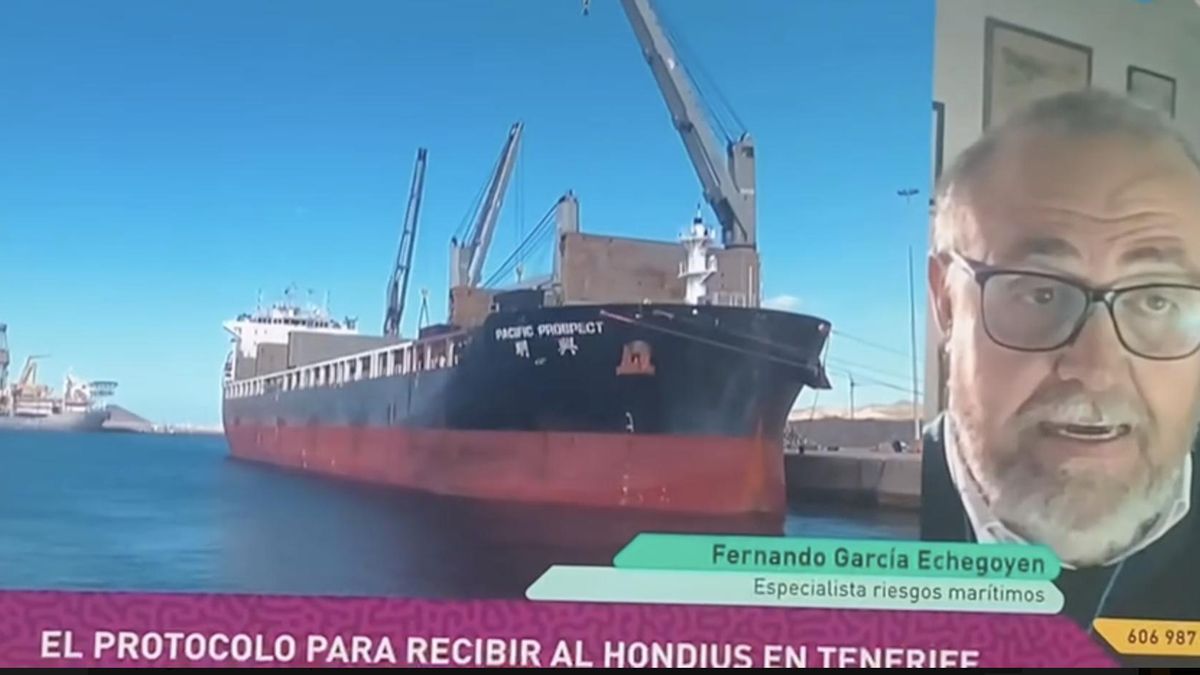
Televisión Canaria is doubling down on the flat-earth theories of Fernando Clavijo concerning the supposed danger of having allowed the Hondius to take refuge in the port of Granadilla – the ship where a hantavirus outbreak was declared. On Saturday afternoon, hours before the vessel arrived off the coast of Tenerife, the programme Entre Nosotras, produced by Videre for the public broadcaster, featured a guest specialist who is one of the most senior experts from the programme Horizonte, presented by Íker Jiménez.
The guest was the sailor and naval writer Fernando García Echegoyen, whose thesis on the crisis sparked by moving this ship from Cape Verde has been circulating online for days: “Spain has no legal obligation, nor any moral obligation. Not international law, not a sausage!” Asked about the possibility that the ship might have to dock rather than anchor at Granadilla, García warned live on air about both scenarios. His argument closely mirrors the baseless theory that the president of the Canary Islands government has been spreading: that rats and mice are present inside the ship, rodents that could jump ashore or swim to land and transmit the virus they supposedly carry.
Claims of rodents and tourist selfies
This self-proclaimed expert has publicly asserted that the Hondius kitchen must be infested with rats that came on board during a stopover where provisions were loaded. But, in addition to the rodents, the supposed expert called upon by Televisión Canaria to inform its audience warned about the danger of tourism that might develop around the ship, with curious individuals who, he stressed, might even want to take a selfie.
Flawed reasoning behind the claims
García failed to mention that the rats that supposedly infected the couple who became the index patients were not on the ship, but on land, and the infection occurred during their visit to Patagonia to observe birds. Furthermore, it is highly reckless to warn of tourists gathering around a ship that is being monitored by Spanish authorities in order to transport its occupants back to their countries of origin.
What’s happening in the Canaries – straight to your phone
News, weather alerts and practical updates – direct from the islands, in English. We live here and know what’s going on – before the international media catch up. Everything lands on our WhatsApp channel – no middlemen, no algorithm. Curated for families, expats and travelers.

Iberdrola plans Tenerife’s biggest battery storage plant

The wild canary that gave its name to the Canary Islands

Canary Islands sea hits second-hottest year on record

Legal bid to halt tree felling in Santa Cruz’s La Salud

Fiesta del Charco: A journey through La Aldea’s past

Corralejo dunes power line set for removal

ULPGC launches 14 research projects at Las Canteras

TMT will never be built, says Canary Islands astrophysics chief

Pedro Duque: Canarias is the “ultimate dream” for rockets
