
Concrete bunker to tackle massive termite waste pile in Tacoronte
A stockpile of 7,000 cubic metres of green waste infected with termites (Reticulitermes flavipes) on a private plot in Tacoronte has forced authorities to build a special concrete structure to eradicate the pests. The huge volume of pruning debris, which had been left on the site by a gardening company contracted by the local council, became so large that Tragsatec, the Spanish company tasked with eliminating the insect on Tenerife, could not find suitable trays or supports to treat the wood.
Outbreak detected in November, urgent works approved
The termite outbreak was first identified last November, and the subsequent operation was commissioned as a matter of urgency. On Monday, officials met with around 40 local residents to explain the nature of the works. The Tenerife Cabildo is fully funding the operation via Tragsatec, which estimates that the treatment will begin in about a month and could last a further three months if no unexpected complications arise.
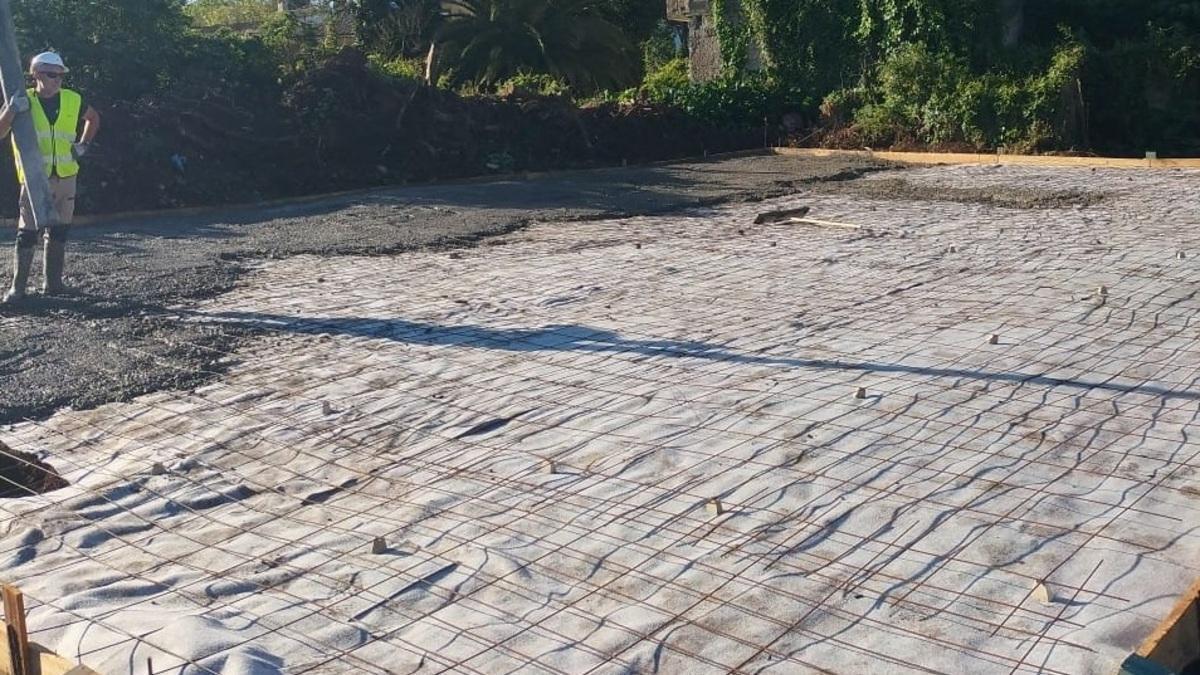
Juan Pestano, a technician from the company, explained: “Right now they are building the concrete base and foundations for a kind of shelter, so we can carry out the treatment on site. We have had to, so to speak, build our own concrete tray.” The structure consists of a roof with three block walls and a reinforced concrete base. “On this base, we will chip the wood and install an automated system to apply the substance that kills the termite, which is called a biocide,” he added. Once it is confirmed that the insect has been eliminated, the waste will be taken to landfill.
Technical challenge is the waste volume, not termite removal
The main technical difficulty with this plot is not how to kill the termites, but how to process such an enormous volume of waste. “This stockpile provides a food source that competes with the 2,200 baits we have placed across a perimeter of more than 100,000 square metres,” Pestano explained carefully. “If we want the traps to be effective over such a wide radius, which extends well beyond this plot, we have to remove this waste that the insects are currently feeding on.” Incineration was also considered, via the construction of a furnace, but burning such a large quantity of waste was deemed too dangerous.
Residents concerned but not alarmed
Pestano said residents had expressed concerns at the most recent meeting. “They are worried, but not alarmed as they were at the very beginning of all this,” confirmed José Ángel Amador Sierra, a representative of the Association of Those Affected by Subterranean Termites. “This outbreak never reached the houses, and it is under control,” he said calmly. However, he added: “It is absolutely inexplicable that green waste was abandoned like this. We are not satisfied with the explanations given at the meeting about how this happened.”
First termite outbreak on Tenerife in 2017
The first outbreak of this insect on Tenerife was detected in 2017. Iván Hernández Machín (PSOE), Tacoronte’s councillor for the environment, stated that what initially seemed like a problem—the accumulation of termite-infected green waste—actually turned out to be a stroke of luck. “It meant the insects found their food supply there and did not have to go looking for it elsewhere,” he said. He explained that the perimeter of the plot had also been baited so that if termites did venture out, they would encounter the poison before reaching homes.
As to how so much plant waste had accumulated on the site, the councillor attributed it to the many years the company responsible for the council’s gardening services had been working there. “The usual procedure is that green waste is shredded on the spot where it is produced. If that is not possible, it is left on the company’s plot for later treatment. Over time, it builds up to the point we are at now,” he explained. He does not believe that the accumulation caused the termites to appear. “Everything was done properly, and we do not know how the termites arrived there. Probably because there is another, as yet undetected, outbreak somewhere,” he argued.
As soon as the presence of the insect was confirmed, the councillor requested an investigation into whether the termite protocol had been followed. “All the documentation suggests that waste from known outbreak sites was taken to the treatment plant in El Pris. If they had done it wrong, we would hold them accountable,” he concluded.
What’s happening in the Canaries – straight to your phone
News, weather alerts and practical updates – direct from the islands, in English. We live here and know what’s going on – before the international media catch up. Everything lands on our WhatsApp channel – no middlemen, no algorithm. Curated for families, expats and travelers.

Iberdrola plans Tenerife’s biggest battery storage plant

The wild canary that gave its name to the Canary Islands

Canary Islands sea hits second-hottest year on record

Legal bid to halt tree felling in Santa Cruz’s La Salud

Fiesta del Charco: A journey through La Aldea’s past

Corralejo dunes power line set for removal

ULPGC launches 14 research projects at Las Canteras

TMT will never be built, says Canary Islands astrophysics chief

Pedro Duque: Canarias is the “ultimate dream” for rockets
